Overview
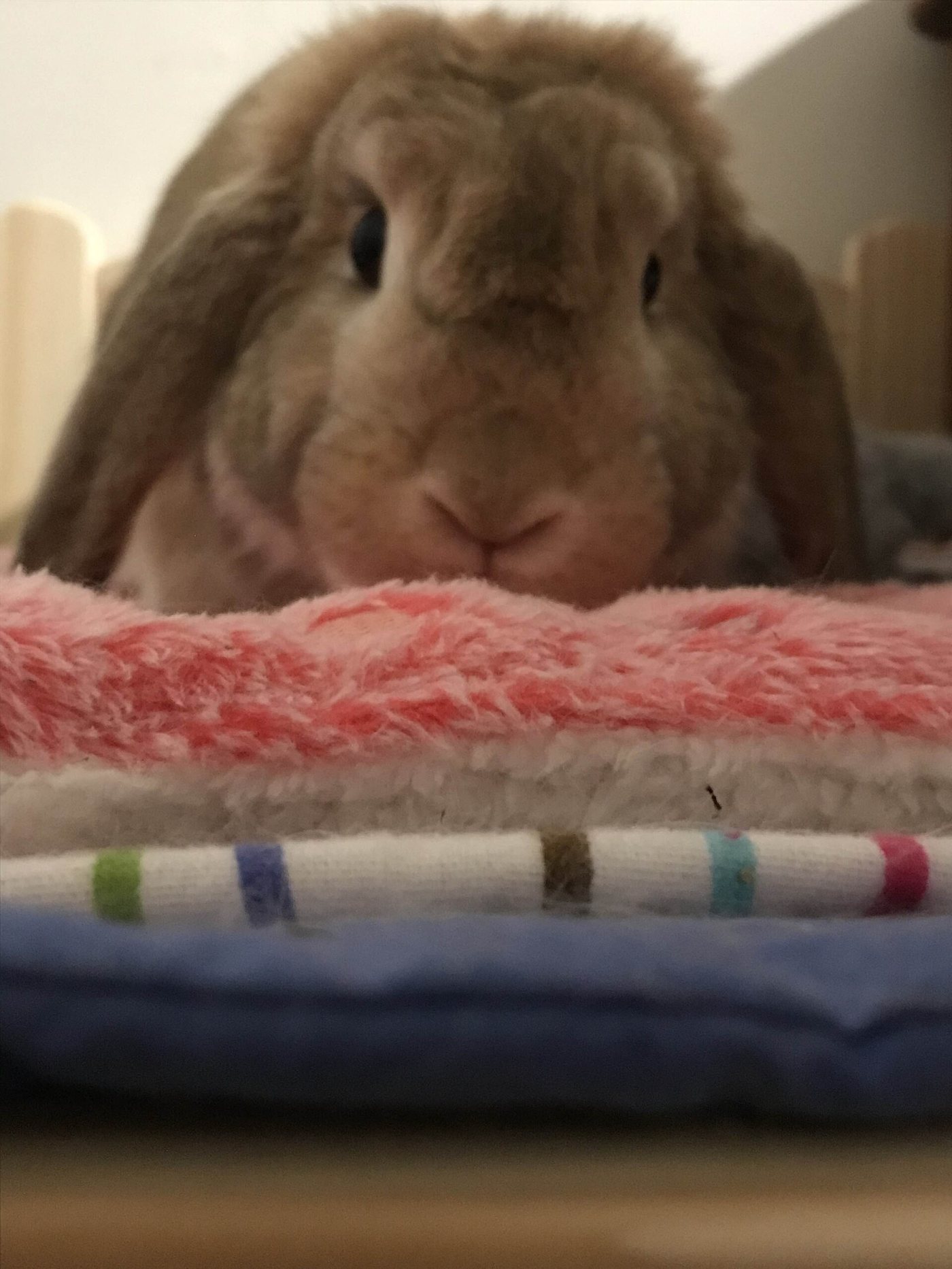
The Mini Lop is the family lop: bigger and sturdier than the tiny Holland Lop, famously good-natured, and wearing the same spaniel ears and round, teddy-bear head. Its name is the rabbit fancy's longest-running joke — at 4.5 to 6.5 pounds it is a solidly medium rabbit — but nothing else about the breed misleads: this is one of the most reliable, affectionate pet rabbits you can choose.
Temperament & personality
Mini Lops are calm, friendly, and unusually people-focused for rabbits — the breed that most often produces the 'follows you around and flops beside you' companion owners hope for. They are playful youngsters and mellow adults, generally tolerant of gentle handling (at floor level, always), and they bond readily with both their humans and a neutered rabbit partner. Individual stubbornness exists, but outright grumpiness is rare in this breed.
Appearance
A medium lop with a massive, wide head, a pronounced crown, and long, thick ears that hang down past the jaw — the breed standard calls the whole picture 'massive and bold.' The body is compact and heavily muscled for its size, and the coat is short, dense, and glossy in a wide range of colours including sooty fawn, steel grey, black, and broken patterns.
Care & daily life
Mini Lops follow the standard rabbit programme with lop-ear vigilance: unlimited grass hay (the diet's foundation), a measured daily pellet portion (this breed gains weight readily — restraint matters), daily leafy greens, and fresh water. Housing should be a large pen or free-roam space — 'Mini' refers to the breed's name, not its space needs — with daily exercise. Check inside the lop ears weekly for wax and redness; flat-faced individuals may need their teeth watched especially closely. Brush weekly, more in moult.
Health & lifespan
The Mini Lop is generally known for the following health watch-points:
- Dental disease — lop breeds' shorter skulls predispose to malocclusion and molar spurs; hay chewing is the daily defence
- Ear disease: poor ventilation in lop ears predisposes to wax build-up and otitis externa, sometimes silent until advanced
- Obesity — this breed gains weight readily; it drives joint, heart, and flystrike risk
- GI stasis — stop-eating is a same-day vet emergency
- Uterine cancer in unspayed does
- Flystrike in warm weather
Living with a Mini Lop
Mini Lops suit families with school-age children, first-time rabbit keepers, and anyone wanting a sociable house rabbit of manageable size. They thrive indoors, litter-train readily, and do best with a bonded neutered companion if the house empties during the day. Expect 7–10+ years of daily hay, space, ear checks, and floor-level companionship.
History
The Mini Lop descends from the German Kleiner Widder ('small lop'), developed in Germany from French Lop, small Chinchilla, and dwarf crosses. Bob Herschbach imported the type to the United States in the 1970s and presented it to the ARBA, which recognised the breed in 1980 after renaming it Mini Lop — 'mini' relative to the French Lop, not to other pet rabbits. In Britain the same rabbit is the Miniature Lop, recognised by the British Rabbit Council. Either way, it grew into one of the world's most popular family rabbits.