Overview
Every lop-eared rabbit alive descends from this one. The English Lop was the first lop breed, created by Victorian fanciers who took the novel droop of early lop ears and selected it into the most extravagant ears in the domestic animal world — 21 inches minimum, trailing past the rabbit's chin like a bloodhound's. Underneath the engineering is one of the calmest animals in the fancy: a big, slow, docile rabbit that seems designed for quiet companionship and demands, in return, that somebody pay attention to those ears.
Temperament & personality
Docile to the point of comedy. English Lops are famously unhurried and tolerant, flopping out in the middle of the room and accepting the household as scenery. They bond steadily with their people, rarely show the dwarf breeds' sharpness, and make excellent house rabbits for calm homes. Youngsters are livelier; unneutered bucks can be boisterous, but the adult default is a big, gentle presence whose main vice is sitting on its own ears.
Appearance
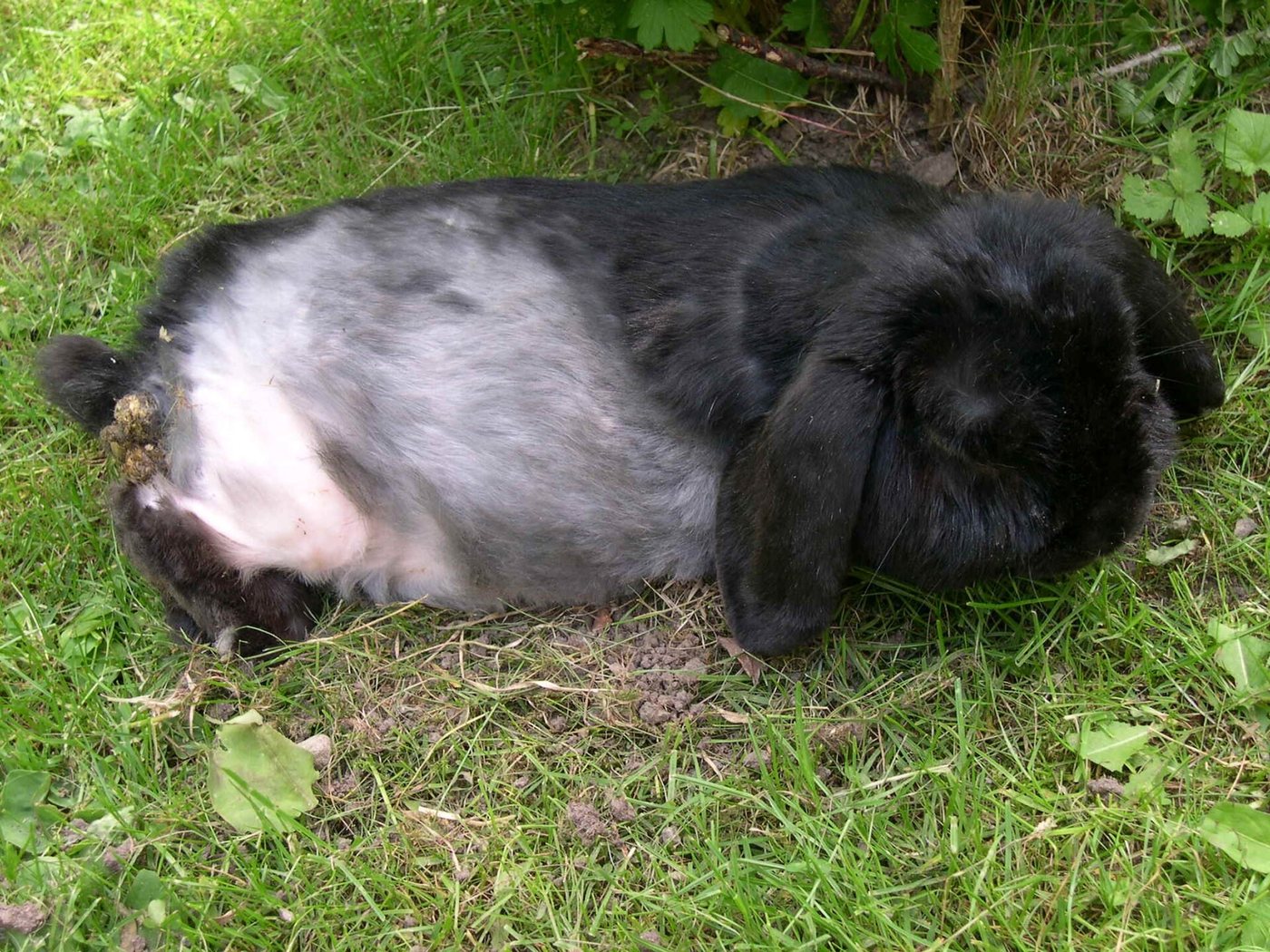
A large lop of almost comical construction: a massive, wide head carried on a broad body — and ears so long they trail the ground, a minimum of 21 inches from tip to tip in the show standard, with exceptional animals exceeding 30 inches. The ears are thick, wide, and rounded at the ends, hanging like a spaniel's. The coat is short, dense, and glossy in sooty fawn, black, steel grey, blue, and broken patterns. Adults look permanently half-asleep, an impression the temperament confirms.
Care & daily life
Everything about English Lop care is standard rabbit care plus ear management: unlimited hay, measured pellets, daily greens, water, and genuinely large housing — a room or shed-grade pen, not a hutch — with daily exercise. The ears need a routine: check them weekly for wounds, mites, and frost or sun damage; provide soft, clean flooring, because the ears drag; keep nails trimmed (a scratching hind foot is the usual ear-injurer); and exercise caution in freezing weather, when trailing ears risk frostbite. Their size and placidity make them manageable, but a 10-pound rabbit is a two-hand lift supporting the hindquarters, and children should enjoy them from the floor.
Health & lifespan
The English Lop is generally known for the following health watch-points:
- Ear injuries and infections — stepped-on, scratched, mud- or frost-damaged ears are this breed's constant watch-item
- Dental disease and molar spurs, as in all rabbits
- GI stasis — a rabbit that stops eating needs a vet the same day
- Sore hocks in heavy individuals on hard flooring
- Heat stress — big body, and those ears are radiators that still can't save an overheated rabbit in a hot hutch
- Uterine cancer in unspayed does
Living with a English Lop
English Lops suit calm households — experienced rabbit keepers, and families with older children — with room for genuinely large housing and the discipline of a weekly ear routine. They are wonderfully placid indoor or shed rabbits and bond strongly. The honest costs are the shorter 5–7 year lifespan of a big breed, the specialist ear vigilance, and the space: this is a small-dog-sized commitment wearing rabbit clothes.
History
The English Lop is where lop rabbits begin: in the early 1800s, English fanciers — keeping rabbits in warm indoor rooms, which encourages ear carriage to soften — selected for drooping ears, then for length, producing by the Victorian era a fancy sensation exhibited across Britain. Every lop breed in the world (French, German, Holland, Mini, and the rest) descends in part from this rabbit. It was among the first breeds exported to America and recognised in the earliest standards; today's English Lop is kept as a show rabbit and a notably gentle pet.