Overview
The Ridgeback is Africa's lion hound: a powerful, heat-proof coursing dog developed to track big game and hold it at bay. The ridge of backward-growing hair that names the breed comes from its indigenous African ancestors. Modern Ridgebacks are calm, dignified, and deeply loyal companions — but they remain a strong, independent hunting dog that needs an owner it can respect.
Temperament & personality
Dignified, intelligent, and strong-willed. Ridgebacks are not demonstrative people-pleasers; they bond intensely to their family, are usually aloof with strangers, and think for themselves. They are even-tempered and tolerant with the children of their household, though their size warrants supervision. Training must be firm, fair, and interesting — a Ridgeback that sees no point in a command will quietly ignore it.
Appearance
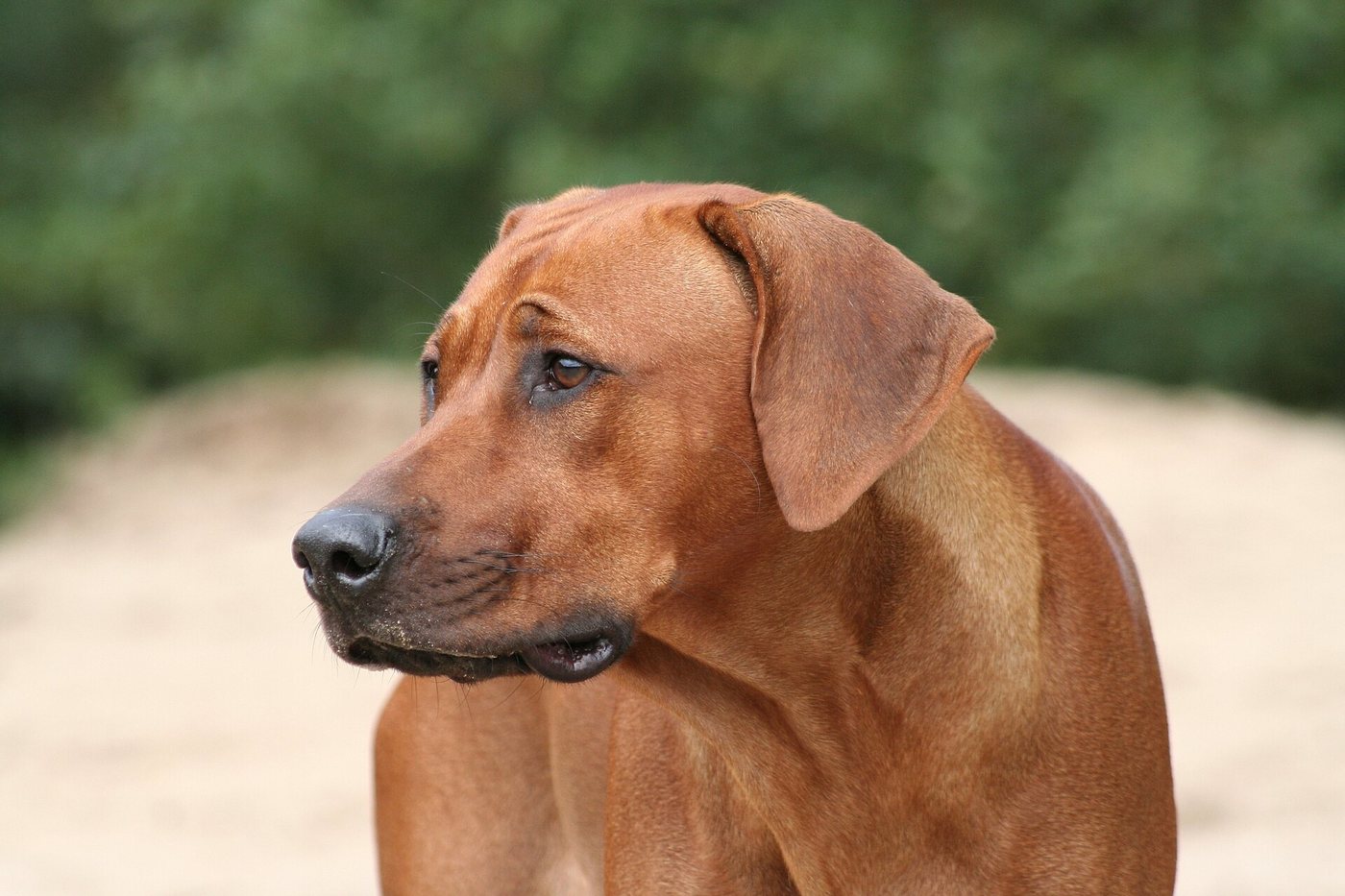
A handsome, muscular hound whose defining feature is the ridge: a strip of hair along the spine that grows in the opposite direction, topped by two crowns (whorls) at its head. The short, sleek coat is light to red wheaten. Ridgebacks are dignified and substantial, with a clean head, intelligent expression, and the look of an athlete built for heat and distance.
Care & daily life
Ridgebacks need one and a half to two hours of exercise daily as adults — they were bred to run all day in African heat — and they relish running, hiking, and lure coursing. Puppies' exercise should be built up gradually to protect growing joints. The short coat is nearly care-free: a weekly brush and it is done. Their prey drive and size demand secure fencing and sensible management around small animals.
Health & lifespan
The Rhodesian Ridgeback is generally known for the following health watch-points:
- Dermoid sinus — a congenital skin defect along the spine linked to the ridge gene; puppies should be carefully checked at birth and beyond
- Hip and elbow dysplasia
- Hypothyroidism
- Degenerative myelopathy and juvenile myoclonic epilepsy (both DNA-testable)
- Deafness and inherited arrhythmia are also reported in the breed
Living with a Rhodesian Ridgeback
Best for experienced, active owners with a large secure yard and the time for serious daily exercise. Ridgebacks are quiet, clean, and dignified in the house, devoted to family, and typically reserved with strangers. Their strength and prey drive make them a poor match for novice owners or homes with free-roaming small pets.
History
Dutch and German settlers in southern Africa crossed their European hunting dogs with the ridged, semi-wild dogs of the Khoikhoi people. In 1870s Rhodesia, big-game hunter Cornelius van Rooyen refined the type into a dog tough enough to track and hold lions, leopards, and baboons in brutal heat. The breed standard was drawn up in 1922, and the Ridgeback was recognised by the AKC in 1955.