Overview
The Portuguese Water Dog was the fisherman's crewmate of the Portuguese coast: a tireless swimmer and retriever that worked the boats for centuries. Today's Portie keeps the whole package — athletic build, webbed feet in spirit if not in the standard, clownish energy, and a low-shedding curly coat. It is a substantial commitment: a bright, boisterous working dog that needs a genuinely active life.
Temperament & personality
Joyful, adventurous, and people-loving, with a working dog's brains and a comedian's timing. Porties are biddable and trainable but can be strong-willed and mouthy youngsters; early training and socialization pay off enormously. Most are friendly with everyone once introduced, and they thrive on having tasks — retrieving, swimming, training games — built into the day.
Appearance
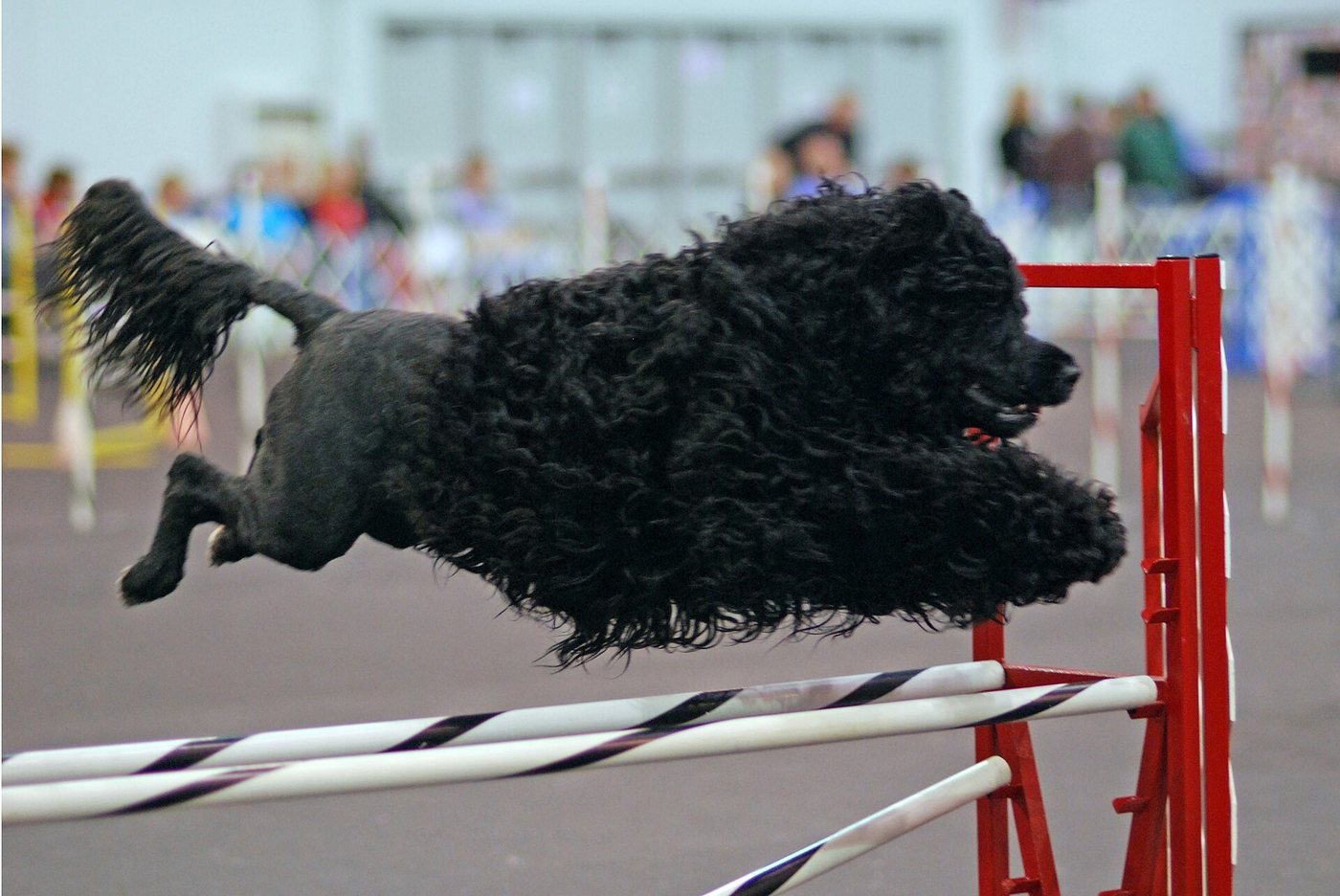
An athletic, medium-sized water dog with a distinctive single coat of tight curls or waves, in black, liver, or brown, sometimes with white markings. Traditionally clipped in the 'lion clip' — hindquarters and muzzle shaved, hair left on the chest and a pompon on the tail — a working cut that aids swimming while protecting the chest and joints. The build is sturdy and off-square, made for endurance in cold water.
Care & daily life
Plan one to one and a half hours of daily exercise, with swimming and retrieving high on the list — this is a working water dog, not a couch ornament. The coat does not shed but grows continuously: brush and comb weekly to the skin and clip every month or two. Keep ears clean and dry, since water work plus hairy ear canals invites infection.
Health & lifespan
The Portuguese Water Dog is generally known for the following health watch-points:
- Hip dysplasia
- Progressive retinal atrophy (DNA-testable)
- GM1 storage disease — a fatal inherited disorder, eliminated from tested lines by DNA screening
- Juvenile dilated cardiomyopathy — also DNA-testable; breeders should show results
- Ear infections are common in this water-loving, hairy-eared breed
Living with a Portuguese Water Dog
A Portie suits active homes — swimmers, hikers, boaters, and families who want a dog in the middle of everything. It can adapt to apartment life only with serious daily exercise and mental work. These dogs are people-focused and do poorly left alone and under-stimulated for long hours.
History
For centuries the Cão de Água worked alongside Portuguese fishermen from the Algarve to Iceland: herding fish into nets, retrieving lost gear, diving and swimming messages between boats. Mechanisation nearly ended the breed — by the 1930s it was nearly extinct — before Vasco Bensaude and later American fanciers, notably Deyanne Miller, rebuilt it. The AKC recognised the breed in 1983, and it became world-famous as the Obamas' White House dog.