Overview
The Chesapeake Bay Retriever is the rugged American of the retriever family: developed by market hunters on Maryland's eastern shore to retrieve ducks from freezing, choppy water all day, in weather that grounded other breeds. Chessies kept that toughness, along with a one-family devotion and a protective streak that sets them apart from the sunnier Labrador and Golden.
Temperament & personality
Bright, sensitive, and notably determined. A Chessie bonds hard to its people, is reserved with strangers, and has strong opinions about its job — owners describe a dog that thinks. Training needs to be consistent and respectful; this breed remembers unfair treatment and responds far better to clear, calm leadership than force. Properly raised, they are steady, happy, and deeply loyal.
Appearance
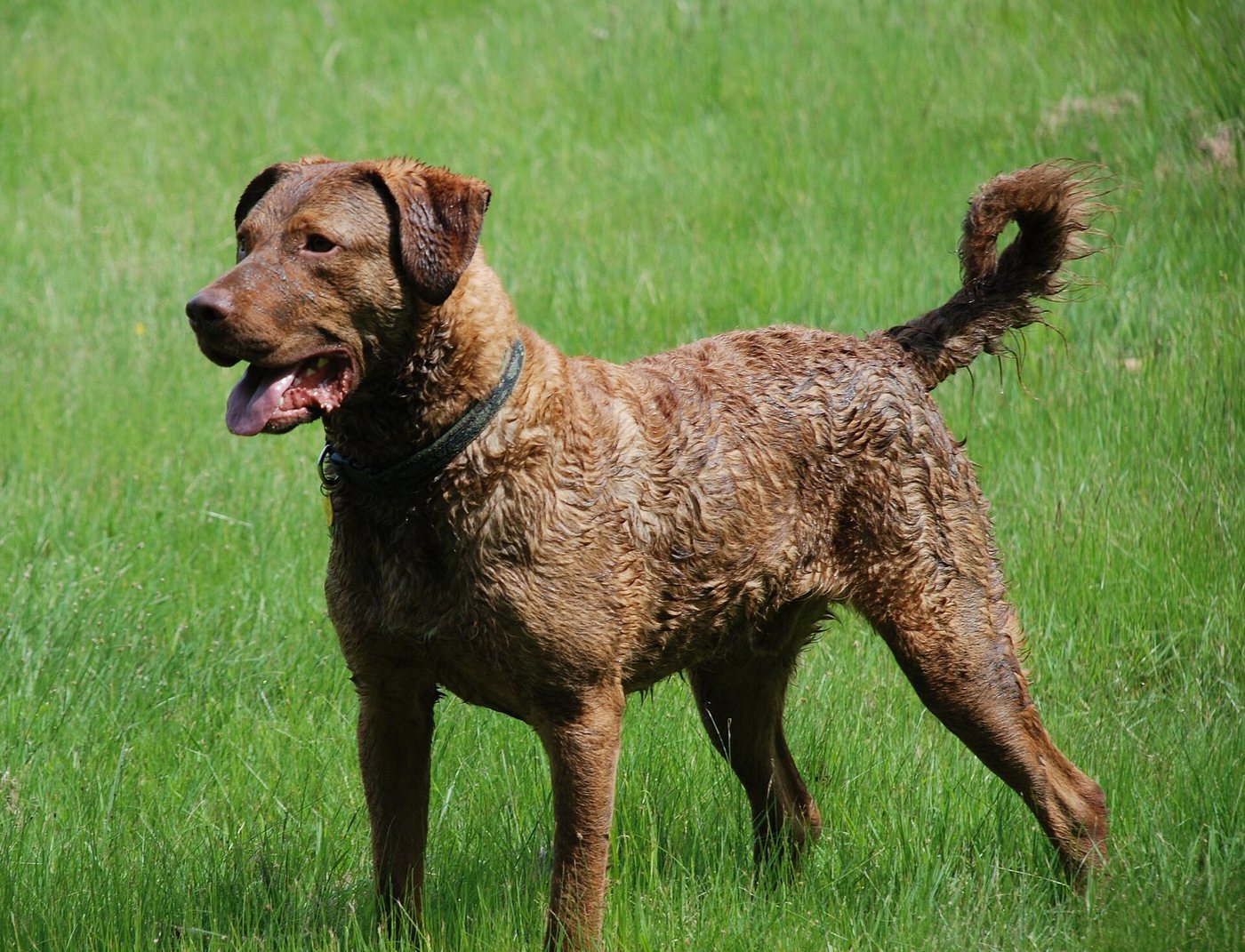
A powerful, well-muscled retriever with a broad head, amber-to-yellow eyes, and a distinctive wavy, oily double coat built for icy water. Colours run from dark brown through reddish 'sedge' to straw-like 'deadgrass', the shades of the marsh it works in. The Chessie's intense, searching expression is pure working dog.
Care & daily life
One and a half to two hours of exercise daily, ideally including swimming and retrieving — this is a high-endurance athlete. The oily double coat needs only weekly brushing; bathe rarely, since soap strips the waterproofing oils. Training must be consistent and fair: Chessies are intelligent and strong-willed, and harsh methods backfire badly with this sensitive breed.
Health & lifespan
The Chesapeake Bay Retriever is generally known for the following health watch-points:
- Hip dysplasia — screened by responsible breeders
- Degenerative myelopathy — a progressive spinal condition; DNA-testable
- Progressive retinal atrophy and exercise-induced collapse (both DNA-testable)
- Von Willebrand's disease, a bleeding disorder, occurs in the breed
- Bloat risk as in other deep-chested breeds; ear infections from constant swimming
Living with a Chesapeake Bay Retriever
Chessies need active, outdoorsy homes — hunters, swimmers, hikers — with space and a real job for the dog. They form deep bonds with their families and can be protective of them and their property, so early socialization matters. Not a dog-park extrovert or an apartment couch dog; a working partner looking for work.
History
The breed traces to 1807, when two Newfoundland-type puppies were rescued from a wrecked English brig in the Chesapeake Bay and bred to local retrievers by Maryland duck hunters. The result was a dog that could break ice, swim for hours in freezing water, and guard the day's take — and in 1964 the Chesapeake Bay Retriever became Maryland's official state dog.