Overview
The English Springer is the quintessential spaniel: a tireless, tail-wagging gundog bred to flush ('spring') game birds from dense cover, then retrieve them tenderly. Show and field lines have diverged in looks and intensity — field-bred Springers are leaner and more driven, show dogs heavier-coated and calmer — but both share the breed's defining traits: boundless enthusiasm, a soft heart, and a desire to work closely with their people all day long.
Temperament & personality
Springers are among the friendliest and most eager-to-please of all breeds, typically excellent with children, other dogs, and strangers alike. They are energetic and can be boisterous youngsters, but they are also famously trainable and biddable — this is a breed that wants instructions. They form strong attachments and dislike being left out of family life; a lonely Springer can become anxious and noisy. Field-bred dogs in particular need a serious daily workload.
Appearance
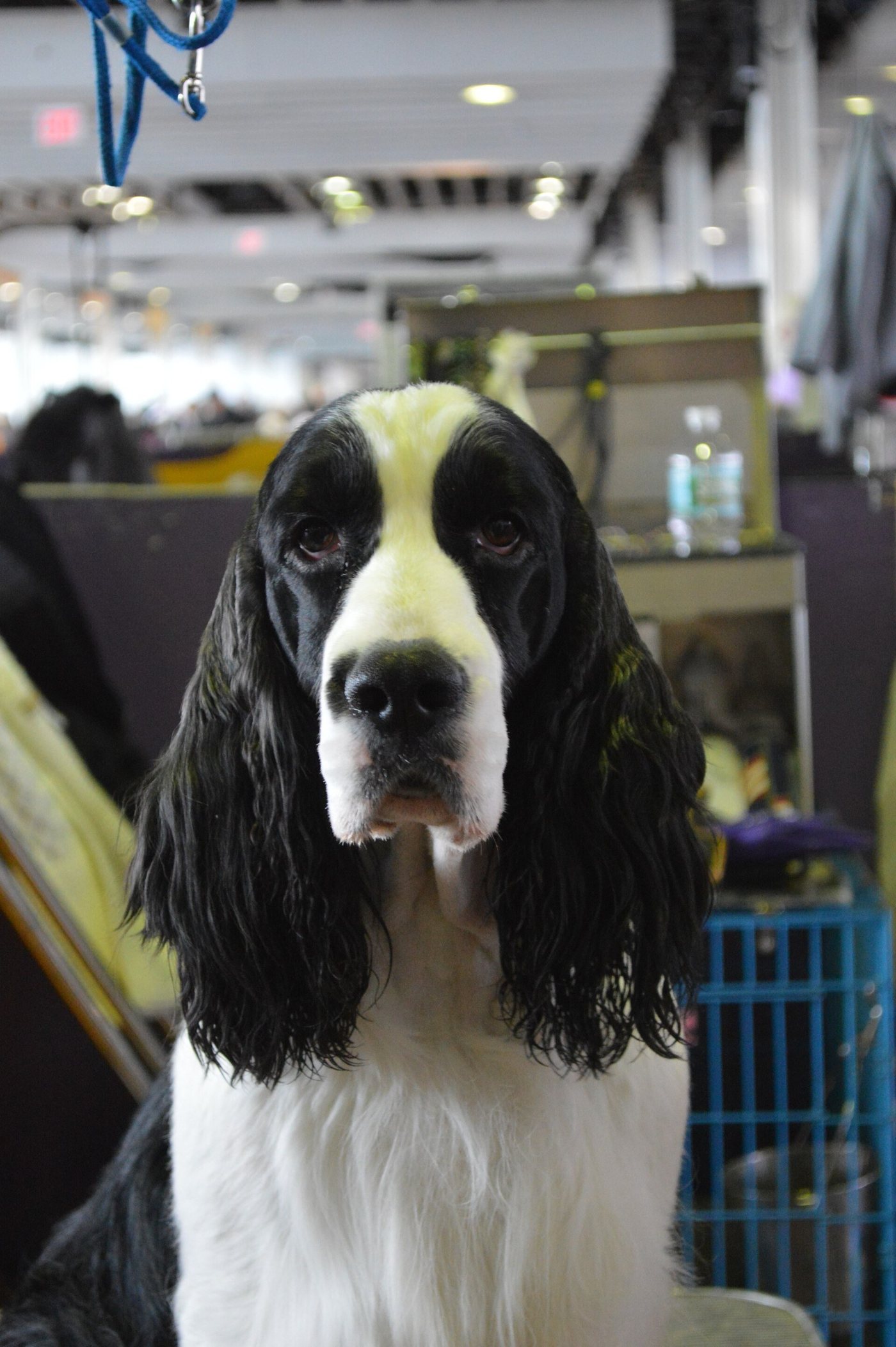
A compact, sturdy dog, a little longer than tall, with long drop ears, expressive hazel or brown eyes, and a medium-length coat with feathering on the ears, chest, legs, and belly. Colours are liver-and-white or black-and-white, sometimes with tan markings. The tail — docked in some countries, natural in others — seems to be in near-constant motion when the dog is happy, which is often.
Care & daily life
One and a half to two hours of exercise a day is the realistic figure, ideally including off-lead running, retrieving, swimming, or gundog-style training that uses the breed's nose and brain. Brush two to three times a week to keep the feathering free of tangles and burrs, trim as needed, and check the long ears regularly — spaniel ears trap moisture and are prone to infection. Keep weight in check; Springers love food.
Health & lifespan
The English Springer Spaniel is generally known for the following health watch-points:
- Hip and elbow dysplasia
- Progressive retinal atrophy and other inherited eye conditions — breeding stock should be eye-tested and DNA-tested
- Phosphofructokinase (PFK) deficiency, a DNA-testable enzyme condition, occurs in the breed
- Ear infections are common thanks to the long, heavy ear flaps
- Immune-mediated conditions and epilepsy are seen at modest rates
Living with a English Springer Spaniel
Springers fit active families beautifully — especially rural and suburban homes with space to run and people who enjoy training and outdoor life. They can adapt to town living only with serious daily exercise. Choose the line carefully: a field-bred Springer in a quiet apartment is a mismatch, while a show-line dog still needs far more activity than most people expect from a medium-sized dog.
History
Spaniels are among the oldest gundog types, and the Springer — named for its job of springing game into the air for nets, hawks, and later guns — was for centuries simply the larger dog from spaniel litters that also produced Cockers. The breeds were formally separated in the early 1900s, and the English Springer was recognized by the AKC in 1910. It remains one of the most successful dual-purpose gundogs in the world, dominant in spaniel field trials and detection work alike.