Overview
The Pointer is the original pointing dog — the breed that gave the verb to the hunting world. For three centuries it has been refined for one purpose: galloping over huge ground, finding birds by scent, and freezing into a statuesque point. That single-minded athleticism defines the pet dog too. A Pointer is a sweet-natured, even-tempered companion with the engine of a racehorse.
Temperament & personality
Even-tempered is the standard's word, and owners agree: Pointers are kind, stable, and sociable dogs that generally like everyone, including other dogs. They are less clingy than many sporting breeds and more independent in the field, where they work at a distance. Indoors, a well-exercised Pointer is calm and affectionate; an under-exercised one is a demolition crew.
Appearance
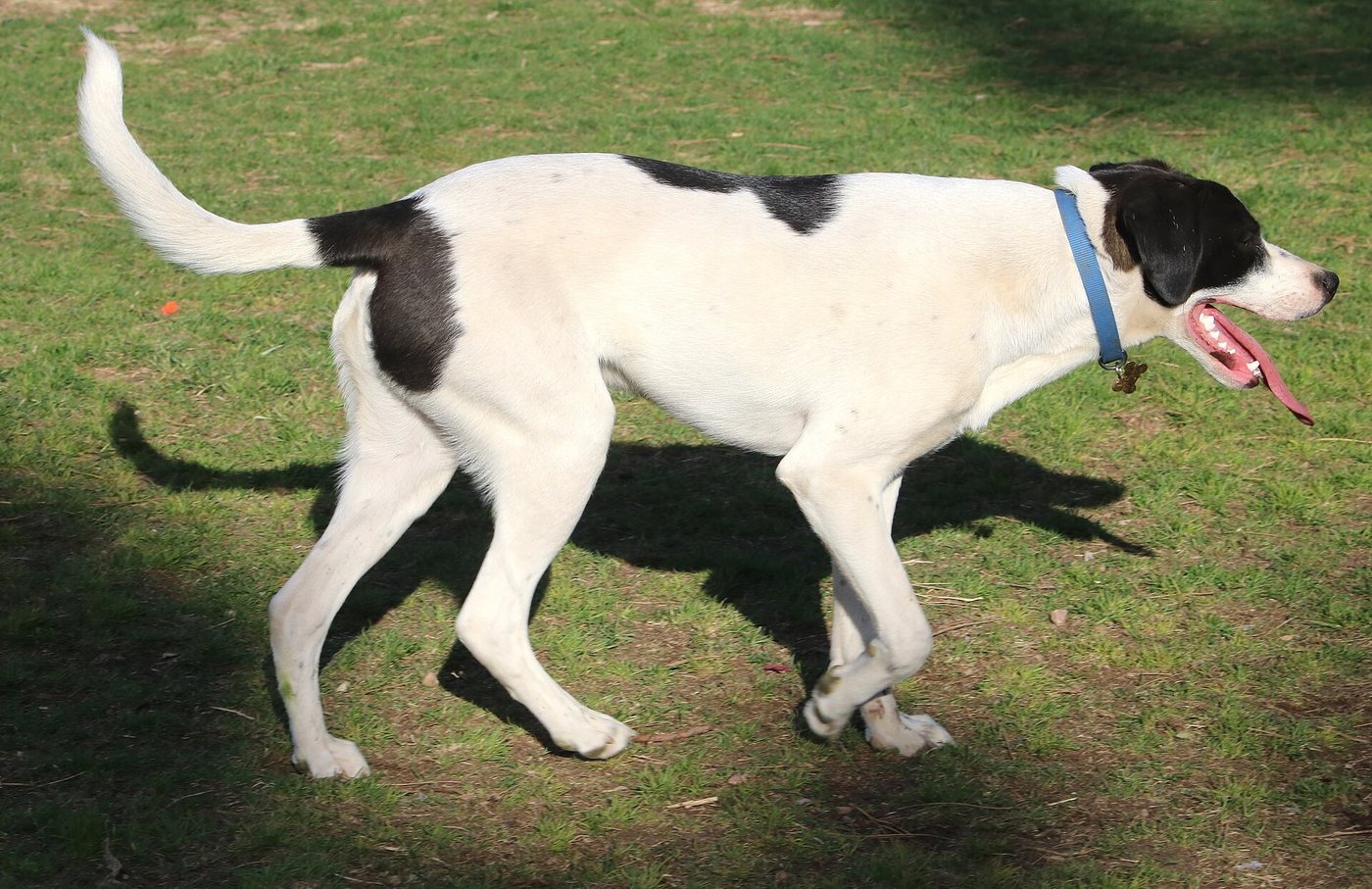
A lean, racy athlete built for speed in the field: short, dense coat in solid liver, black, orange, or lemon, with or without white. Long head with a kindly, intelligent expression, moderately long ears, and a tail traditionally carried as a proud, horizontal 'flag' when the dog scents game.
Care & daily life
Pointers are among the highest-energy of all breeds — two hours of vigorous exercise daily is a working minimum for young adults, ideally including off-lead running and retrieving in safe areas. They were bred to quarter fields for hours and will dismantle a quiet household if under-run. The short coat needs just a weekly brush, and their thin skin benefits from checks after rough-cover work.
Health & lifespan
The Pointer is generally known for the following health watch-points:
- Hip dysplasia
- Hypothyroidism
- Eye conditions including progressive retinal atrophy
- Neurotropic osteopathy (a rare spinal condition seen in young Pointers) and deafness are reported in the breed
- Overall a notably healthy, long-lived breed
Living with a Pointer
For runners, riders, hunters, and very active families with space. Pointers settle nicely indoors after real exercise and are gentle housemates, but they are among the worst possible choices for quiet homes — their need to run is non-negotiable. A house with land or serious daily access to open ground suits them best.
History
Pointing dogs of this type were refined in England in the 17th and 18th centuries, likely from Spanish and French pointing stock crossed with foxhounds and setters for speed and nose. The breed became the quintessential dog of the British driven shoot, 'pointing' game birds by freezing into its famous stance. Field-trial lines in America pushed the speed and range even further.