Overview
The German Shorthaired Pointer is the Swiss Army knife of gundogs: bred to point birds, retrieve from land and water, track game, and then come home and be a family dog. It performs all of that at maximum enthusiasm. The GSP is one of the most capable and rewarding sporting breeds — and one of the most demanding, with an energy budget that shapes its owner's whole lifestyle.
Temperament & personality
Friendly, smart, and unstoppably enthusiastic. Shorthairs bond closely with their families, are good with children (if boisterous), and approach every activity at full voltage. They are cooperative learners who thrive on variety and work; without it, the same brains and drive produce escape artistry and home renovation. A tired GSP is a sweet, clownish house dog.
Appearance
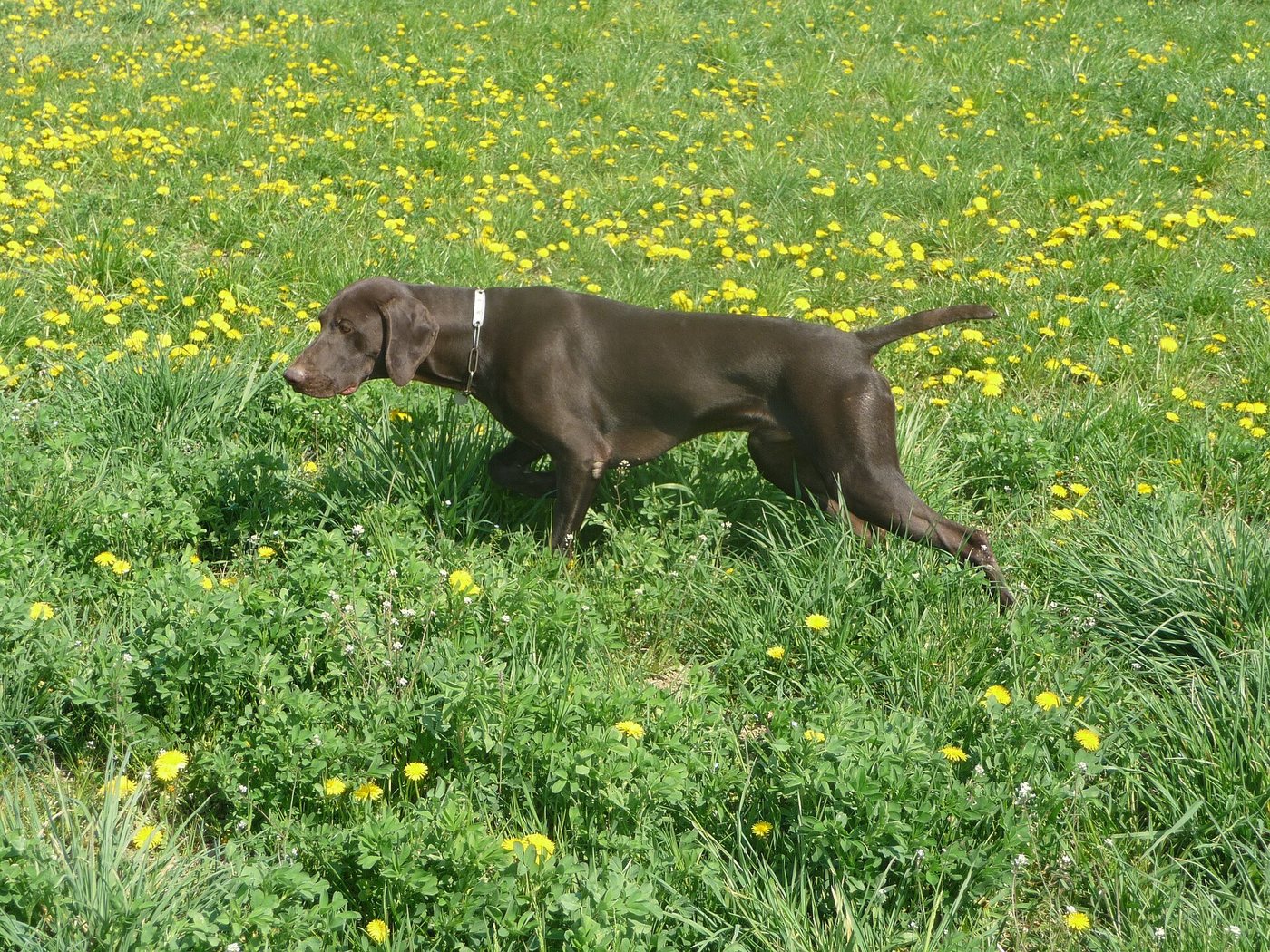
A lean, athletic pointer with a short, dense coat in solid liver or liver-and-white (patched or ticked), a long noble head, and an expression of total focus. The docked tail (where practised) and chiselled build are pure gundog. Shorthairs look permanently ready — coiled, bright-eyed, and built to run all day.
Care & daily life
This breed's energy is the contract: budget two hours a day of real exercise, ideally including off-lead running, swimming, or field work. A bored Shorthair is a demolition crew — they climb, dig, and invent projects. The short coat needs only weekly brushing. Training should start early and stay interesting; GSPs are brilliant, versatile learners who excel at everything from hunting to agility to scent work.
Health & lifespan
The German Shorthaired Pointer is generally known for the following health watch-points:
- Hip dysplasia — screened by responsible breeders
- Bloat (gastric dilatation-volvulus), as in other deep-chested athletic breeds
- Von Willebrand's disease, a bleeding disorder (DNA testing available)
- Entropion and other eyelid/eye conditions; progressive retinal atrophy occurs
- Lymphedema, and cancers including hemangiosarcoma, occur in the breed; conotruncal heart defects are documented
Living with a German Shorthaired Pointer
Shorthairs belong with active people: hunters, trail runners, and families who live outdoors. They need space, secure fencing (they are escape artists), and near-constant inclusion in family activity. Apartments and quiet households are a poor match — a GSP's needs are not negotiable, just meetable.
History
German hunters of the 19th century wanted one dog that could do everything — point, retrieve, track, on land and in water — and built the Shorthair from Spanish and English pointers, scent hounds, and local German hunting dogs. The breed reached America in the 1920s and became a fixture of US field trials and hunting culture, prized as the complete versatile gundog.