Overview
The German Wirehaired Pointer is Germany's answer to the all-weather, all-purpose gundog: a dog bred to point birds, retrieve ducks from icy water, track, and keep going in thorny cover that would shred a softer coat. That versatility comes packaged with intensity — this is a keen, driven, highly athletic breed that thrives with outdoors people and wilts in a sedentary home.
Temperament & personality
With its family the Wirehair is affectionate, loyal, and often comically expressive; with strangers it tends to be watchful and reserved. It is smart and eager but has an independent streak born of field work, so training should be consistent, fair, and started early. This breed bonds hard and wants a job — give it one, or it will appoint itself to something you did not have in mind.
Appearance
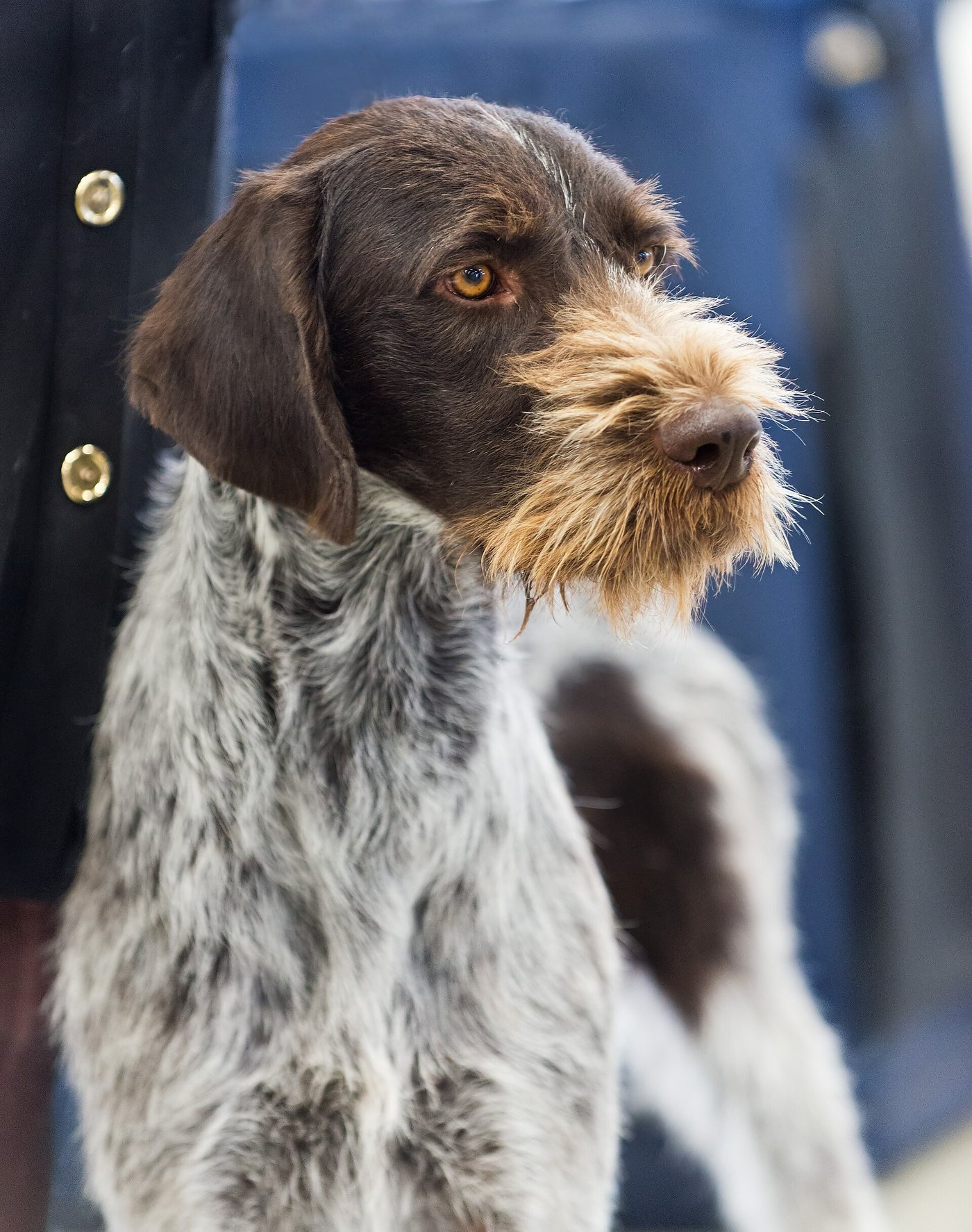
A rugged, athletic gundog built for bad weather: a harsh, wiry double coat with a pronounced beard, eyebrows, and leg furnishings gives the face a wise, almost human expression. The liver-and-white coat comes solid, ticked, or spotted, and the tail is usually docked where legal. Everything about the dog looks weatherproof, because it is.
Care & daily life
This is a high-output dog: plan on at least one and a half to two hours of real activity daily, ideally including off-leash running, swimming, and training work. The wiry coat sheds lightly but needs a thorough weekly brushing out of the undercoat and occasional hand-stripping to keep its texture; a stripped or clipped beard area stays tidier. Feed for the work the dog actually does — active GWPs burn serious calories.
Health & lifespan
The German Wirehaired Pointer is generally known for the following health watch-points:
- Hip and elbow dysplasia
- Von Willebrand's disease, a bleeding disorder (DNA-testable)
- Hypothyroidism
- Eye conditions such as entropion and cataracts
- Heart disease, including subaortic stenosis, occurs in some lines
Living with a German Wirehaired Pointer
A Wirehair needs an active, outdoorsy home — ideally with hunting, hiking, swimming, or dog sports in the weekly routine. It is a poor fit for sedentary or apartment-only living unless exercise is taken very seriously. Bored GWPs become inventive and destructive, and their prey drive means fences and leashes are not optional around wildlife or cats.
History
German hunters of the late 1800s wanted one dog that could do everything: point, retrieve on land and water, track wounded game, and work in the harshest cover. They crossed the German Shorthaired Pointer with wire-coated breeds including the Griffon, Stichelhaar, and Pudelpointer, producing the Deutsch Drahthaar. The breed reached the United States in the 1920s and was recognised by the AKC in 1959.