Overview
The Norwich Terrier is a pocket-sized working terrier with a scholar's pedigree — literally, having been the beloved ratter of Cambridge students in the Victorian era. Small enough to live in college rooms and game enough to clear a stable yard, it remains one of the most charming terriers: hardy, affectionate, busy, and always ready. Its pricked ears distinguish it from its drop-eared Norfolk sibling.
Temperament & personality
Alert, affectionate, and thoroughly fearless. Norwich are among the most people-focused terriers, happiest as full-time companions rather than kennel dogs, and typically steady with children and sociable with other dogs for a terrier. The independence is still there — training should be cheerful and consistent — as is the prey drive, so cats that run and free-roaming rodents are asking for a chase.
Appearance
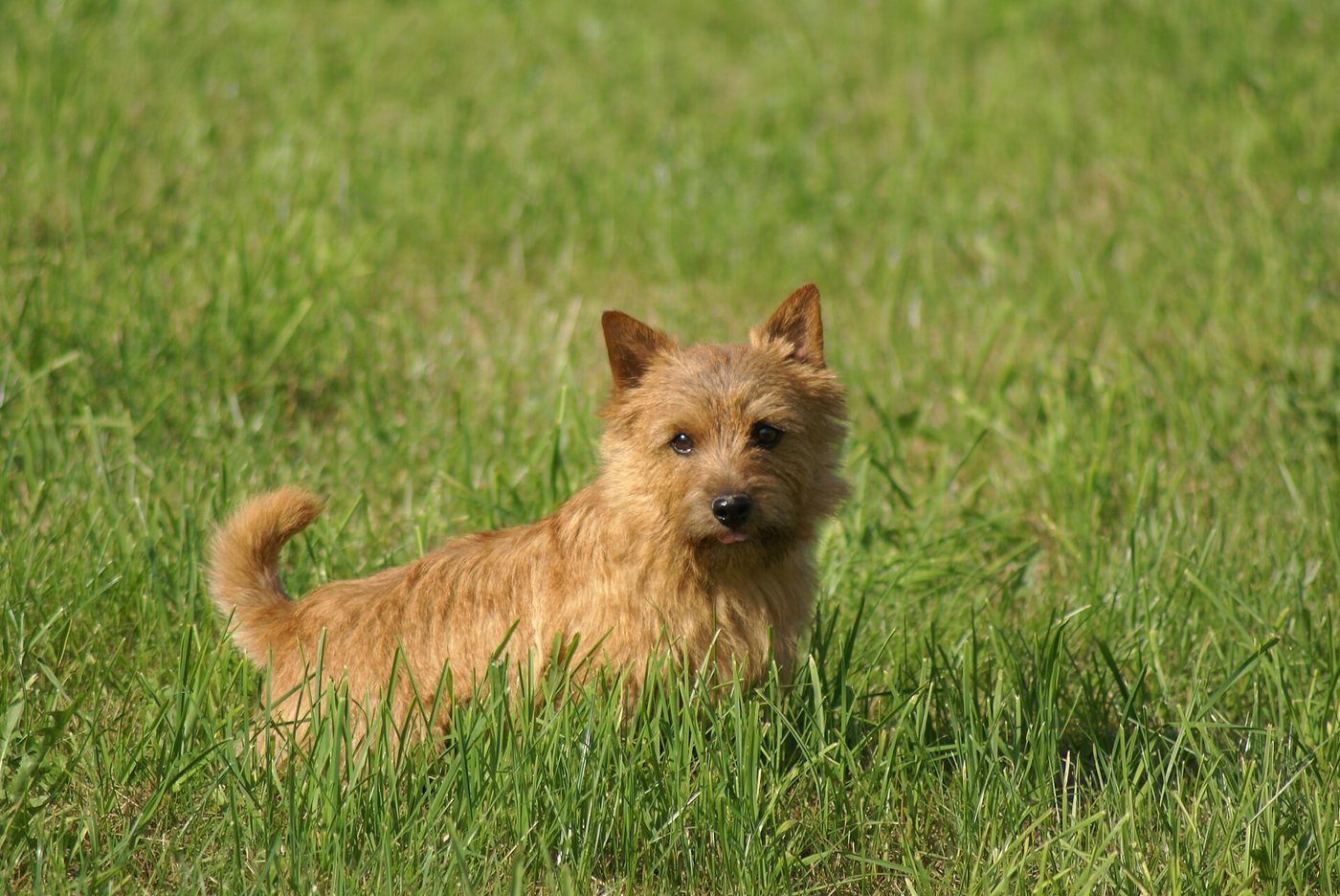
A compact, merry terrier with a hard, wiry double coat in red, wheaten, grizzle-and-tan, or black-and-tan, a keen fox-like face, small dark eyes full of mischief, and — its badge of identity — sharply pricked, pointed ears. (Its drop-eared sibling is the Norfolk.) Sturdy, short-legged, and weatherproof, it is a working terrier in a portable frame.
Care & daily life
About an hour a day of walks, play, and terrier-appropriate mischief management — digging pits and scent games are kindnesses, not indulgences. The wiry coat needs hand-stripping a few times a year to keep its harsh texture (or regular clipping, accepting a softer coat), plus weekly brushing. Check the teeth in puppyhood for retained baby teeth, a common small-terrier issue, and keep this food-motivated breed lean.
Health & lifespan
The Norwich Terrier is generally known for the following health watch-points:
- Upper airway syndrome — a breed-recognised breathing problem; ask breeders about airway screening and avoid breeding from noisy breathers
- Hip dysplasia, despite the small size
- Patellar luxation (slipping kneecaps)
- Epilepsy is reported in the breed
- Eye screening is recommended in breeding stock
Living with a Norwich Terrier
Norwich adapt happily to apartments and country life alike, provided they get their hour of activity and plenty of human company. They are among the most affectionate terriers and dislike long solitude. Secure fencing and care around small pets come with the terrier territory.
History
In the 1880s, small red terriers became fashionable ratters among Cambridge undergraduates — the 'Cantab terriers' lived in stables and student lodgings around Trumpington Street. Horseman Frank Jones developed and sold the type widely, exporting to America, where they were called Jones Terriers. Shown for decades as Norwich Terriers in both ear types, the prick-eared dogs kept the Norwich name when the breeds split.