Overview
The Norfolk Terrier is one of the smallest of the working terriers — a drop-eared, whiskery ratter and fox-bolter bred for the farms of East Anglia. What sets it apart in the terrier family is temperament: Norfolks were expected to work alongside other dogs, and they kept a gregarious, good-humoured streak that makes them unusually easy terriers to live with. Small, hardy, and game for anything is the breed in one line.
Temperament & personality
Alert, affectionate, and fearless without being quarrelsome. Norfolks are people-oriented, portable adventure companions who are typically steadier with children and other dogs than most terriers. They retain a proper terrier's independence and prey drive, so training should be upbeat and consistent, and off-leash freedom belongs in fenced areas only.
Appearance
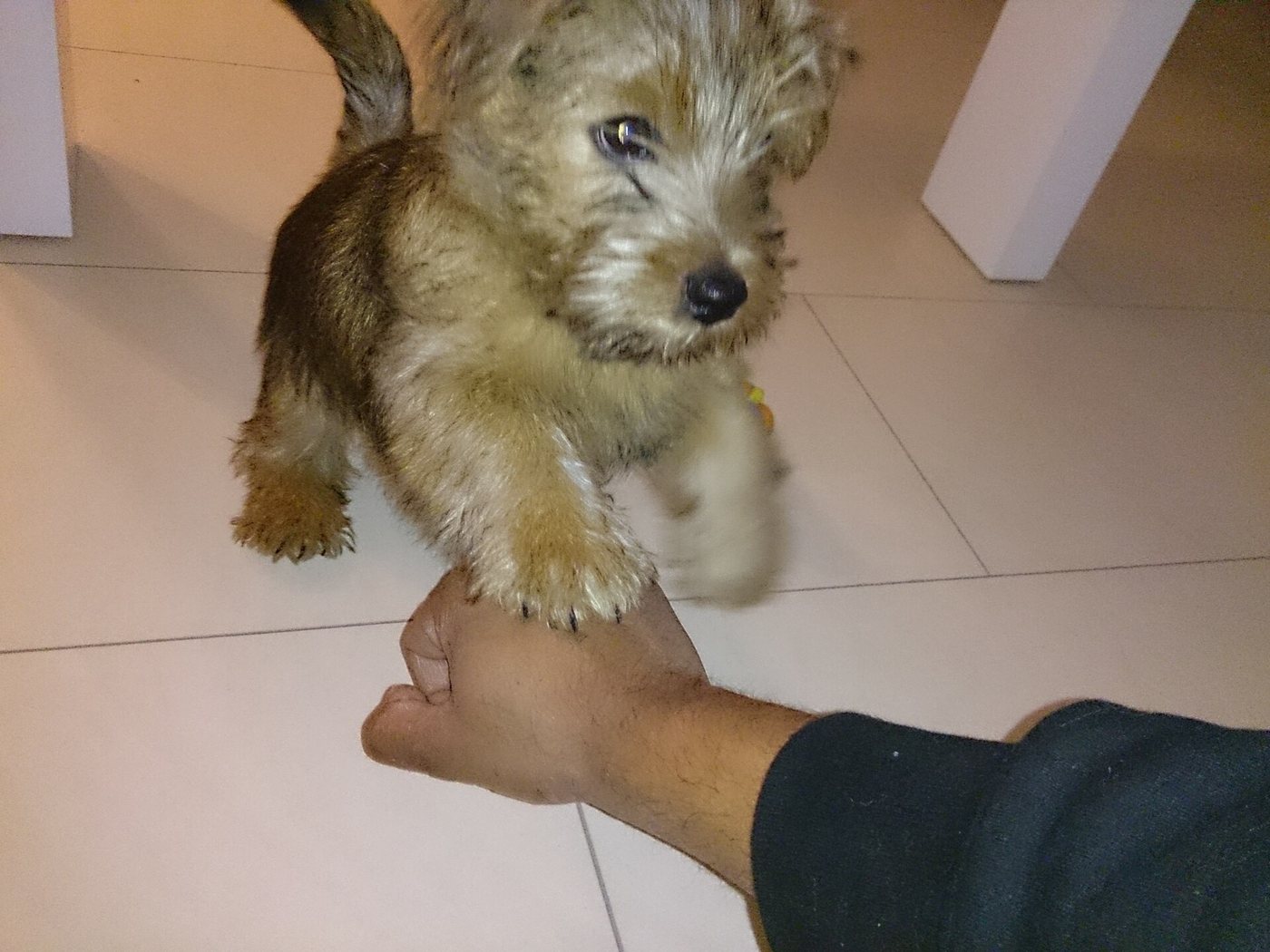
A small, sturdy, big-hearted terrier with a hard, wiry double coat in red, wheaten, grizzle-and-tan, or black-and-tan, a fox-like face, and — the giveaway — dropped ears that fold forward. Its near-twin, the Norwich, carries its ears pricked up; the Norfolk lets them fall. Weatherproof, whiskery, and built low to the ground for going to earth.
Care & daily life
About an hour a day of walks and play, plus chances to dig and explore legally — this is a working earth dog in a small suit. The wiry coat needs hand-stripping a few times a year to keep its texture and colour (clipping is easier but softens the coat), plus weekly brushing. Small terriers crowd their teeth, so dental care matters; keep baby teeth checked at the first vet visits.
Health & lifespan
The Norfolk Terrier is generally known for the following health watch-points:
- Mitral valve disease — heart screening is a genuine priority in this breed
- Patellar luxation (slipping kneecaps)
- Hip dysplasia occurs despite the small size
- Dental crowding and retained baby teeth are common in small terriers
- Eye screening is recommended in breeding stock
Living with a Norfolk Terrier
Norfolks pack working-terrier character into an apartment-friendly size, and they are among the easiest terriers for multi-dog homes thanks to their pack heritage. They still need secure fencing, supervised time around small pets, and owners who enjoy an energetic, opinionated little dog rather than a lap decoration.
History
In the early 1900s, horseman Frank Jones of Norwich bred small red terriers from local stock for East Anglian farms and stables, selling them as far as America. The resulting 'Jones Terriers' — shown for decades as Norwich Terriers of both ear types — split into two breeds: the Kennel Club separated drop-ears in 1964 and the AKC followed in 1979, creating the Norfolk.