Overview
For three decades the Labrador was the most registered breed in the United States, and the reasons are simple: it is friendly with everyone, athletic enough for any adventure, and smart enough for serious work — guide dogs, detection, search and rescue, and of course retrieving. A Lab is a big, boisterous, joyful dog that needs an active life.
Temperament & personality
Labs are famously good-natured, patient, and sociable. Young Labs are exuberant to a fault and mature slowly; chewing and boisterous greetings are the usual complaints, both eased by exercise and training. They are lovers, not guards — most will greet an intruder with a wagging tail and a toy.
Appearance
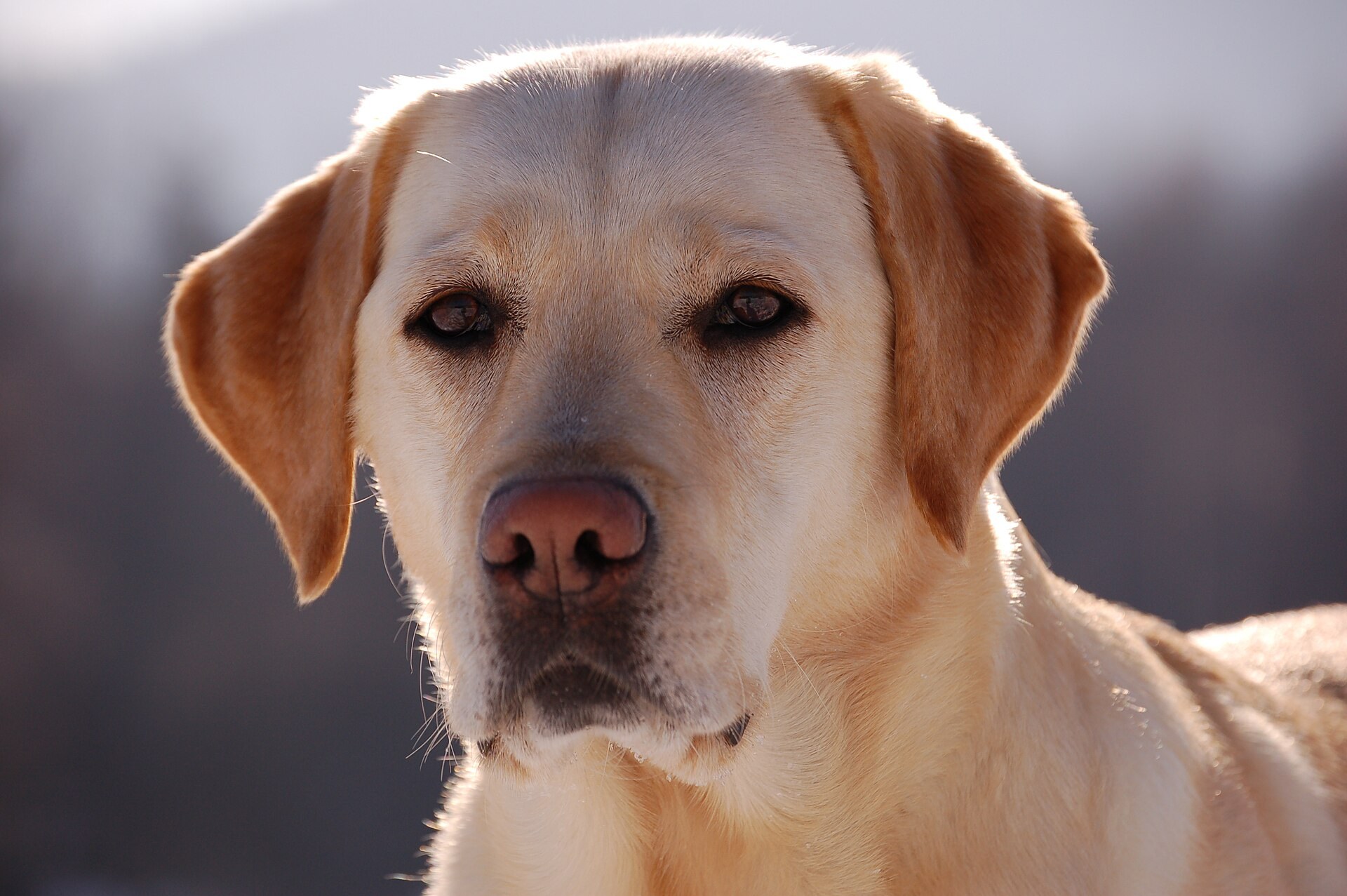
A solidly built, athletic dog with a broad head, kind eyes, drop ears, and the famous thick 'otter tail' used as a rudder in water. The short, dense double coat is weather-resistant and comes in three recognised colours: black, yellow (cream to fox red), and chocolate.
Care & daily life
This breed needs real exercise — at least an hour and a half daily, ideally including retrieving and swimming, which Labs are built for. Their appetites are legendary and many carry a gene variant that makes them feel perpetually hungry; measure food, limit treats, and keep them lean. Brush weekly, daily during the twice-yearly shed.
Health & lifespan
The Labrador Retriever is generally known for the following health watch-points:
- Obesity — Labs are genetically prone to overeating and weight gain
- Hip and elbow dysplasia
- Exercise-induced collapse and progressive retinal atrophy (both DNA-testable)
- Ear infections, thanks to swimming and floppy ears
- A higher-than-average risk of cruciate ligament tears
Living with a Labrador Retriever
Labs thrive in active homes — families, runners, hikers, hunters, and anyone who wants a dog woven into daily life. They can manage apartment living only with serious daily exercise. A bored, under-exercised Lab is a chewing project with four legs.
History
The breed began as the St. John's water dog of Newfoundland, helping fishermen retrieve nets, lines, and fish from icy water. Imported to England in the 1800s, it was refined by sporting nobles into the modern gundog and recognised by the Kennel Club in 1903.