Overview
The Golden Retriever is one of the most popular family dogs in the world, and it earned that place honestly: few breeds combine intelligence, patience, and an eagerness to be part of everything the family does. Bred in the Scottish Highlands as a gundog that could retrieve waterfowl from rough ground and cold water, the Golden still carries that working heritage — it loves a job, loves water, and loves people most of all.
Temperament & personality
Goldens are famously even-tempered. They are playful without being hyper, affectionate without being clingy, and they keep a puppyish outlook well into adulthood, usually settling around age two or three. They are poor guard dogs — a stranger is usually greeted as a friend they haven't met yet — but excellent companions for active households. Left alone and unexercised for long stretches, a bored Golden can become destructive, so this breed does best where someone is around for much of the day.
Appearance
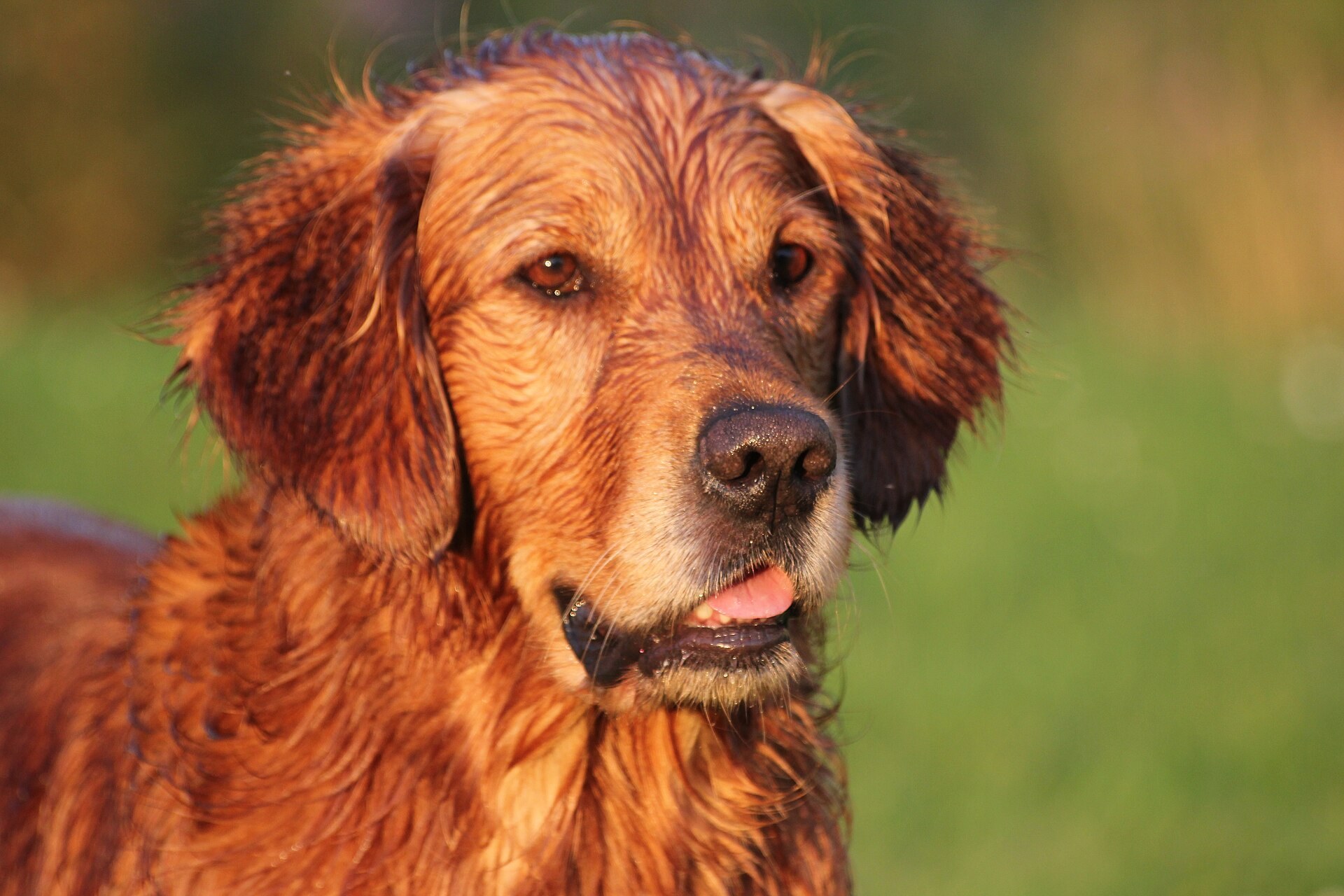
A sturdy, well-balanced dog with a broad head, friendly dark eyes, and a dense double coat that ranges from light cream to deep gold. The outer coat is water-repellent and can be straight or wavy; the feathering on the chest, legs, and tail is part of the classic look. That luxurious coat comes at a price: Goldens are heavy shedders.
Care & daily life
Plan on one to two hours of exercise a day — walks, fetch, swimming, or training games — plus regular mental work, because this is a smart breed that gets bored. Brush two or three times a week to manage shedding and prevent mats, more during the spring and fall coat blows. Feed a measured, quality diet and watch the waistline: Goldens gain weight easily, and obesity shortens their lives.
Health & lifespan
The Golden Retriever is generally known for the following health watch-points:
- Cancer — Goldens have one of the highest cancer rates of any breed; studies suggest a majority are affected in their lifetime
- Hip and elbow dysplasia
- Heart conditions, including subvalvular aortic stenosis
- Eye conditions such as pigmentary uveitis and cataracts
- Hypothyroidism and skin allergies are also relatively common
Living with a Golden Retriever
Goldens adapt to apartments only if their exercise needs are genuinely met every day; a house with a yard suits them better. They thrive in families with children, multi-dog homes, and active singles alike — the common thread is time and attention. They are not outdoor kennel dogs; a Golden wants to be where its people are.
History
The breed was developed in the mid-1800s on the Guisachan estate of Dudley Marjoribanks, later Lord Tweedmouth, in the Scottish Highlands. He crossed the now-extinct yellow Tweed Water Spaniel with wavy-coated retrievers and later added Irish Setter and Bloodhound, producing a dog that could work all day in cold lochs and dense cover. The Golden was recognized by the UK Kennel Club in 1913 and the AKC in 1925.