Overview
The Basset Hound is a study in delightful contradiction: a dog built like a joke — enormous ears, a mournful face, legs that seem borrowed from a smaller animal — that is in fact one of the finest scenting machines ever bred, second only to its Bloodhound cousin. Bassets were designed to track rabbits and hare slowly and relentlessly, and they bring that same unhurried determination to family life, along with a patience with children that few breeds match.
Temperament & personality
Charming, patient, and low-key. Bassets are sociable with people and other dogs, famously tolerant, and stubborn in the particular hound way: they are not defying you, they are simply finishing the scent first. Training succeeds with food motivation and low expectations of speed; harsh methods get you a dog lying down in protest, which, at 60 pounds, ends negotiations.
Appearance
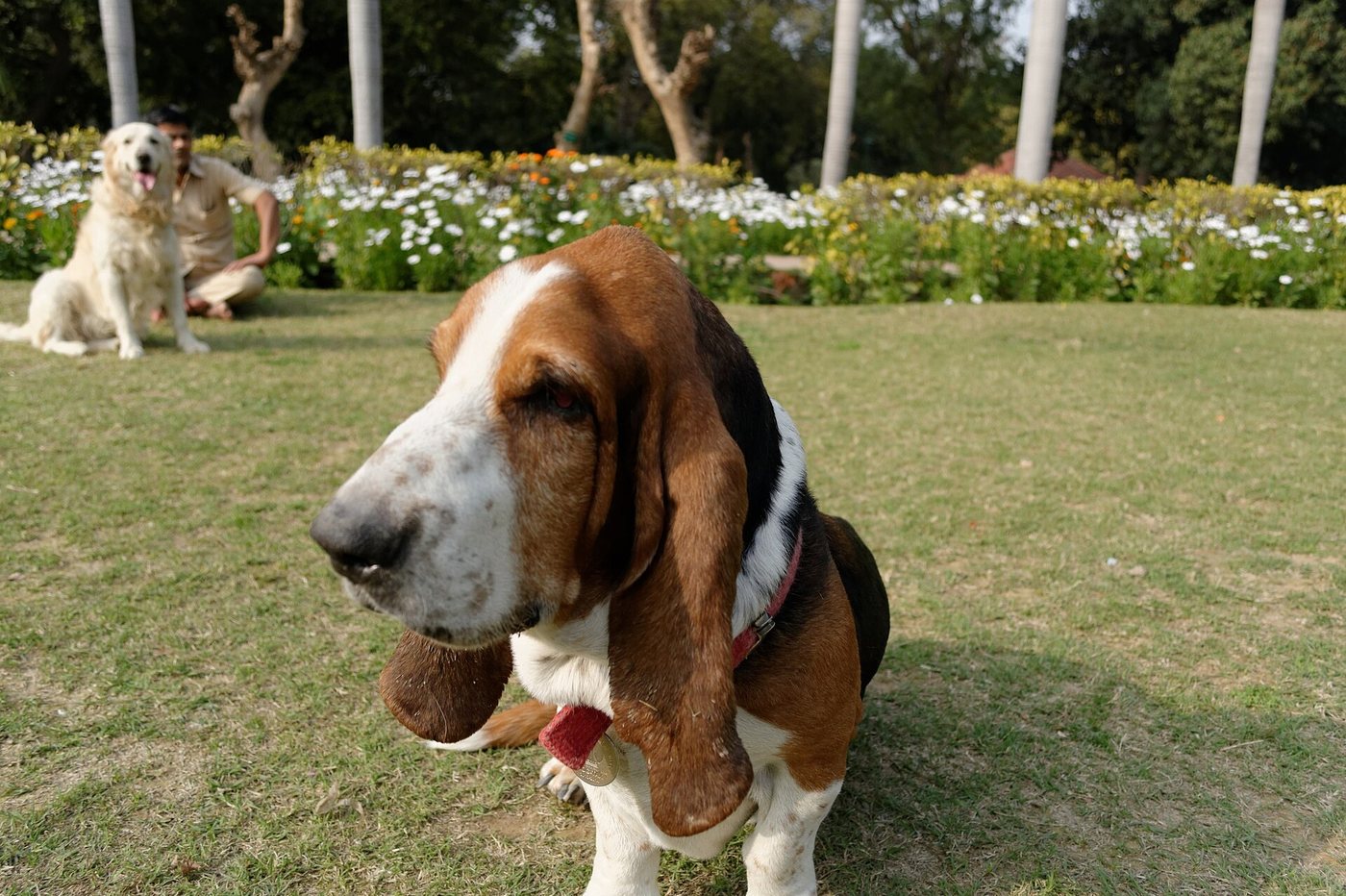
A long, low, heavy-boned hound with the longest ears in the dog world, loose wrinkled skin, a pleading, melancholy expression, and short legs under a substantial body — a big dog on short stilts. The short, smooth coat comes in hound colours: tricolour, red and white, and lemon combinations are common. Those pendant ears famously step-tangle and drag through food bowls.
Care & daily life
About an hour of moderate exercise a day — Bassets are heavier and more athletic than they look, and they need it to keep weight off a long, low frame. Never let one get fat: extra pounds punish the spine and joints. The short coat needs only a weekly brush, but ears need weekly cleaning (those long, low-airflow ears trap moisture), and skin folds should be kept clean and dry.
Health & lifespan
The Basset Hound is generally known for the following health watch-points:
- Intervertebral disc disease and back strain — the long spine under a heavy body is the breed's structural risk
- Ear infections, driven by the long, low-airflow ears
- Bloat (GDV) occurs despite the modest height — the chest is deep
- Glaucoma and inherited eye conditions occur
- Obesity is common and worsens nearly every other risk on this list
Living with a Basset Hound
Bassets fit relaxed households beautifully — families, singles, seniors — and adapt to apartments thanks to their low indoor energy, though neighbours should be warned about the baying voice. They are pack animals at heart and do best with company, human or canine, rather than long hours alone.
History
The Basset descends from the French St Hubert hounds kept by monks and aristocrats — 'basset' comes from the French 'bas,' meaning low. French hunters wanted a slow, deliberate scent hound they could follow on foot through dense cover, and the low-slung Basset was the answer. The breed reached Britain and America in the late 1800s and became a fixture of popular culture as well as the hunting field.