Overview
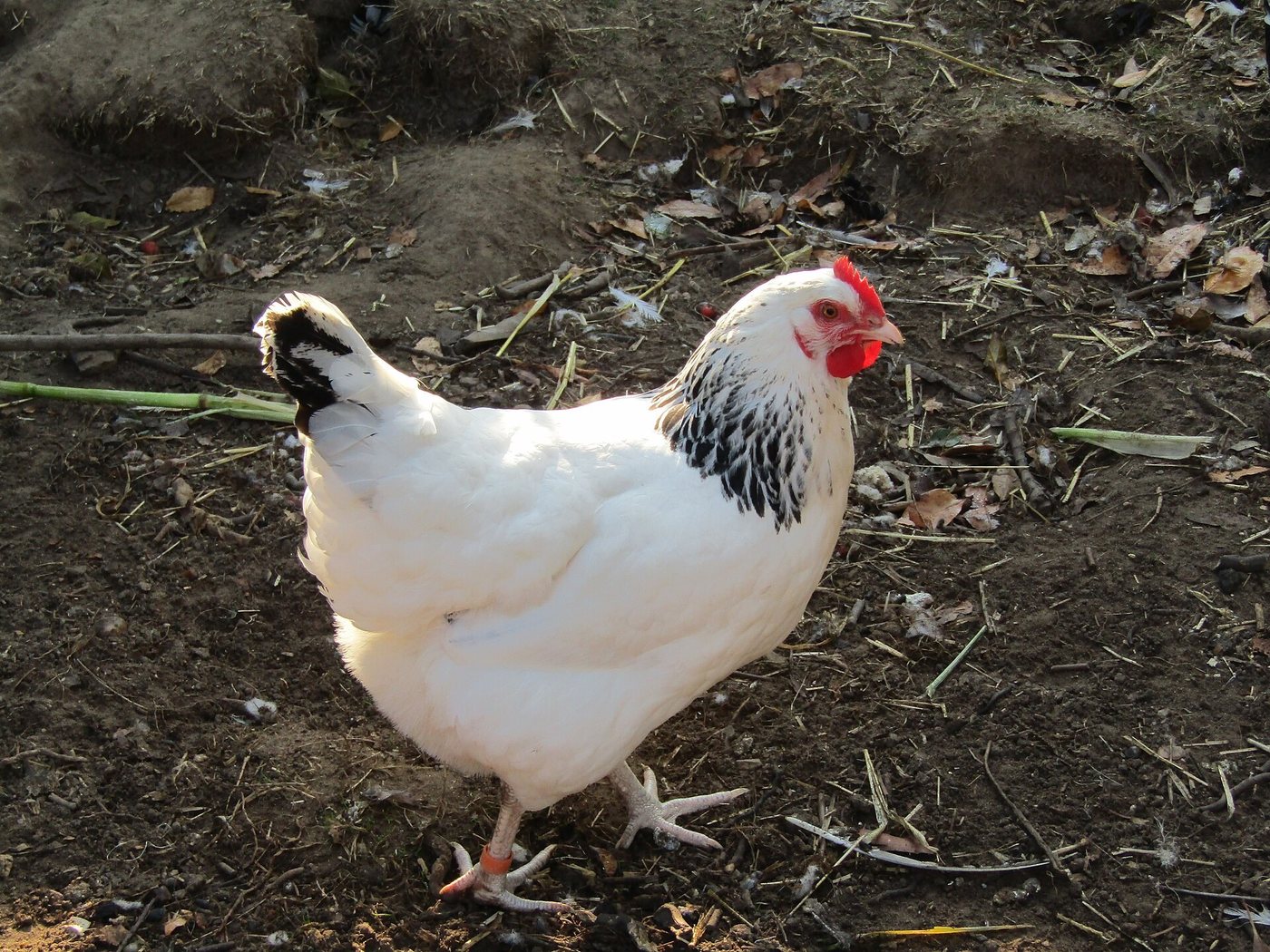
The Sussex is the breed that carried English poultry-keeping for a century: the table bird of the London markets and, almost uniquely, a genuinely good layer too — 240–280 eggs a year from a hen built like a roasting chicken. The Light Sussex, white with its black collar and tail, is one of the most handsome sights in a garden flock, and the temperament is as good as the looks: docile, curious, and companionable.
Temperament & personality
Friendly supervisors. Sussex hens patrol the garden with you, inspect every forkful of soil, and chat quietly as they go. They are confident without pushiness, sit comfortably mid-flock, and tame down with handling into hens that come when called — especially if calling involves mealworms.
Appearance
A clean-cut, elegant bird: the classic Light Sussex is white with a sharp black collar, black tail, and black flight feathers, worn with the tidy confidence of a bird in evening dress. Speckled (rich mahogany spangled with white), Red, Buff, and Coronation varieties exist. The body is long and deep with a broad back — bred for the table — pinkish-white legs, and a medium single comb.
Care & daily life
A robust, unfussy breed needing standard care: quality feed, grit, water, and a dry coop. Give them range if you can — Sussex are enthusiastic, methodical foragers that scratch up a garden thoroughly, so fence the vegetable beds. Hens that go broody are assets if you want chicks. Their size and self-possession mean they mix well with most breeds and are rarely victims or villains.
Health & lifespan
The Sussex is generally known for the following health watch-points:
- Marek's disease — vaccinate or buy vaccinated chicks
- Standard red mite, lice, and worm burdens
- Bumblefoot risk on wet ground given their size
- Internal laying and other reproductive issues in older laying hens
- Generally regarded as a robust, long-lived breed with few breed-specific problems
Living with a Sussex
Sussex suit garden keepers and families who want beauty, eggs, and good nature in one bird, and homesteaders who still value a dual-purpose frame. They live 6–10 years, forage enthusiastically (protect seedlings), and get on with children, dogs under supervision, and other breeds. A thoroughly likeable default choice.
History
Chickens recognisably ancestral to the Sussex were described in Roman Britain, and the county of Sussex refined them over centuries into England's premier table breed — the birds that supplied London's markets when 'Sussex' on a menu meant quality. The Sussex Poultry Club formed in 1903 and the Light Sussex became one of the world's most popular dual-purpose breeds, later contributing to early commercial hybrid layers.