Overview
The Plymouth Rock is the chicken version of a reliable estate car: nothing flashy, everything competent. Developed in New England as a farm dual-purpose bird, it lays a solid 200–280 brown eggs a year, dresses out well for the table, winters without complaint, and does it all with one of the calmest temperaments in the chicken world. If you are choosing a first breed and cannot decide, this is the breed experienced keepers will keep naming.
Temperament & personality
Docile, steady, and quietly friendly. Rocks learn routines, come running for treats without the frantic edge of flightier breeds, and tolerate being carried by careful children. Roosters are usually manageable. In a mixed flock they sit mid-order: too big to bully easily, too calm to bother.
Appearance
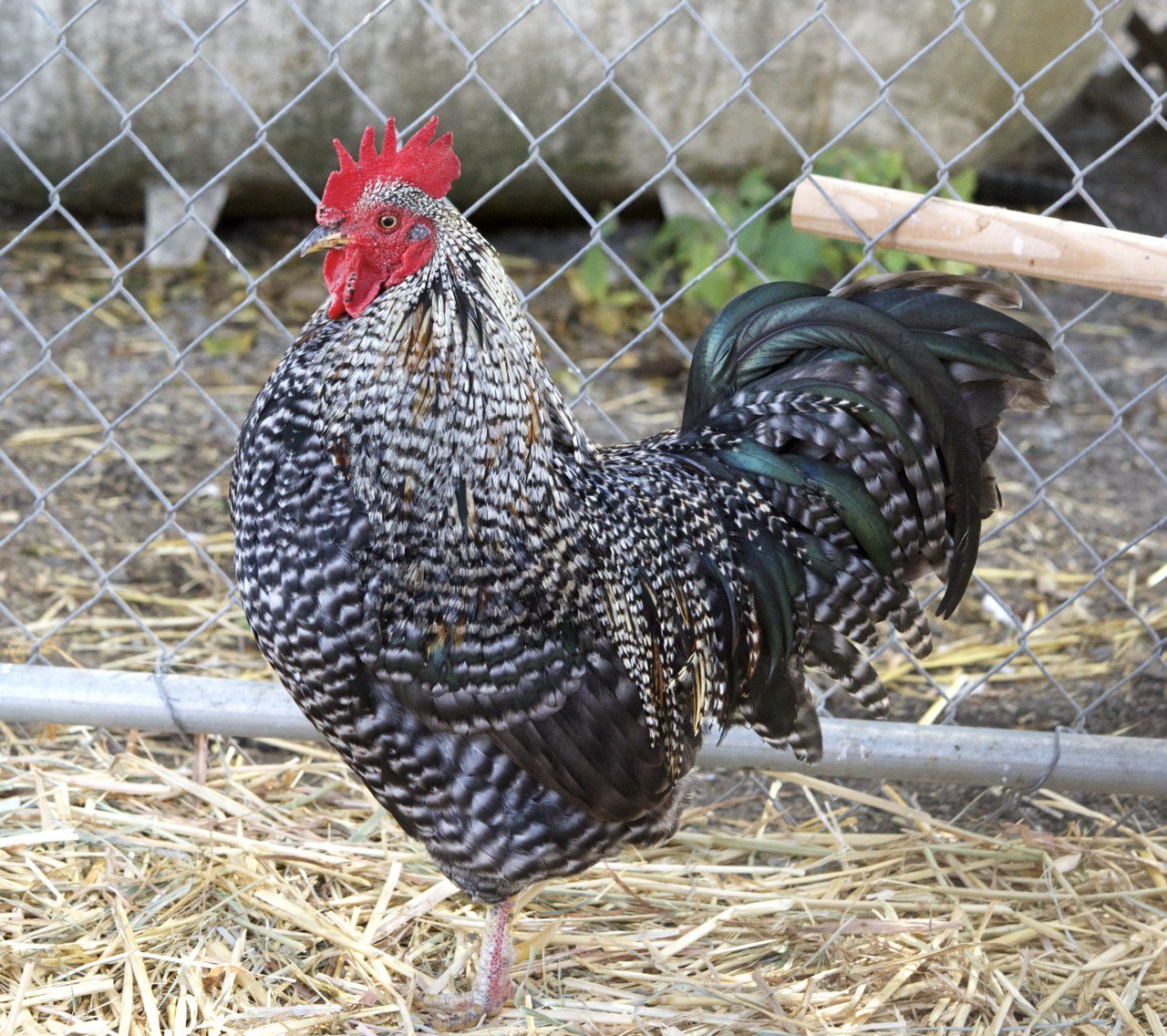
Instantly recognisable in its classic Barred variety: crisp black-and-white barring over the whole body, each feather crossed by clean parallel bars (roosters, carrying two copies of the barring gene, look lighter than hens). A single red comb, red earlobes — brown-egg signal — yellow legs, and a long, broad, deep body. Other varieties include White, Buff, and Partridge, but Barred is the icon.
Care & daily life
Easy, standard care: layer feed, grit, clean water, a dry coop, and as much ranging room as you can give — they forage well and stay active. Their size and calm make them straightforward for new keepers. Hens make good mothers if they sit; a broody Rock with fertile eggs is a reliable hatchery. Watch weight in confined birds, as the dual-purpose frame fattens readily.
Health & lifespan
The Plymouth Rock is generally known for the following health watch-points:
- Marek's disease — buy vaccinated chicks where possible
- Obesity in under-exercised, over-fed birds, with fatty liver risk
- Bumblefoot, favoured by their weight on hard ground
- Standard external parasites (mites and lice) and worms
- Reproductive issues in older high-producing hens
Living with a Plymouth Rock
Rocks suit almost any keeper: families, beginners, homesteaders, and mixed flocks, where their calm size lets them hold their own without bullying. They tolerate confinement better than flighty breeds but shine with range to forage. Expect 5–10 years of life, with good laying for three or four of them.
History
Plymouth Rocks were created in Massachusetts in the years just after the American Civil War, crossing Dominique-type barred birds with Java and Cochin stock to fix size, hardiness, and laying in one bird. First exhibited in 1869, the Barred Rock became the most popular farm chicken in America through both World Wars — the default chicken of the family farm — before commercial hybrids pushed pure breeds aside.