Overview
The Orpington — usually the Buff — is the breed that turns chicken keepers into chicken people. Bred by William Cook in Kent in the 1880s as a dual-purpose bird, it has since become the heavyweight champion of the pet-chicken world: enormous, soft-feathered, unhurried, and genuinely fond of human company. It lays respectably rather than spectacularly, goes broody at the drop of a hat, and mothers superbly.
Temperament & personality
Serene. Orpingtons wander rather than rush, tolerate cuddles, follow their people around like feathered dogs, and generally sit at the peaceable end of any pecking order — sometimes too peaceable, as pushier breeds can bully them. Roosters are typically mild-mannered for their size.
Appearance
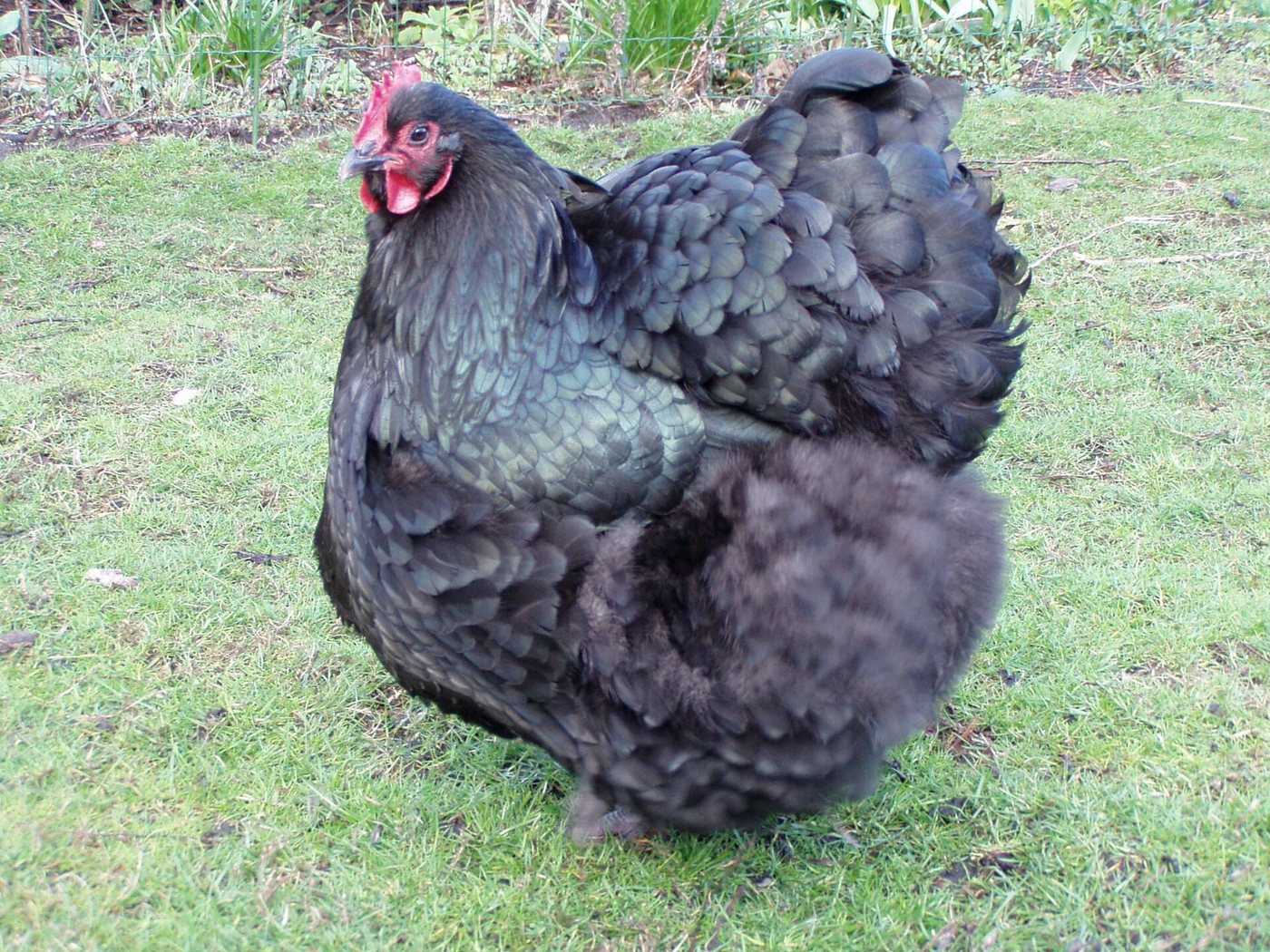
A very large, loose-feathered bird that looks even bigger than it is: a broad, deep body carried low, buried in soft, abundant plumage — golden buff in the famous variety, also black, white, blue, and lavender. The head seems small, the legs are nearly hidden by fluff, and the whole effect is of a feathered armchair that happens to walk. Pinkish-white legs and a single comb complete the picture.
Care & daily life
Simple, standard feeding and housing, with two breed-specific notes: give low roosts, because heavy, fluffy birds injure legs jumping down from height; and keep mud and wet at bay, since that glorious plumage takes forever to dry and chills a bird in winter. In hot climates, shade and airflow are essential — Orpingtons overheat more readily than slim breeds. Broody hens need watching: enthusiastic sitters can lose condition, so lift them off daily for food and water.
Health & lifespan
The Orpington is generally known for the following health watch-points:
- Leg and joint strain from jumping down — keep roosts low for these heavy birds
- Heat stress in summer; that insulation works both ways
- Feather mites and lice hiding in dense plumage — check under the fluff, not just over it
- Broodiness-related weight loss in hens allowed to sit on empty nests for weeks
- Marek's disease and standard parasites, as for all backyard chickens
Living with a Orpington
Orpingtons suit families, beginners, and anyone keeping chickens partly as pets. Their size makes them poor fliers and easy to fence; their calm makes them good with children; their fluff makes them stars of the school visit. Avoid if you need maximum eggs per bird, live somewhere very hot, or keep a chronically muddy run. Lifespan is commonly 8–10 years.
History
William Cook of Orpington, Kent, was the great chicken marketer of the 1880s. He assembled the Black Orpington from Minorca, Langshan, and Plymouth Rock stock in 1886, naming it after his town, and followed with the Buff in the 1890s — the variety that conquered the world. Queen Alexandra kept Orpingtons; so did seemingly every suburban keeper since. The breed defined the idea of the beautiful, docile, dual-purpose hen.