Overview
The Tonkinese is what happens when breeders take two of the most beloved breeds in the world and deliberately keep the best of each: the Burmese's compact, muscular body and sweetness, the Siamese's elegance and sparkle — moderated into a cat that is affectionate without being extreme in any direction. Add the signature aqua eyes and a coat that genuinely feels like mink, and you have one of the cat world's best-kept secrets: playful, devoted, and sociable to the marrow.
Temperament & personality
Warm, playful, and people-centred. Tonkinese follow their humans, join conversations in a moderate voice, play fetch with real enthusiasm, and sleep in contact with their favourite person or cat. They are less demanding than Siamese and less single-minded than Burmese — breeders describe them as 'moderate in all things except affection.' They are excellent with children and other animals, greet guests like hosts, and generally treat the household as a team sport they are delighted to play.
Appearance
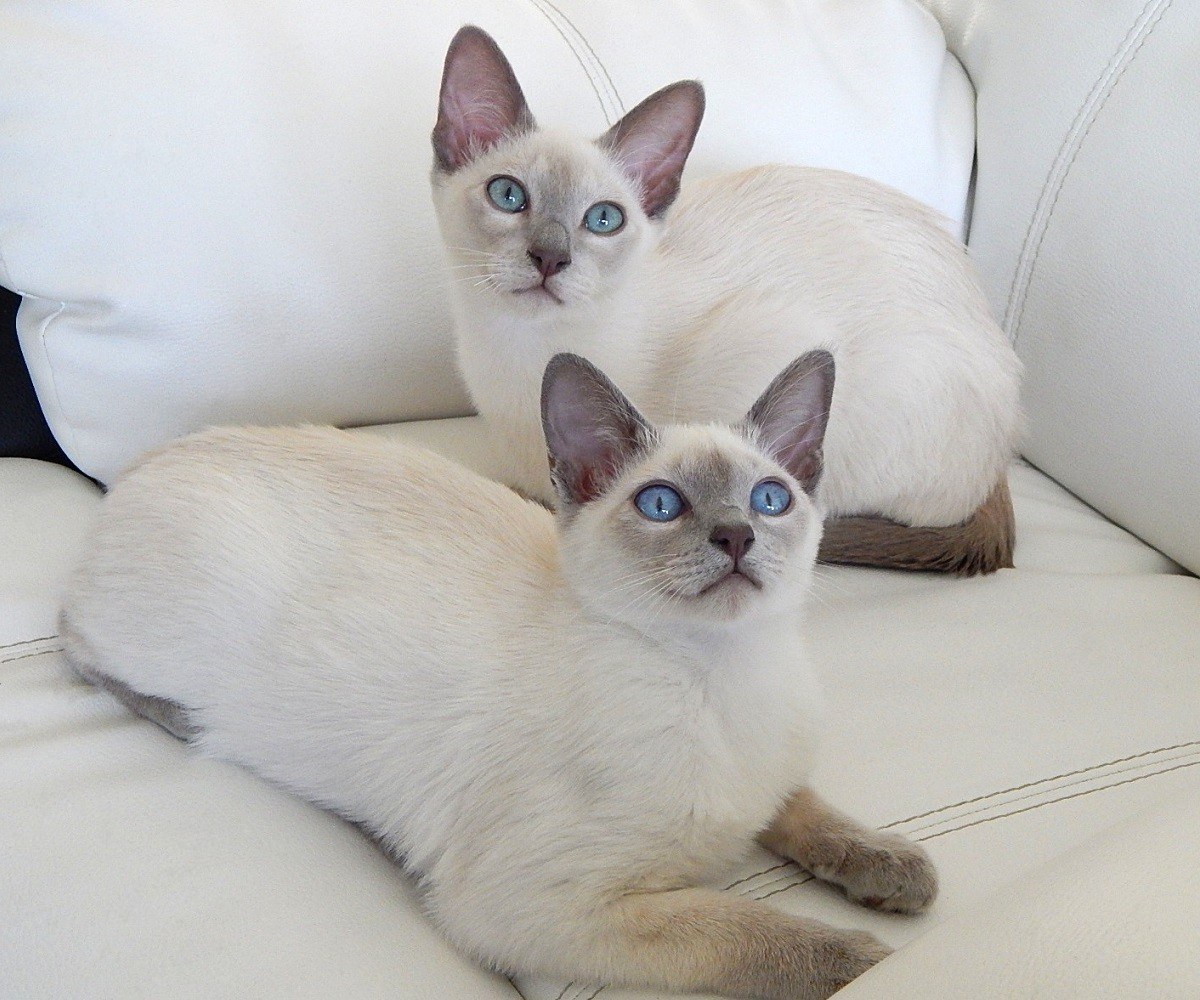
The Tonkinese blends its parent breeds into something warmer than both: a medium-sized, surprisingly muscular cat with a soft, modified wedge head, a gently rounded muzzle, and expressive almond eyes in the breed's signature aqua — a blue-green found almost nowhere else. The coat is short, fine, and mink-soft to the touch, lying close with a natural sheen. Colours come in natural (brown), champagne, blue, and platinum, each in three patterns: solid, mink (softly shaded points), and pointed.
Care & daily life
The short, close coat needs very little — a weekly brush or rub-down keeps it gleaming. The real investment is social: Tonkinese are active, playful, and intensely companionable, needing daily interactive play, climbing and window territory, and above all company — they are classic candidates for keeping in pairs. They are intelligent and trainable, enjoying fetch, puzzle feeders, and even harness walks. Dental care deserves routine attention, as with their Siamese ancestors, and portions should be measured, since a bored Tonkinese will campaign for snacks.
Health & lifespan
The Tonkinese is generally known for the following health watch-points:
- Generally a robust breed benefiting from hybrid vigour, with the parent breeds' watch-points in milder form
- Upper respiratory infections can spread easily among young Tonkinese in cattery settings — vaccination and hygiene matter
- Dental disease — gingivitis occurs as in the Siamese family; home dental care is recommended
- Burmese hypokalemia DNA screening is relevant to the breed's Burmese ancestry and used by conscientious breeders
- Inflammatory bowel disease and lymphoma are reported at modest rates as in cats generally; no heavy breed-specific burden
Living with a Tonkinese
Tonkinese fit warm, busy, affectionate households — families with children, homes with dogs, multi-cat homes, and anyone who wants a cat woven into daily life. They are the opposite of a low-maintenance, independent pet: they need company and engagement, and reward it enormously. They are indoor cats whose world should include perches, playmates, and people. For owners who work long hours, two Tonkinese are famously easier than one.
History
Cats resembling the Tonkinese — golden-brown, aqua-eyed — existed in Southeast Asia for centuries, and 'chocolate Siamese' types appeared in the West as early as the 1880s. The modern breed was deliberately created in the 1960s–70s, first in Canada by breeder Margaret Conroy (who crossed a Siamese with a Burmese aiming for the best of both) and then in the United States, where the breed took its name — a nod to the Gulf of Tonkin, despite the cats having no connection to Vietnam. The CFA granted championship status in 1984, and the Tonkinese has kept a devoted following ever since.