Overview
The Singapura is the smallest cat in the fancy and one of the most charming: a tiny, sepia-ticked sprite with huge ears and eyes, an impish streak a mile wide, and a kittenish energy that lasts for years. Exported from Singapore in the 1970s under a story that later drew questions, the breed won its place on personality — playful, affectionate, and perpetually underfoot in the best way.
Temperament & personality
Bright, busy, and affectionate. Singapuras want to help with everything — typing, cooking, reading the paper — and they keep a kitten's play drive well into adulthood. They are gentle and non-dominant with other animals, quietly vocal, and they bond to the whole household rather than one person. Expect a cat that rides shoulders, rides herd on the household routine, and sleeps as close to a human heat source as physically possible.
Appearance
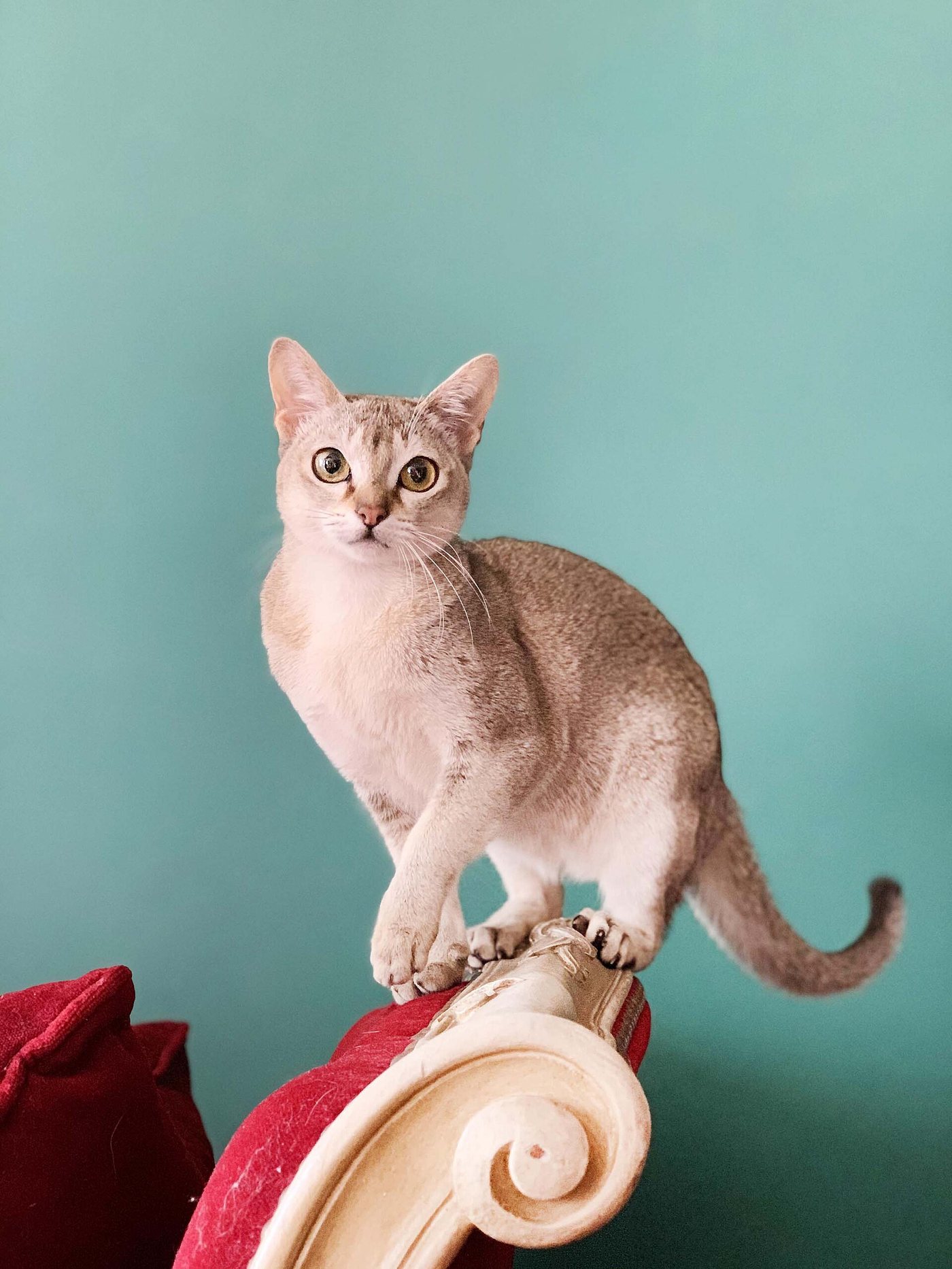
The smallest pedigreed cat looks like a kitten that never grew up: 4–8 pounds of fine-boned, surprisingly muscular cat in a unique sepia ticked coat — every hair banded warm brown and black, giving the famous 'agouti' glow, with paler ivory on the chest and belly. The head is a rounded wedge with strikingly large ears, large almond eyes outlined in dark liner with a lighter 'spectacle' ring, and a short, neat muzzle. Everything about the Singapura reads delicate except the bright, mischievous expression.
Care & daily life
Minimal grooming — the short, fine coat needs only an occasional brush, and shedding is barely noticeable. The real care points are warmth (this tropical, tiny breed feels the cold and seeks heat sources), measured feeding (small frames show extra ounces quickly), and gentle handling, especially by children. Keep them indoors: size and friendliness make them vulnerable outside. Routine vet care, plus attention to breeding-queen health in the breed's background, covers the rest.
Health & lifespan
The Singapura is generally known for the following health watch-points:
- Pyruvate kinase (PK) deficiency — an inherited red-blood-cell disorder identified in the breed; a DNA test exists and responsible breeders screen for it
- Otherwise generally healthy, though the gene pool is small and breeders monitor diversity carefully
- Uterine inertia (failure of normal labor contractions) is reported more often in Singapura queens, so breeders plan for possible caesareans — a breeder concern more than a pet owner's
- Small litters (often 2–3 kittens) are normal for the breed
- Prone to feeling the cold; weight gain shows quickly on the tiny frame
Living with a Singapura
Singapuras suit indoor homes that want a small, interactive cat: apartments are ideal, and they thrive with people home much of the day, another pet for company, and warm spots to claim. They perch high, play in bursts, and sleep under covers. Their size and trusting nature make them strictly indoor cats. For gentle households, few breeds pack this much personality into this little cat.
History
The Singapura's documented history starts in 1975, when American geophysicist Tommy Meadow and his wife Hal brought sepia ticked cats from Singapore to California and began breeding them as a preserved street-cat type. The breed gained recognition through the 1980s (Singapore even adopted it as a tourism mascot, the 'Kucinta'). In 1990–91, reporting suggested the Meadows had actually shipped cats to Singapore years earlier and re-imported them — the CFA investigated, found no wrongdoing warranting action against the breed, and registrations continued, but the romance of the founding story carries an asterisk to this day. The cats themselves — tiny, ticked, and unmistakable — are not in dispute.