Overview
The Abyssinian is the cat as athlete and investigator: a lean, ticked bundle of curiosity that treats your home as terrain to be climbed, opened, and understood. One of the oldest recognised breeds, it is also one of the most modern in lifestyle — busy, trainable, and devoted to its people without ever quite sitting still. If the average cat naps through history, the Aby is out making some.
Temperament & personality
Playful, inquisitive, and people-oriented well into old age. Abys follow their owners at a trot, ride shoulders, retrieve toys, and greet guests like a host. They are not lap cats in the sedentary sense — affection is delivered in motion — but their loyalty is total. With another active pet for company and owners who play daily, they are among the most joyful cats to live with.
Appearance
The Abyssinian wears the famous ticked coat: each hair banded with several colours, giving a warm, agouti shimmer with no stripes on the body, darker shading along the back, and a lighter belly. The build is lean, muscular, and elegant — medium-sized with long legs, large alert ears, and almond-shaped gold or green eyes under distinctive 'M' tabby marks on the forehead. Ruddy (burnt orange-brown) is the classic colour, joined by blue, sorrel, and fawn.
Care & daily life
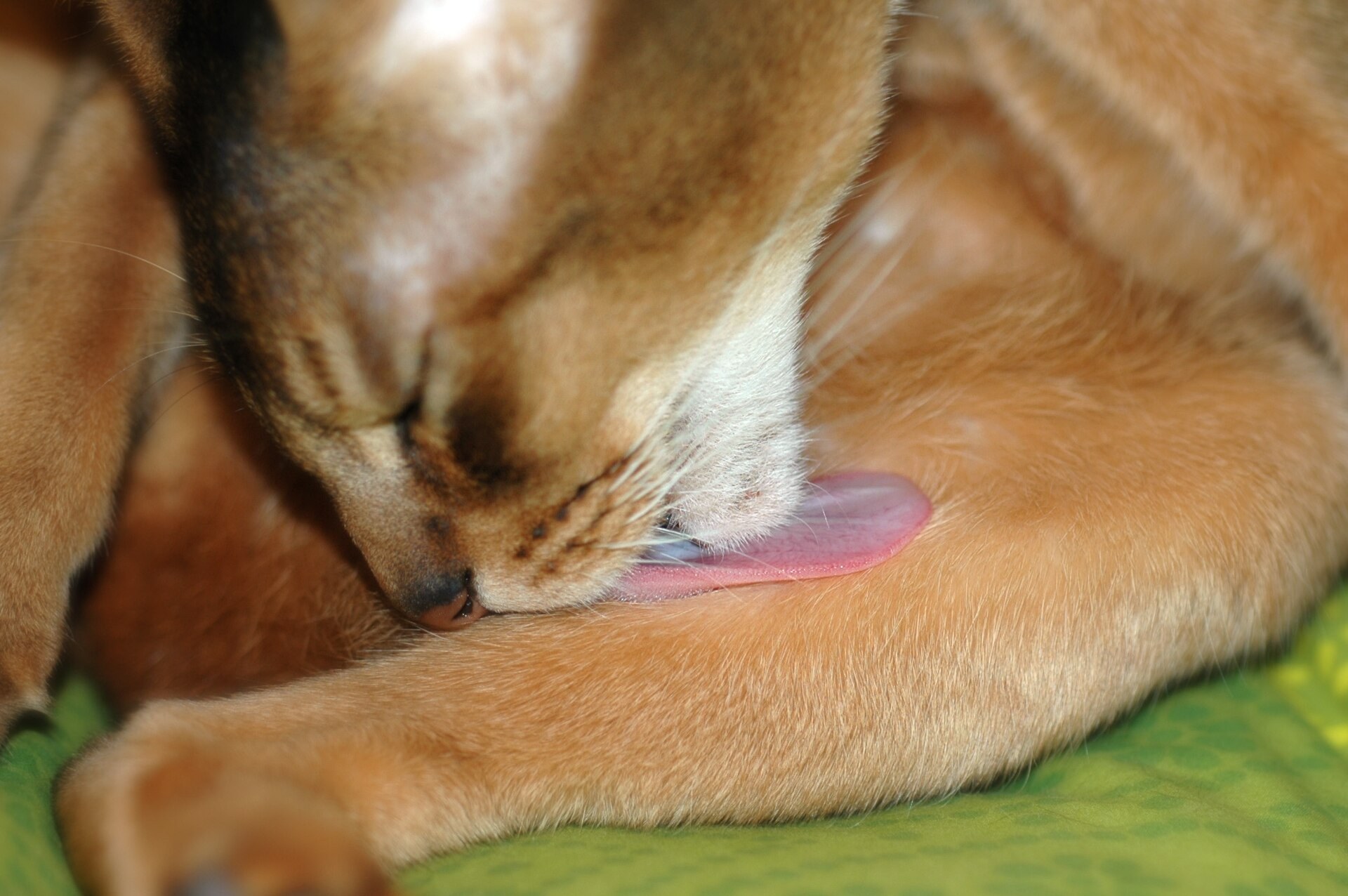
The short coat needs only a weekly brush or hand-rub, and Abys groom themselves fastidiously. The real investment is stimulation: this is one of the most active breeds, needing tall climbing furniture, window perches, daily interactive play, and ideally a companion animal. Many Abys learn harness walks, fetch, and clicker tricks readily. Keep dental care on the calendar — the breed is prone to gum disease, so tooth brushing and dental checks pay off.
Health & lifespan
The Abyssinian is generally known for the following health watch-points:
- Progressive retinal atrophy (rdAc PRA) — inherited blindness; a DNA test exists and has greatly reduced its frequency
- Pyruvate kinase deficiency — an inherited anaemia; DNA-testable and screened in responsible programs
- Periodontal (gum) disease is a notable breed tendency — dental care matters
- Patellar luxation occurs in some lines
- Renal amyloidosis was a historical concern in certain lines; it is uncommon today but worth asking breeders about
Living with a Abyssinian
Abyssinians suit active, engaged households — including families with older children — that want a cat participating in everything. They need height (they live vertically), company, and things to do; a lone Aby in an empty house is a recipe for mischief. They are a classic choice for people who think they want a dog's interactivity in a cat's body.
History
Legend says the Abyssinian came from Ethiopia — and the breed's founding cat, Zula, was indeed brought to Britain from Abyssinia in 1868 by a soldier returning from the war there, and shown at the Crystal Palace in 1871. Whatever Zula's true ancestry, the breed as we know it was built in Britain from ticked cats of similar type, nearly lost in the war years, and rebuilt with American help. Genetic studies suggest the breed's roots may trace through Indian Ocean trade routes as much as to Ethiopia — but the name, and the romance, stuck. The CFA recognised the Abyssinian in the early decades of the 1900s, making it one of the oldest established breeds.