Overview
The Maine Coon is the gentle giant of the cat world: one of the largest domestic breeds, wrapped in a rugged, weatherproof coat, and famous for a temperament so sociable and easygoing that owners call them 'the dogs of the cat world.' They chirp and trill instead of meowing, follow their people from room to room, and keep a playful, kittenish streak for years. If you want a cat with real presence — in size and in personality — this is the breed.
Temperament & personality
Gentle, clownish, and deeply people-oriented. Maine Coons are not typically lap cats — they prefer to be *next* to you, supervising — but they are affectionate, patient with children, and usually welcoming to other animals, including dogs. They are intelligent and trainable, often learning to walk on a harness, play fetch, and answer to their names. Their slow maturation means the goofy kitten phase lasts well into their third year.
Appearance
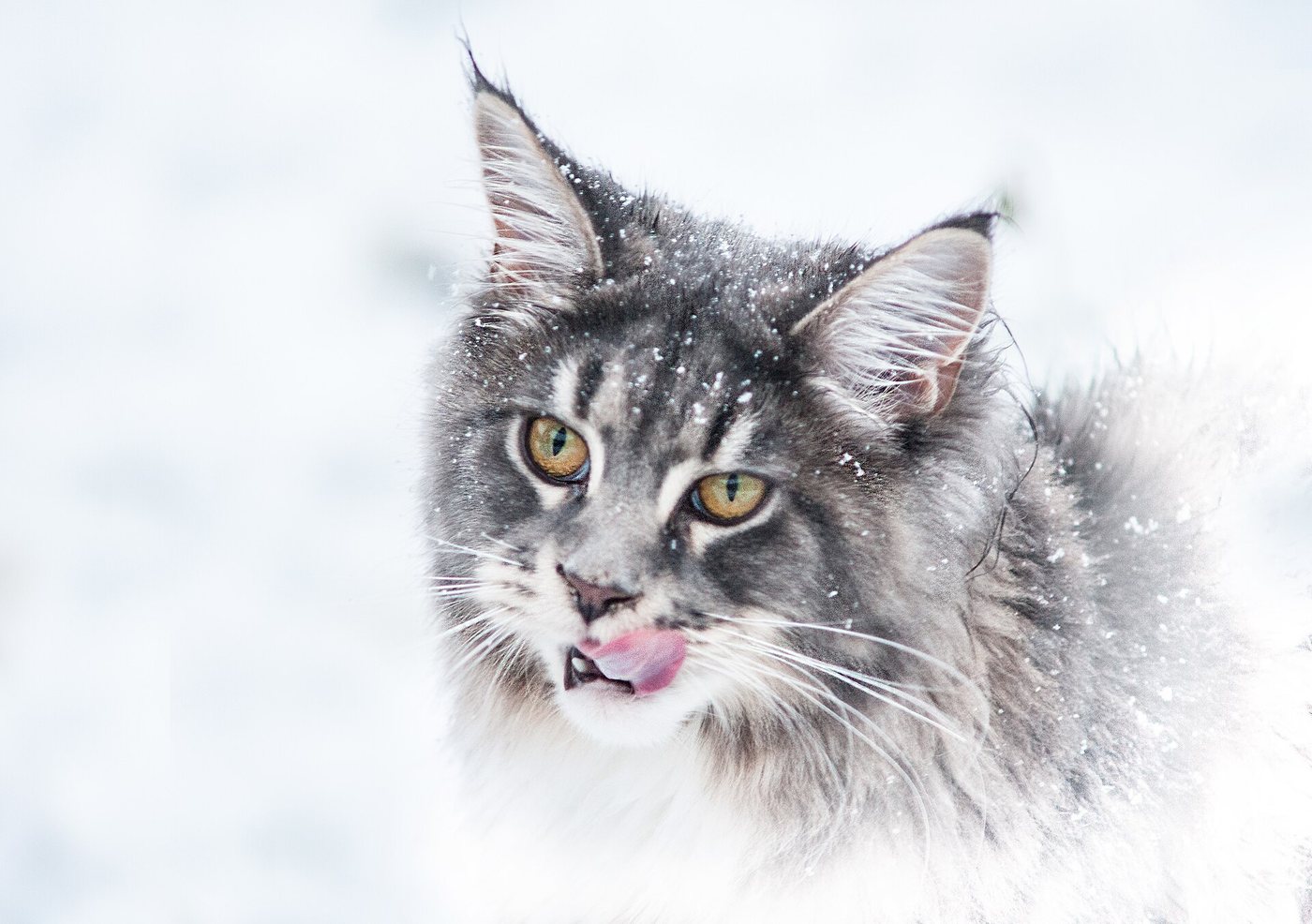
The Maine Coon is built for northern winters: a long, shaggy, water-resistant coat that is shorter on the shoulders and flows longer on the belly and britches, a magnificent plumed tail, tufted 'lynx tips' on the ears, and fur between the toes that works like snowshoes. The head is a modified wedge with high cheekbones, a square muzzle, and large, expressive, slightly oval eyes. Males in particular develop an imposing, lion-like ruff.
Care & daily life
Comb the coat once or twice a week with a steel comb — the breed's coat is surprisingly resistant to matting for its length, but the belly and britches need attention. Maine Coons are active, playful cats that stay kittenish for years; give them tall cat trees, scratching posts, and daily play sessions. Unlike most cats, many Maine Coons genuinely enjoy water, from pawing at faucets to supervising showers. Feed a quality diet and watch weight, especially for indoor neutered males.
Health & lifespan
The Maine Coon is generally known for the following health watch-points:
- Hypertrophic cardiomyopathy (HCM) — the breed's best-known inherited disease; a DNA test exists for one major mutation, and breeders also screen by ultrasound
- Hip dysplasia occurs at notable rates for a cat, linked to the breed's large frame
- Spinal muscular atrophy (SMA) — a DNA-testable condition affecting kittens in some lines
- Polycystic kidney disease is screened for in responsible breeding programs
- Dental disease and obesity are the everyday management issues, especially in indoor males
Living with a Maine Coon
Maine Coons suit families, singles, and multi-pet homes alike — they are social without being demanding, and tolerant of household bustle. They need vertical space (tall trees and shelves) and are best kept indoors or with supervised outdoor access. First-time owners who can handle the size, grooming, and food bills will find them easy, rewarding cats.
History
The Maine Coon is America's own longhaired breed, developed over the 1800s as a hardy farm and ship's cat in Maine, where its size, coat, and hunting skill were survival traits in brutal winters. Popular legend credits everything from Marie Antoinette's escaped cats to Viking longships (the resemblance to the Norwegian Forest Cat keeps that one alive), but the realistic origin is European cats brought by settlers and sailors, shaped by New England selection. Maine Coons starred in America's earliest cat shows — a Maine Coon won Best Cat at the 1895 Madison Square Garden show — then faded when Persian glamour arrived, before a dedicated revival from the 1950s onward restored the breed. It is now among the most popular breeds in the world and the official state cat of Maine.