Overview
The Siberian is what centuries of Russian winter produce: a strong, round, triple-coated cat with a temperament as steady as its build — gentle, playful, quietly dog-like, and famously unfazed by household life. It is also the breed at the centre of the hypoallergenic debate, and this profile will not oversell that: many Siberians genuinely do produce less Fel d 1 allergen, and many allergic people genuinely live with them happily — but 'lower allergen, sometimes' is the true claim, and anyone buying primarily for allergies should verify their own reaction first.
Temperament & personality
Calm, gentle, and quietly playful. Siberians are affectionate without being demanding — they follow their people, join games, chirp and trill in conversation, and settle contentedly nearby rather than insisting on the lap. They are intelligent problem-solvers, many enjoy water, and their easygoing stability makes them a byword for a family-safe temperament. Slow to mature, they keep a measured, kittenish playfulness for years, paired with an almost dog-like loyalty to the household as a whole.
Appearance
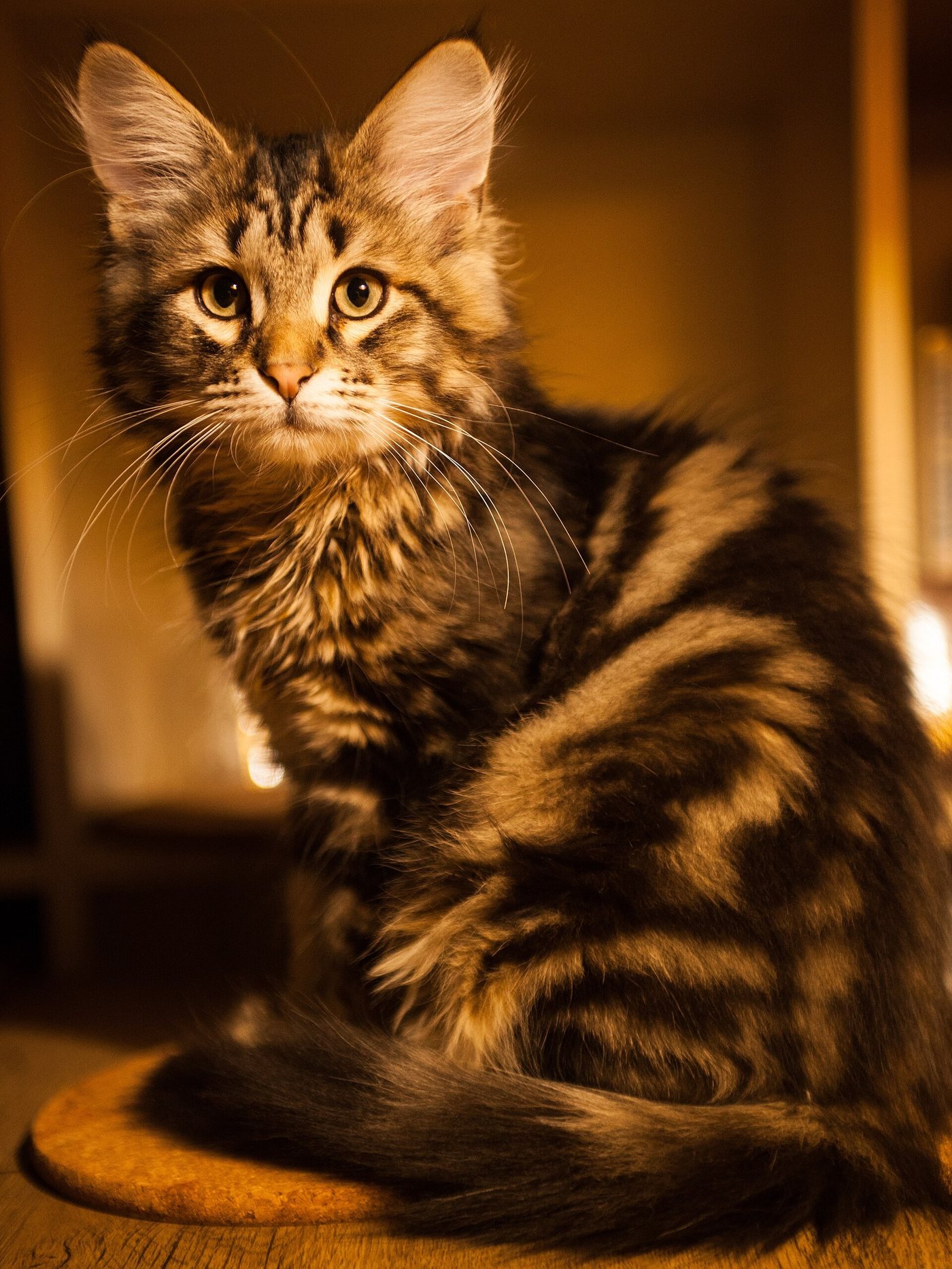
The Siberian is built like a small, round barrel of a cat: a powerful, well-muscled body with a slight arch to the back, medium legs ending in big round paws, and a magnificent triple coat — a coarse, water-repellent guard layer over a dense undercoat that thickens dramatically in winter and 'blows' in spring. The head is a rounded wedge with full cheeks, a slightly domed forehead, tufted ears, and large, nearly round green, gold, or blue eyes (odd eyes occur in white cats). Males are substantially bigger than females, and the breed matures very slowly — full size and coat may take up to five years.
Care & daily life
That triple coat needs combing once or twice a week most of the year — genuinely little for its density, since the texture resists matting — and more often during the great spring shed, when the winter coat comes out in handfuls. Siberians are athletic and clever: provide serious climbing furniture, puzzle feeders, and daily play. Many enjoy water and will supervise plumbing repairs. For allergy-motivated buyers: spend real time with the specific breeder's cats first, ideally visiting with the exact line, because Fel d 1 levels vary cat by cat (see FAQs).
Health & lifespan
The Siberian is generally known for the following health watch-points:
- Hypertrophic cardiomyopathy (HCM) — the breed's main inherited concern; there is no DNA test for the Siberian form, so responsible breeders screen breeding cats by regular heart ultrasound
- Otherwise a notably hardy natural breed — centuries of Russian winters were an unforgiving health screen
- Polycystic kidney disease has been reported occasionally; some breeders ultrasound-screen kidneys too
- The dense coat and hearty appetite make weight-watching and dental care the routine priorities
Living with a Siberian
Siberians fit an unusually wide range of homes: families with children, multi-pet households, singles, and first-time owners all suit their calm adaptability. They like company and participation but are not clingy, and they tolerate sensible children and cat-friendly dogs with ease. They are at their best in homes that can give them climbing space, daily play, and — for the twice-yearly coat explosion — a tolerant attitude to fluff.
History
The Siberian is a natural landrace that developed over centuries in Russia — a hardy farm and household cat of the forests and cities, woven into Russian folklore as a magical helper and status symbol, and mentioned in print by the 1800s as a large, long-coated Russian cat. Unlike most 'ancient' breeds it was genuinely shaped more by climate than by fanciers until the Soviet era ended. Organised breeding began in the late 1980s (Leningrad's Kotofei club drew up an early standard), and the first Siberians reached the West around 1990 as the Cold War thawed. CFA registered the breed in 2000 and granted championship status in 2006; its reputation since has been built on two pillars — the gentle temperament, and the allergy question.