Overview
The zebra finch is the aviary in fast-forward: a four-inch Australian finch that beeps like a tiny toy horn, builds nests with total commitment, raises families at the drop of a hat, and sings a squeaky, individual song it learned as a chick (zebra finch song learning is so reliable that neuroscientists study it worldwide). They are among the very easiest birds to keep — hardy, cheap to feed, and endlessly active — with one welfare condition that is absolute: they must have the company of their own kind.
Temperament & personality
Busy, cheerful, and companionable, zebra finches run their society in public: courting with song and bounce-dances, squabbling over the best perch, bathing communally, and sleeping in a companionable row. They are not tame-to-hand birds and don't need to be handled — their charm is the flock itself. A pair will entertain for hours; a group in a flight cage is a small, self-running world. A lone, silent zebra finch, by contrast, is a welfare problem, not a pet.
Appearance
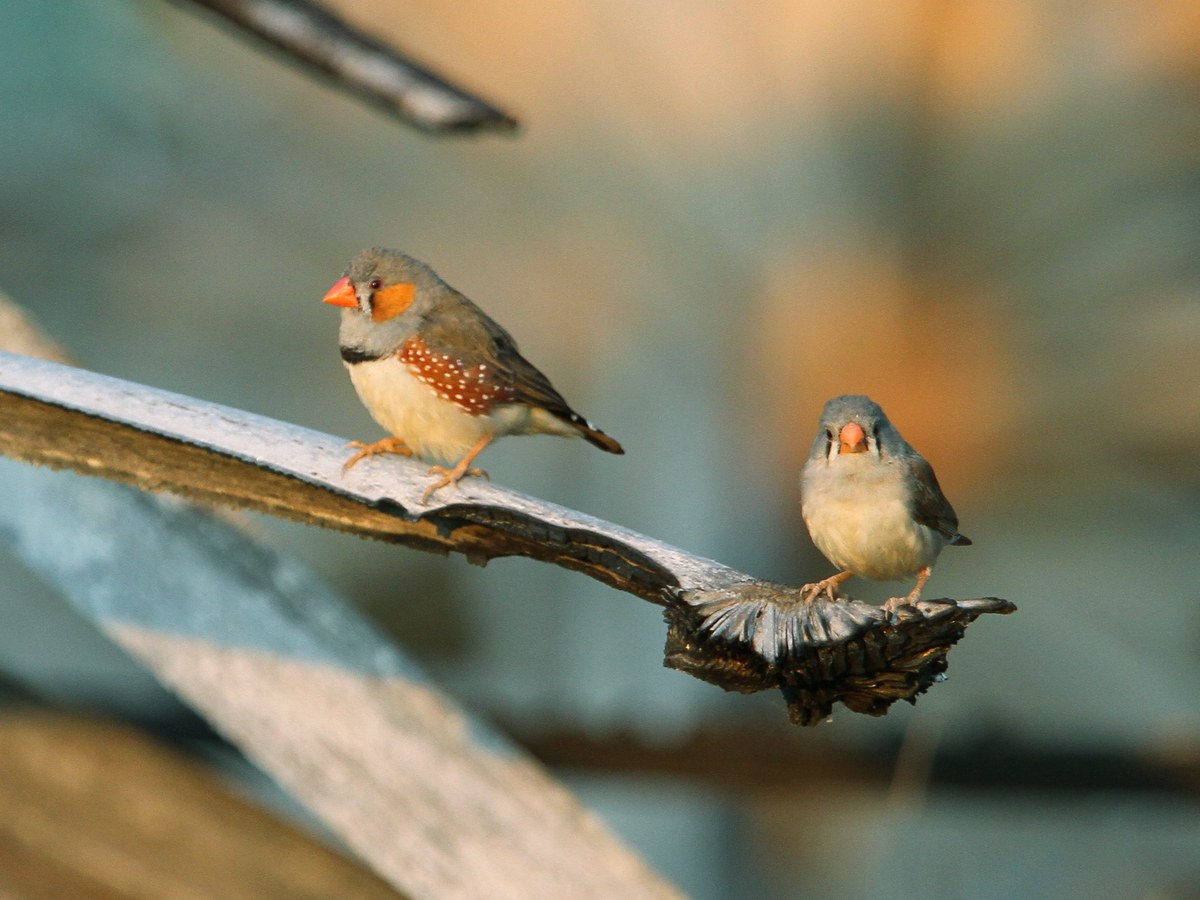
A tiny finch, about 4 inches long, built for speed: wild-type males wear a grey crown and back, chestnut cheek patches, a black throat bib and barred chest, and white-spotted chestnut flanks; females are plainer grey-buff all over. Both sexes carry the orange-red beak that gives the species its cheerful look. Decades of breeding have produced whites, pieds, blacks, penguins, and crested forms. Their flight is bouncing and direct, punctuated by constant soft 'beep-beep' contact calls.
Care & daily life
Canaries' housing rule applies: length, not height — a flight cage of at least 24–30 inches long for a pair (bar spacing no more than ½ inch) so the birds can actually fly. Zebra finches are social to their bones: keep pairs or small groups, never a single bird, and expect compatible pairs to breed enthusiastically — provide a nest basket only if you want chicks, and remove it (with egg-food restraint) if you don't. Feed a finch seed mix as the base with leafy greens, a little egg food (especially when breeding or moulting), cuttlebone, and grit access per standard finch practice; fresh water daily, with a shallow bath dish they'll use with delight. They are hardy little birds for indoor aviaries and large cages, sensitive mainly to draughts, fumes, and loneliness.
Health & lifespan
The Zebra Finch is generally known for the following health watch-points:
- Egg binding in hens, especially over-bred or calcium-poor females
- Air-sac and tracheal mites occur (less characteristically than in canaries and Gouldians) — wheezing and voice change are the signs
- Scaly face/leg mites
- Obesity and inactivity in small cages — flight space is medicine
- Enteritis and other infections in overcrowded aviaries; quarantine new birds
Living with a Zebra Finch
Zebra finches suit almost any bird lover with a flight cage or indoor aviary: beginners, families, older keepers, and apartments (they are among the quietest birds alive). The deal is simple and strict: finch company always, room to fly, and a decision — made deliberately — about breeding, because a contented pair will fill the cage with chicks. They are watch-and-listen birds, not handling birds, and reward their keepers with constant, cheerful industry.
History
Zebra finches are birds of the Australian dry interior, gathering in flocks around waterholes and breeding explosively after rain fills the grasslands with seed. Their readiness to breed in a cage made them the laboratory finch — more scientific papers on song learning, genetics, and development rest on this species than on any other songbird — and simultaneously a universal aviary pet. Named for the male's barred 'zebra' chest, the little birds have been bred in captivity for over a century into dozens of colour forms.