Overview
The canary is the original cage bird: a small finch from the Macaronesian islands that humans have kept and selectively bred for over 500 years purely for beauty and song. Unlike the parrots on this site, a canary is not a hands-on companion — it is a living musician, happiest in a flight cage near a sunny window, repaying simple care with one of the finest songs of any small bird. Males sing; females chirp and call.
Temperament & personality
Canaries are lively, self-contained, and cheerful. A cock canary sings to assert his territory and his health — a singing bird is a contented bird — and learns the household's rhythms quickly, greeting familiar people with calls. They are not cuddly and mostly dislike handling, which owners should respect: their charm is observational, a small bright presence and a room full of song rather than a bird on your shoulder.
Appearance
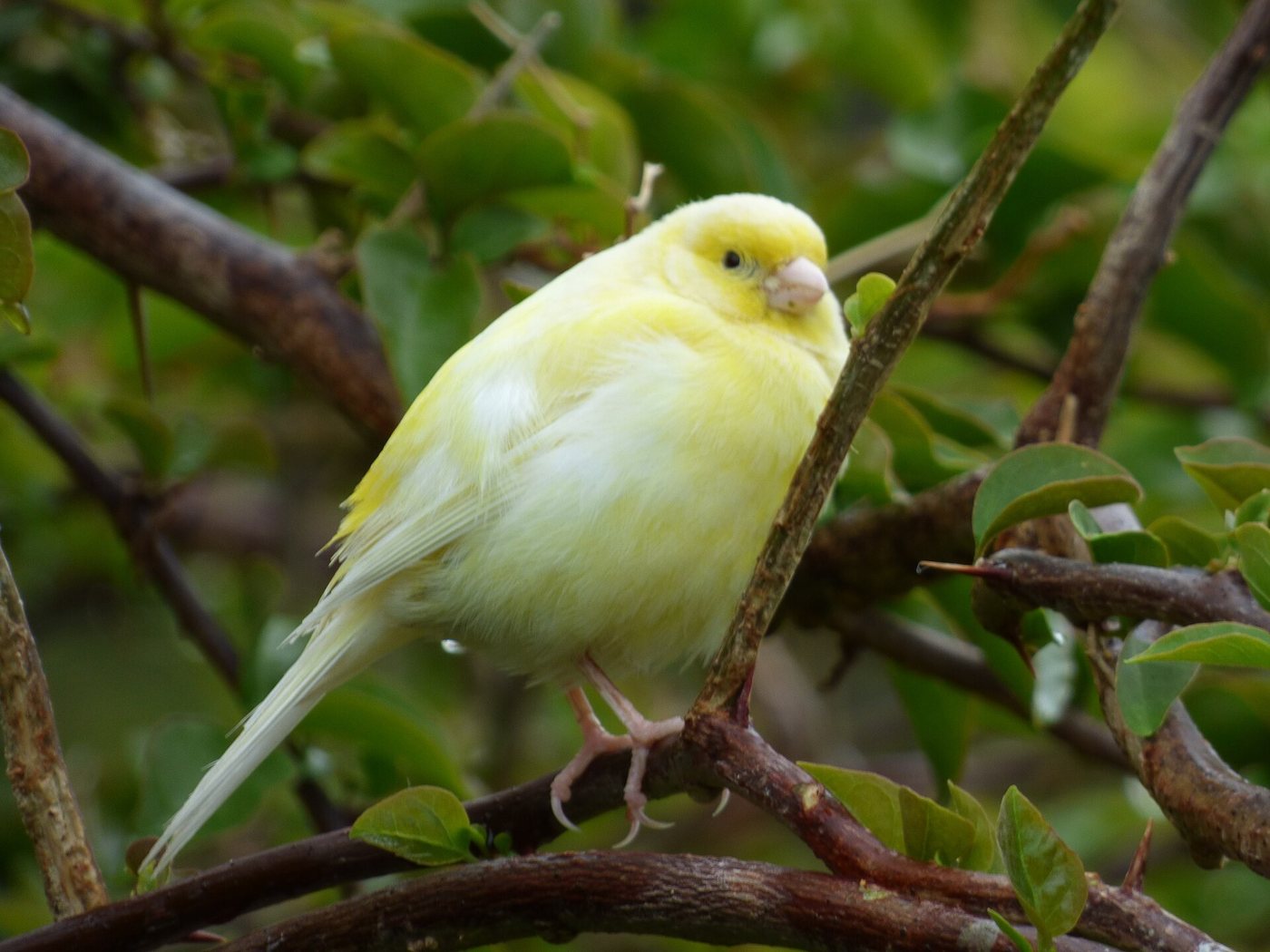
A small finch with a stout seed-eating beak. The wild Atlantic canary is a streaky greenish-yellow; the domestic canary has been bred into clear yellows, oranges (red-factor birds are fed colour foods to hold their hue), whites, and variegated patterns. Song breeds are slim and plain; type breeds like the crested Gloster — with its famous 'bowl-cut' fringe — are bred for shape instead.
Care & daily life
Canaries need a cage long rather than tall — at least about 24 inches long for a single bird — because they exercise by flying back and forth. Feed a canary seed mix or crumble plus leafy greens, a little fruit, egg food at moulting and breeding times, and cuttlebone. Singing males are usually kept singly (two males together will fight or fall silent); hens can share a flight. Protect them from drafts and fumes, give 10–12 hours of darkness for sleep, and expect an annual moult when singing stops for some weeks.
Health & lifespan
The Canary is generally known for the following health watch-points:
- Air-sac mites, causing wheezing, clicking, and voice loss — a classic canary ailment
- Scaly leg and face mites
- Canary pox, spread by insects and contact
- Egg binding in hens
- Obesity and fatty liver in cage-bound birds on rich seed diets
- Respiratory disease from drafts, smoke, and fumes
Living with a Canary
The canary is the lowest-demand pet bird on this page: a pet to watch and listen to rather than handle, suiting quiet homes, older keepers, and anyone who wants birdsong without parrot intensity. Males are best kept singly for song. The commitment is a decade or more of simple, steady care — clean cage, flight space, darkness at night — repaid every morning in music.
History
Domestic canaries descend from the Atlantic canary of the Canary Islands, Madeira, and the Azores, brought to Europe by Spanish sailors in the 1400s. Spain guarded the trade for a century by exporting only males; when birds escaped from a wrecked ship to Elba and breeding spread, the canary became Europe's cage bird — miners later carried them underground as living carbon-monoxide alarms. Selective breeding produced today's three families: song canaries (like the German Roller and American Singer), colour canaries, and type canaries bred for shape and crests.