Overview
The budgerigar — budgie, or parakeet in many American pet shops — is the most kept pet bird on Earth, and it is easy to see why: it packs genuine parrot intelligence, sociability, and even talking ability into a 7-inch, easy-care package. Wild budgies live in vast flocks in the Australian interior, and that flock nature defines the pet bird: it wants company, conversation, and something to do all day long.
Temperament & personality
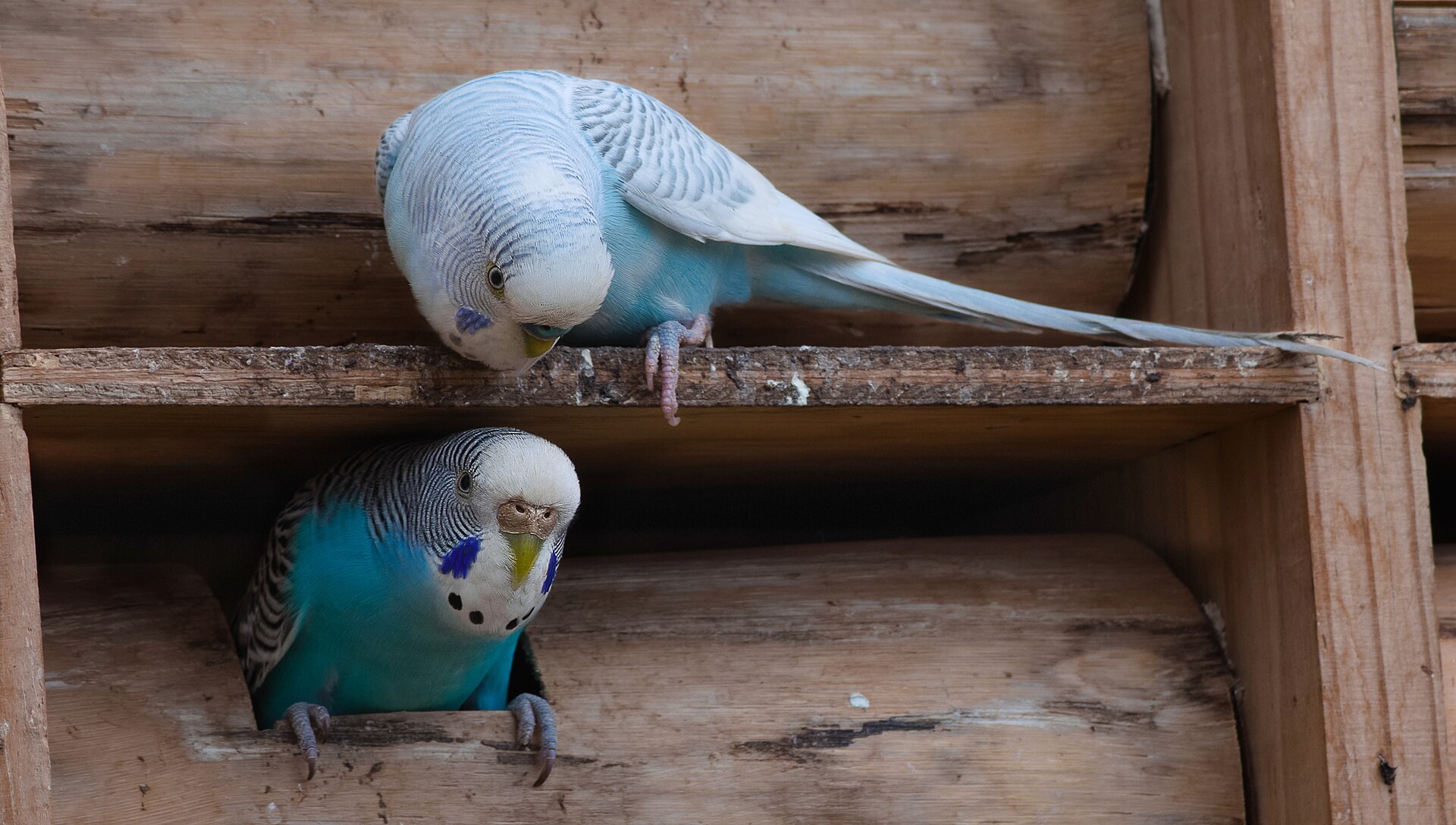
Budgies are bright, busy, and cheerful, filling a room with soft warbling and chatter rather than screams. Hand-raised and gently handled birds bond closely to their people, enjoy head scratches, and learn tricks and words readily — males are the standout talkers. They are flock animals to the core; a lone budgie with an absent owner is a lonely bird, while a pair will entertain each other (and you) endlessly.
Appearance
A small, slim parakeet with a long tapered tail that makes up nearly half its length. Wild-type birds are green with a yellow head and fine black barring, but centuries of pet breeding have produced blues, whites, yellows, violets, and pied combinations. The cere (the fleshy band above the beak) is usually blue in adult males and tan or brown in females.
Care & daily life
Budgies need daily out-of-cage flight time in a bird-safe room — a cage is a bedroom, not a whole life. Offer a quality seed mix or pellets plus daily leafy greens and vegetables, cuttlebone for calcium, and fresh water. They need 10–12 hours of sleep in a quiet, darkened space, perches of varied natural wood, and toys rotated regularly to prevent boredom. Keep them away from kitchen fumes, aerosols, and non-stick cookware fumes, which are lethal to birds.
Health & lifespan
The Budgerigar (Budgie) is generally known for the following health watch-points:
- Tumours, particularly of the kidneys and gonads, are unfortunately common in pet budgies
- Respiratory infections, often linked to dusty or drafty conditions
- Psittacosis (parrot fever), a bacterial infection that can pass to people
- Scaly face and leg mites, causing crusty growths on the cere and feet
- Obesity and fatty liver disease on all-seed diets with too little exercise
- Iodine deficiency and goitre in birds fed seed only
Living with a Budgerigar (Budgie)
Budgies suit almost anyone willing to give daily attention: first-time bird keepers, families with older children, and apartment dwellers (they are among the quietest parrots). The commitment is modest by parrot standards but real — up to 15 years, daily interaction, and flight time out of the cage. A pair is the kindest setup for people who work full-time.
History
Budgerigars are native to the dry grasslands of inland Australia, where nomadic flocks follow water and seeding grasses. Aboriginal peoples knew them for millennia — the name is thought to derive from a Gamilaraay word. They were brought to Europe in 1840 by naturalist John Gould and became a Victorian sensation; huge breeding programs followed, producing the rainbow of colour mutations seen today. The larger 'English' show budgie was later developed for exhibition.