Overview
The crested gecko is the Lazarus of the pet trade: a species science had written off as extinct for a hundred years, rediscovered in 1994, and now bred by the hundreds of thousands. Its appeal is easy to see — huge eyes fringed with 'lashes,' velvety skin, the ability to thrive at room temperature with no special lighting, and a diet you mix from powder like baby food. It may be the lowest-maintenance reptile in the hobby that is still genuinely interesting to watch.
Temperament & personality
By day a crested gecko is a statue, wedged into foliage; by night it becomes a leaping, licking acrobat that hunts, explores, and fires up into richer colours after dark. They are gentle but not cuddly — youngsters startle and jump freely (aim them at soft landings), while many adults become placid hand-sitters. Almost all are solitary: house them singly and enjoy the nightly show through the glass.
Appearance
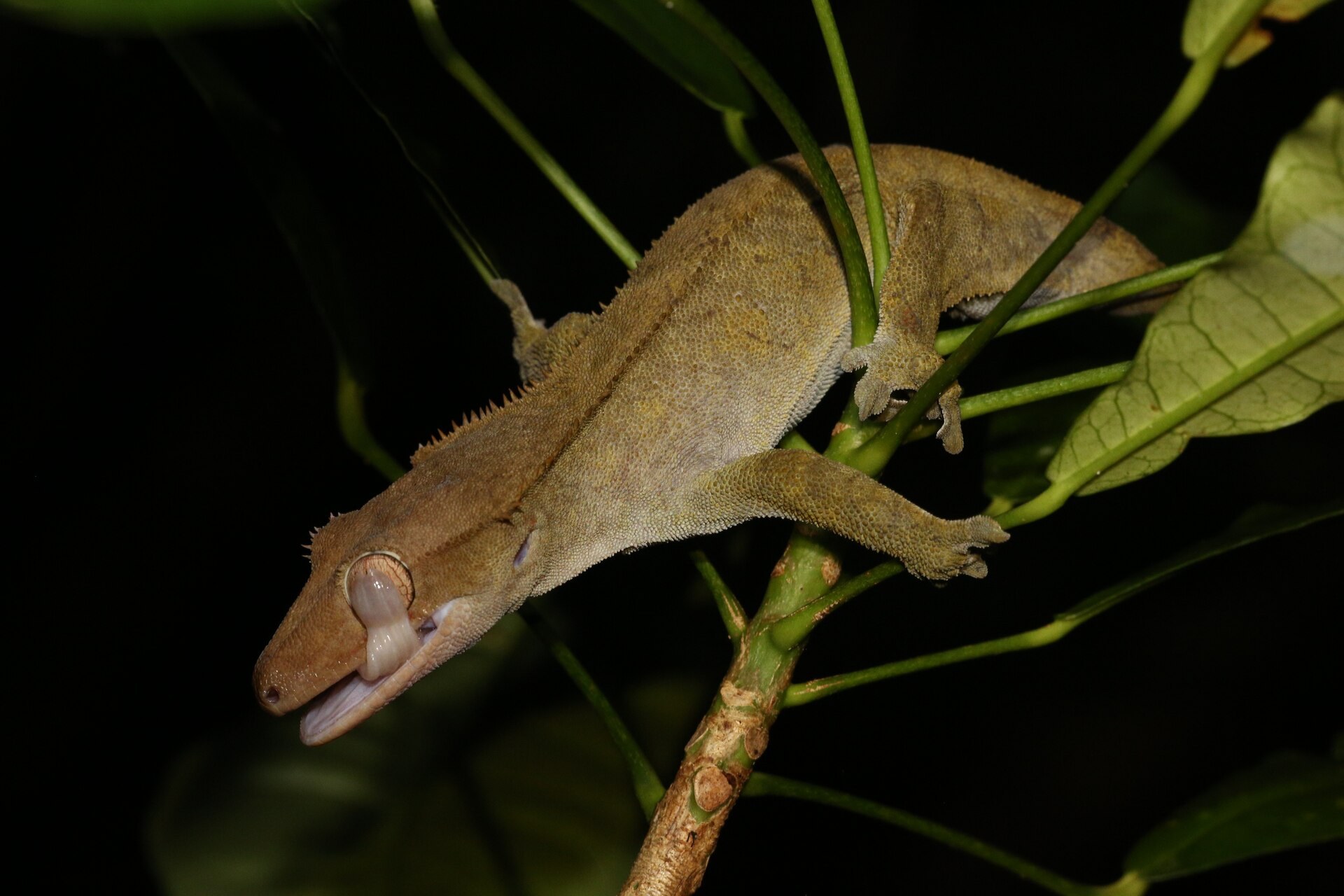
A stocky arboreal gecko with a big triangular head, enormous lidless eyes with vertical pupils, a fringe of spines ('lashes') over the eyes that gives the species its other name — eyelash gecko — and baggy skin it seems to be wearing a size too large. Wild colours are camouflage: mottled browns, oranges, and greys. Captive morphs include pinstripe, harlequin, dalmatian (spotted), and flame patterns in reds, oranges, creams, and charcoals. Adults look permanently, charmingly startled.
Care & daily life
Crested geckos are the easiest reptile on this page about temperature: ordinary room temperature (72–78°F) suits them, and sustained heat over 80–85°F is genuinely dangerous — many keepers need no heat source at all outside cold rooms. They are humidity animals instead: mist the enclosure each evening to spike humidity toward 80%, let it fall toward 50–60% by day, and provide a water dish (many drink droplets, but a dish is cheap insurance). Feed a quality commercial crested gecko diet — a powdered fruit-and-insect formula mixed with water — two or three times a week, with small live insects as an occasional protein boost. Give them height, foliage, and cork bark to climb and hide in, and handle gently over a surface: youngsters are jumpy and will leap.
Health & lifespan
The Crested Gecko is generally known for the following health watch-points:
- Metabolic bone disease — kinked tails and soft jaws from calcium deficiency; correct diet formulation and occasional dusted insects are the prevention
- Stuck shed on toes and tail tips if humidity runs too low
- Floppy tail syndrome, a spinal/pelvic deformity seen in geckos that sleep head-down on glass
- Mouth rot and retained eggs in breeding females occur
- Tail loss itself is not an illness — but an open tail stump should be kept clean while it heals
Living with a Crested Gecko
Crested geckos suit apartment dwellers, night owls, and keepers who want a low-maintenance reptile: no heat lamp, no live-insect colony required, a modest vertical tank, and care measured in minutes. The commitment is a 15–20 year lifespan and daily misting (or a mister on a timer). They are less suited to households wanting a handle-it-all-day pet, or to warm rooms that regularly exceed 80°F without air conditioning.
History
Crested geckos live only in southern New Caledonia, a Pacific island territory east of Australia. Described by science in 1866, they then vanished from records for over a century and were presumed extinct — until 1994, when herpetologist Robert Seipp's expedition found them alive in the aftermath of a tropical storm. Exported founders launched a captive population that exploded: within two decades the 'extinct' gecko had become one of the most-produced reptiles in the pet trade, and wild populations are now protected.