Overview
Everything about the blue tongue skink is reassuringly solid: a two-foot armoured sausage of a lizard that huffs at surprises, flashes a tongue the colour of a sports drink, and then gets on with the serious business of eating. Wild-caught imports once had a reputation for grumpiness, but captive-bred blue tongues — especially the Australian northern blue tongue — are famous for puppy-like calm, recognising their keepers, and tolerating handling better than almost any large lizard.
Temperament & personality
Blue tongues are the contemplatives of the lizard world: slow, deliberate, food-obsessed, and apparently convinced that anything novel is either edible or beneath notice. Most captive-bred animals become genuinely tame, ambling out to investigate their keeper and accepting hand-fed treats. Expect a daily rhythm of basking, burrowing into substrate, and emerging to patrol for food — plus dramatic huffing and tongue-flashing from youngsters that almost always mellows with age.
Appearance
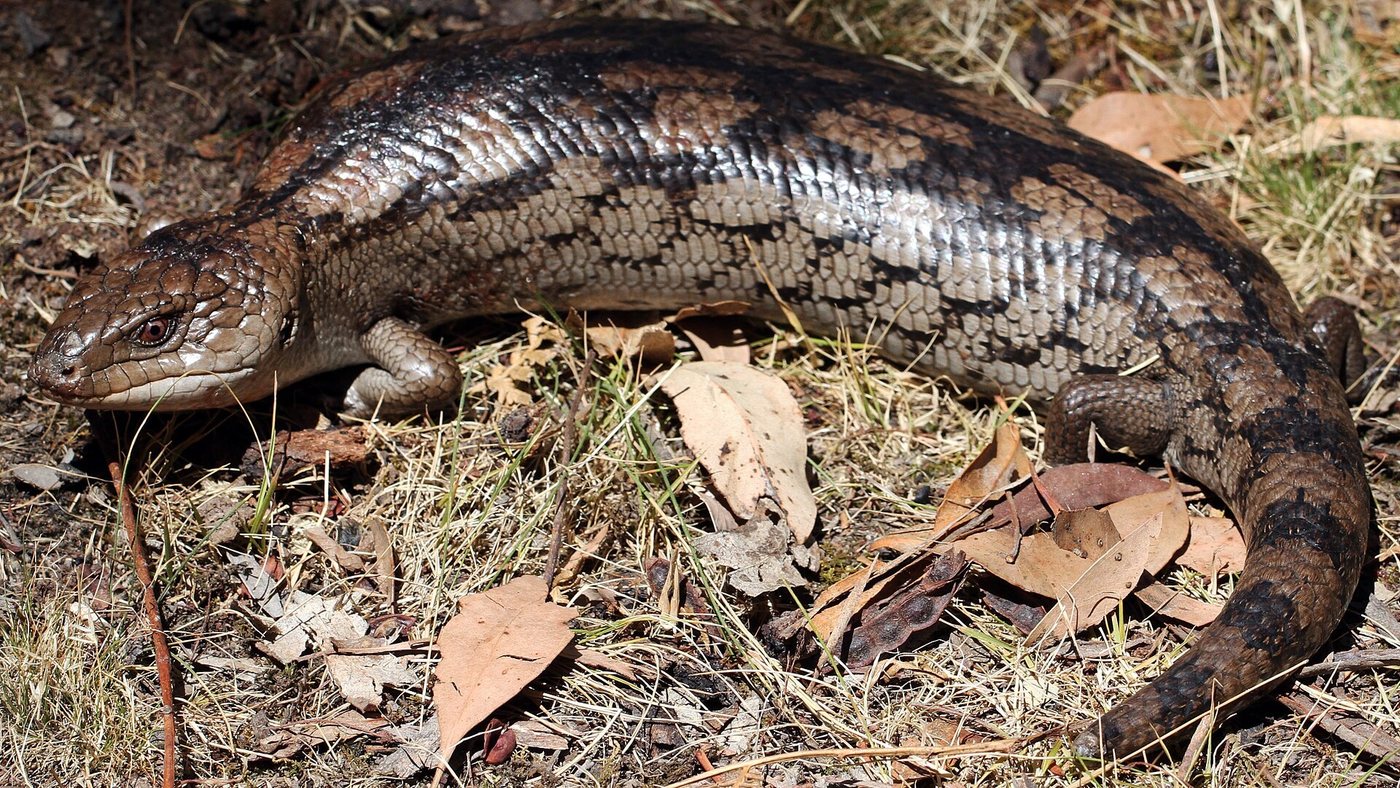
A big, low-slung lizard built like a friendly tank: sausage body, short sturdy legs, a broad triangular head, smooth shiny scales, and the giveaway feature — a broad, vivid blue tongue it flashes at anything that startles it. Northern blue tongues wear earthy bands of brown, orange, and cream; Indonesian species run darker and glossier. Adults have an appealingly grumpy, heavy-lidded expression that owners read (accurately) as calm self-possession.
Care & daily life
Give a blue tongue room: a wide floor plan matters far more than height, with a basking spot of 95–105°F, a cool end in the high 70s to low 80s, and a proper UVB tube — skinks are sun-lovers. Northern (Australian) animals want it dry-ish at 40–50% humidity; Indonesian species need 60–80%, and mixing the two rules up is the commonest husbandry mistake with this pet, so know exactly which species you're buying. Feed like the omnivore it is: roughly half vegetables and greens (squash, green beans, leafy greens, berries) and half protein (insects, snails, egg, lean cooked meats, or quality grain-free dog food, a long-standing keeper staple), with calcium dusting. Adults eat two or three times a week — obesity, not starvation, is the usual risk.
Health & lifespan
The Blue Tongue Skink is generally known for the following health watch-points:
- Respiratory infections, especially in Indonesian species kept too cool or Australian species kept too wet
- Metabolic bone disease without proper UVB and calcium
- Obesity and fatty liver disease — these skinks are enthusiastic eaters on an adult feeding schedule of only a few meals a week
- Stuck shed constricting toes, and scale rot from damp substrate
- Mouth rot and eye infections occur, usually with an underlying husbandry gap
Living with a Blue Tongue Skink
Blue tongues suit keepers who want a substantial, interactive lizard and have the floor space for a genuinely large enclosure — they are a living-room pet, not a bedroom-tank pet. Daily care is light (spot-clean, water, basking check) and feeding days are events the skink will learn to anticipate. They suit patient adults and older children best; the size, cost, and two-decade lifespan make them a poor impulse buy.
History
Blue tongue skinks are Australasian animals: the northern blue tongue (Tiliqua scincoides intermedia) of Australia is the most common in the US trade, alongside Indonesian species from the islands of New Guinea and beyond. Australia's export ban means its species descend from old captive stock, while Indonesian animals have historically been imported in large numbers. Aboriginal Australians have known these skinks for millennia, and the blue tongue — startling against pink mouth lining — is thought to startle predators and advertise the lizard's unprofitability as a meal.