Overview
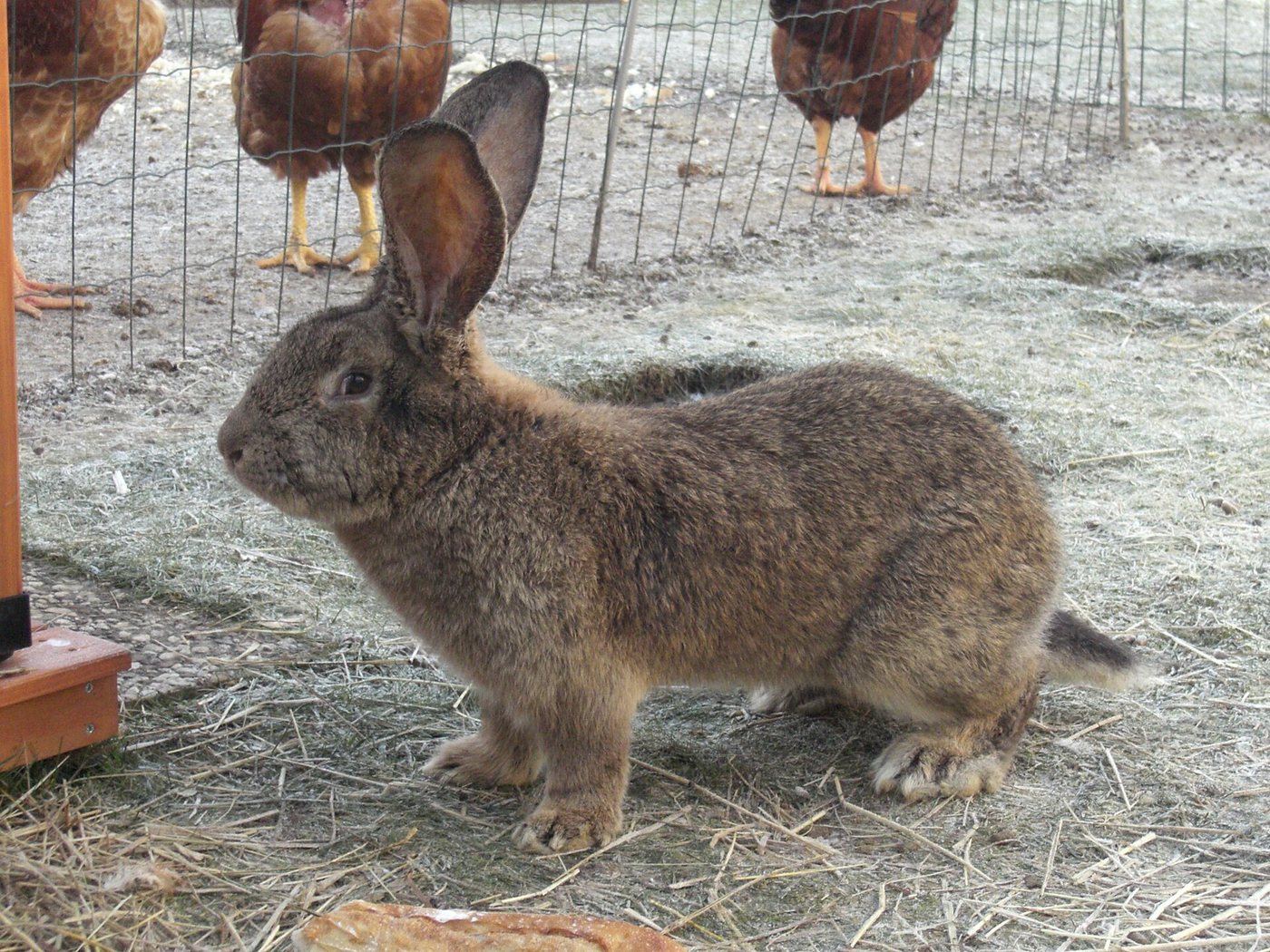
The Flemish Giant is not a metaphor: this is a rabbit the size of a border collie pup, the largest domestic breed in the world, bred around Ghent in Belgium from the 1500s onward. Against every expectation its temperament matches the nickname it earned — 'the gentle giant.' Docile, patient, and almost dog-like in its calm, the modern Flemish is kept as a show rabbit and an increasingly popular, if logistically serious, house pet.
Temperament & personality
Flemish are the philosophers of the rabbit world: unhurried, tolerant, and content to sprawl in the middle of family life. They rarely startle, accept handling philosophically (from the floor, given their weight), and bond with a steady, undemanding affection. Youngsters are livelier, and bucks can be boisterous before neutering, but the adult default is a big, calm presence — the rabbit equivalent of an old Labrador.
Appearance
Simply enormous: the largest domestic rabbit breed, with a long, powerful body, a broad head with full cheeks, tall upright ears (5–7 inches, often with black tips), and a dense, glossy coat in fawn, light grey, steel grey, black, blue, and a few other recognised colours. A Flemish at full stretch can measure close to a metre long — visitors regularly mistake a relaxed adult for a medium-sized dog.
Care & daily life
Flemish Giants need rabbit care at scale: unlimited hay plus a larger pellet ration than small breeds (many keepers free-feed pellets to growing youngsters), daily greens, and water in quantity — a heavy crock or oversized bottle. Space is the big one: an extra-large pen or dedicated room, ramps instead of jumps (their weight punishes joints), and solid flooring — thin wire floors plus 20 pounds of rabbit is a recipe for ruined hocks. Handling is a two-arm job supporting chest and hindquarters; children should enjoy them from the floor. Their size makes them poor apartment rabbits unless the home is genuinely roomy.
Health & lifespan
The Flemish Giant is generally known for the following health watch-points:
- Sore hocks — sheer weight on the feet makes pododermatitis the breed's constant watch-item; solid soft flooring is non-negotiable
- Spinal and joint strain — arthritis is common in older giants; ramps and low entries help
- GI stasis and dental disease, as in all rabbits
- Heat stress — big bodies overheat; giants struggle in hot weather and need cool housing
- Heart strain in very heavy individuals — keep them fit, not fat
- Flystrike risk in summer, especially where checking a large rabbit's rear is neglected
Living with a Flemish Giant
Flemish Giants suit experienced rabbit keepers and families with real space — a house with a rabbit-proofed room, or a quality shed setup — who want a calm, dog-like companion and can handle dog-sized logistics and food bills. They are gentle with children at floor level and bond deeply. The honest costs: 5–8 years rather than a dwarf's decade-plus, giant-scale housing, and weekly hock vigilance for life.
History
The Flemish Giant descends from the great meat and fur rabbits of Flanders — records of giant rabbits around Ghent reach back to the 1500s, and the 'Ghent giant' was famous across Europe for centuries. Exported to America in the 1890s, it became a foundation breed: the Flemish contributed size to many American breeds during the rabbit-meat boom of the early 1900s and was recognised by the ARBA's predecessors from the start. Today it survives mainly as a show and pet breed — its size now admired rather than harvested.