Overview
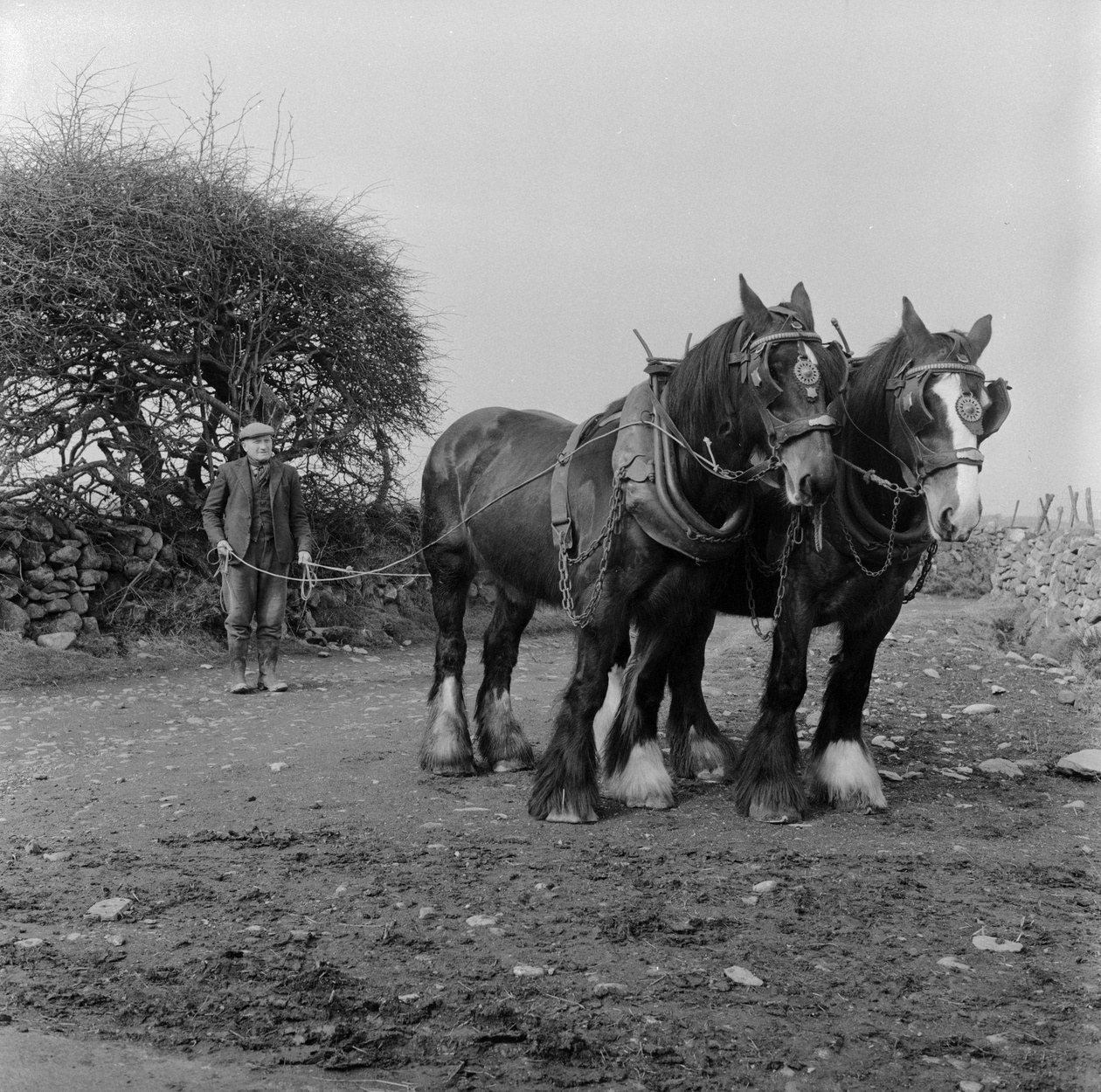
The Shire is the tallest breed of horse in the world — its geldings have held the all-time height record for over 170 years — and England's definitive heavy horse. Descended from the medieval 'Great Horse' that carried armoured knights, the Shire was rebuilt in the Midland counties as the supreme farm and brewery horse: a ton of black or bay power on feathered legs, pulling London's beer drays and ploughing the heavy clays of the Shires. Still a rare breed today, it survives as a show hitch horse, a riding horse of surprising quality, and living heritage.
Temperament & personality
Shires are calm, kind, and famously sensible — bred to work quietly in city traffic and on farms handled by whole families. They are less animated than a Percheron and steadier than most light breeds, with a slow, thoughtful manner that owners find deeply relaxing. Size makes groundwork non-negotiable: a Shire must learn manners young, because no human wins an argument with 2,200 pounds of horse that has decided otherwise.
Appearance
Unmistakable: a long, noble head with a slightly convex profile, a broad chest and enormously powerful hindquarters, and — the breed's signature — abundant, silky feather flowing from knee and hock over huge, round feet. Most Shires are black or bay with white socks and a blaze. Everything is to a larger scale than the Clydesdale, its closest cousin, and the overall impression is of dignity rather than flash.
Care & daily life
Draft economics apply in full: large stalls, doors, trailers, and farrier bills (shoes are forged big, or hooves trimmed by draft specialists). The feather is the daily chore: it must be parted, inspected, and kept dry, because it conceals the skin diseases this breed is prone to. Shires are moderate eaters for their size but need forage volume to match their gut, plus steady exercise — fit, working Shires stay sounder than idle ones.
Health & lifespan
The Shire is generally known for the following health watch-points:
- Chronic progressive lymphedema (CPL) — the feathered breeds' major curse: an incurable, progressive swelling, thickening, and skin disease of the lower legs. Shires are among the most affected breeds; daily leg inspection and dry management are the only tools
- Dermatitis and feather mites ('scratches') hidden under the feather — the feather must be lifted and the legs examined, not admired from a distance
- PSSM1 (polysaccharide storage myopathy) occurs in the breed; DNA testing is available
- Shivers, the draft neuromuscular hind-limb condition, is recorded in Shires
- Draft-scale joint strain and foot imbalance under two thousand pounds of horse — farriery quality is destiny
Living with a Shire
Shires suit people with heavy-horse facilities who want heritage, calm, and spectacle in one package: hitch exhibitors, brewery-style promotion teams, drivers, and heavy-horse riders. Purchase prices for quality stock are high and running costs are draft-scale across a 20–25-year life. They reward owners who enjoy the daily ritual of leg care and grooming — with a Shire, the ritual is part of the point.
History
The Shire's ancestors carried knights as the medieval Great Horse; after gunpowder ended the armoured charger, the type was crossed with Flemish and Friesian imports and rebuilt in Leicestershire, Lincolnshire, Derbyshire and their neighbours — the 'Shires' — into the world's supreme agricultural horse, formalised by the Shire Horse Society in 1878. Sampson, a Shire gelding foaled in 1846, stood 21.2½ hands and remains the tallest horse ever recorded. Exported worldwide at its peak, the breed crashed with mechanisation and is still listed as at risk by the Rare Breeds Survival Trust.