Overview
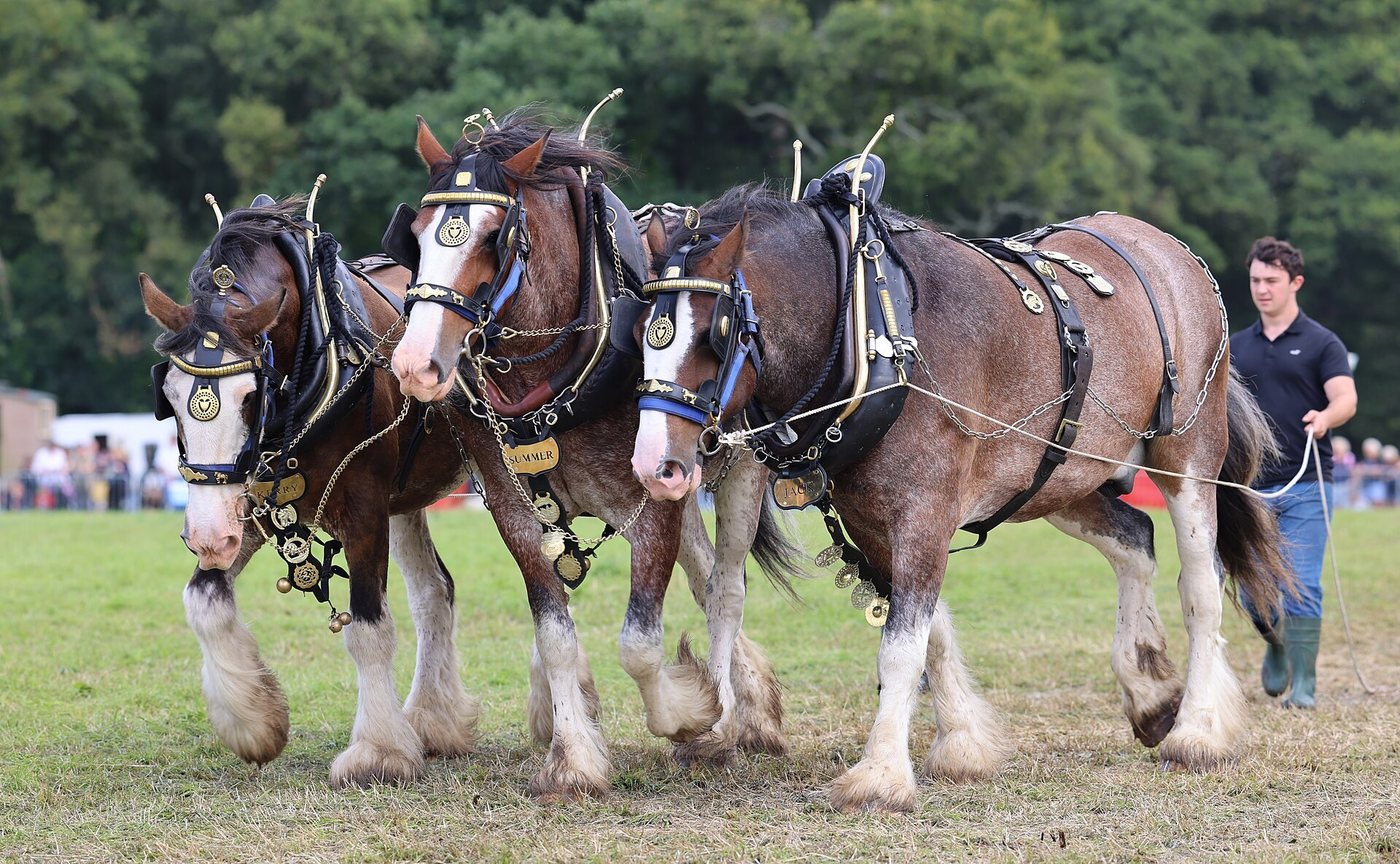
The Clydesdale is the draft horse the world knows by name: a Scottish heavy horse of immense power and surprising grace, with silky feathered legs, high flashy action, and a temperament so gentle it anchors the breed's 'gentle giant' fame. Bred to work farms and haul city wagons, the Clydesdale today is best known pulling show hitches — eight bay giants in polished harness — yet remains a willing riding and driving horse behind the spectacle.
Temperament & personality
Clydesdales are the steady centre of any barn: calm, kind, patient, and famously tolerant of children, crowds, and chaos. They are intelligent and willing workers that respond to quiet handling; brute force is both unnecessary and useless against a ton of horse that has decided otherwise. Their placidity hides a playful streak — a bored Clydesdale in a muddy field is a comedian, and their curiosity about people never really fades.
Appearance
A giant of a horse: massively built with a broad chest, powerful shoulders and hindquarters, a kind, intelligent head with a slightly convex profile, and abundant feathering flowing over dinner-plate hooves. The most familiar image is the Budweiser bay with four white socks and a blaze, but blacks, browns, and roans are equally part of the breed.
Care & daily life
Everything about Clydesdale care is draft-scale: more feed (though they are more moderate eaters than their size suggests), bigger stalls and trailers, heavier shoes or barefoot trims by a farrier equipped for drafts, and daily attention to the feathered legs, whose skin must stay dry and clean. They are gentle to handle but their size demands groundwork discipline from day one. Regular exercise — driving, riding, or work — keeps their joints and minds right; veterinary and shoeing bills scale up with the horse.
Health & lifespan
The Clydesdale is generally known for the following health watch-points:
- Chronic progressive lymphedema (CPL) — a serious, incurable swelling and skin disease of the feathered lower legs; the breed's major known health burden
- Dermatitis under the feather ('scratches') from moisture and mites, requiring constant leg management
- Shivers — a neuromuscular condition seen in draft breeds, affecting hind-leg movement
- Draft-scale orthopedic wear: hock and joint strain from sheer mass
- Colic and laminitis risk follows all large-breed management rules; weight control matters
Living with a Clydesdale
Clydesdales suit owners with draft-sized facilities and budgets who want the gentlest of giants: hitch and parade exhibitors, drivers, pleasure riders, and farms wanting a working emblem. Costs — feed, shoeing, housing, transport — all scale with the ton of horse, across a 20–25-year life. As a personality to live with, few breeds are easier; as a logistics problem, few are bigger.
History
The Clydesdale was developed in the Clyde valley of Lanarkshire, Scotland, in the 18th and 19th centuries, crossing local mares with imported Flemish and Shire stallions to build a powerful but active farm and haulage horse. It pulled Glasgow's carts, worked farms across the Empire, and followed emigrants to North America and Australia. Mechanisation collapsed draft numbers after 1945, but the breed found a second life as the world's premier show hitch horse — above all through the Budweiser Clydesdales, first hitched in 1933 and now global icons.