Overview
The Staffordshire Bull Terrier is a compact powerhouse: a smooth-coated, heavily muscled terrier bred in England's Black Country from bulldog and terrier crosses. Its history in the fighting pits is real, but so is the other half of its story — for well over a century the Staffy has been prized in Britain as a family dog, nicknamed the 'nanny dog' for its devotion to children. The modern Staffy is a people's dog through and through: clownish, cuddly, and happiest pressed against a human on the sofa.
Temperament & personality
Staffies are affectionate to a fault with their families, courageous, and full of boisterous good humour. They can be intense and occasionally stubborn, and because of their ancestry some are selective or reactive with unfamiliar dogs — early, thorough socialization and calm, consistent training are essential, not optional. With people they are typically outgoing and eager for attention, and they dislike being left alone for long stretches; a bored Staffy is a strong-jawed interior redesigner.
Appearance
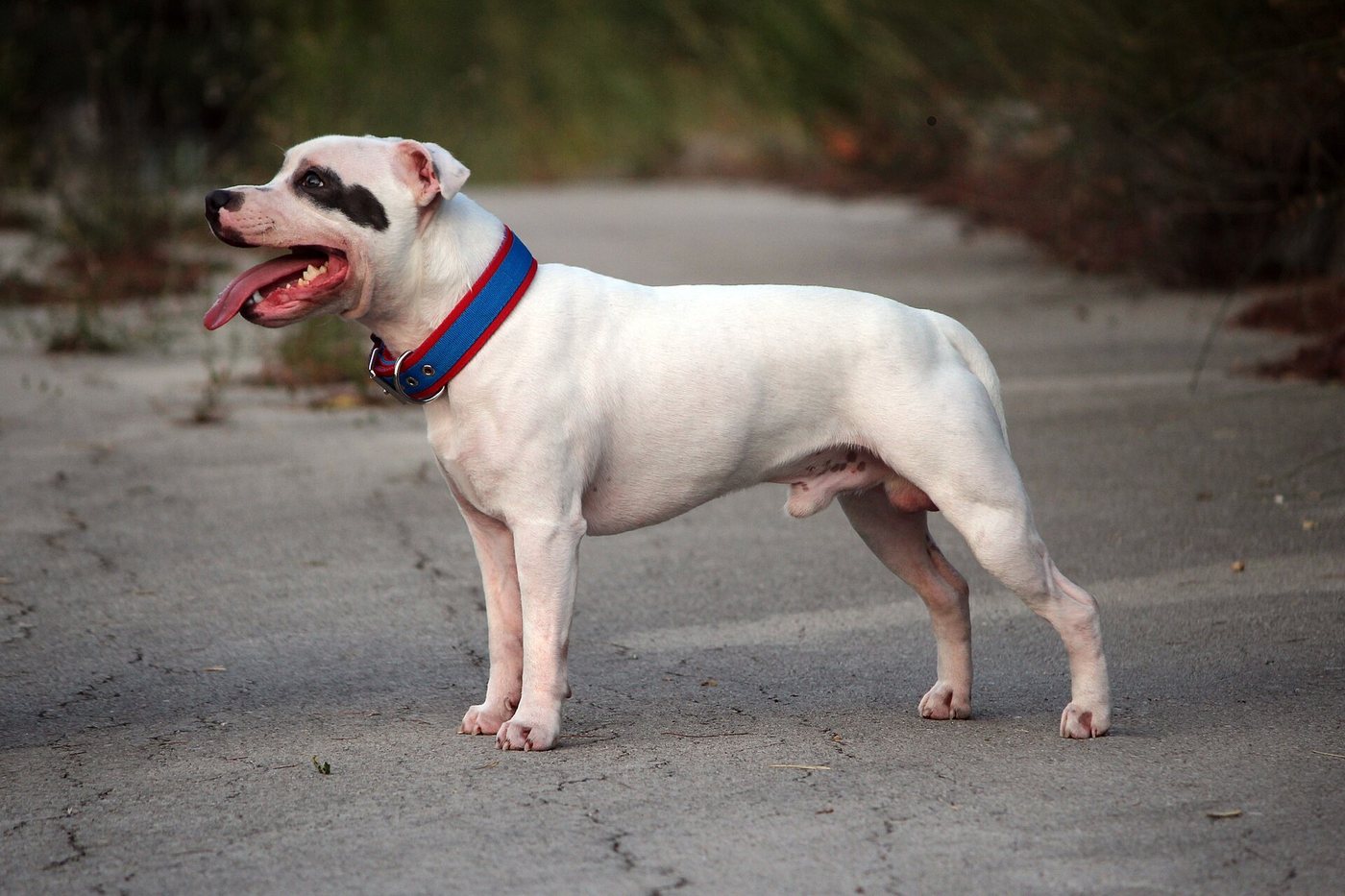
A short, stocky, powerfully built dog with a broad head, pronounced cheek muscles, a short foreface, and dark round eyes set wide apart. The coat is short, smooth, and close, in red, fawn, white, black, blue, or brindle, with or without white markings. Despite standing only knee-high, a Staffy gives an overwhelming impression of strength — this is a lot of dog in a small frame.
Care & daily life
Plan on one to one and a half hours of exercise and play a day: walks, tug games, fetch, and training all count. Staffies are smart and food-motivated, so reward-based training works well, but keep sessions fun — they bore quickly with drilling. The short coat needs only a weekly brush. Watch weight carefully, supervise around other dogs until you know your dog's comfort level, and note that Staffies feel the heat: exercise in the cool hours on hot days.
Health & lifespan
The Staffordshire Bull Terrier is generally known for the following health watch-points:
- Hereditary cataracts and other inherited eye conditions (DNA testing available)
- L-2-hydroxyglutaric aciduria (L2HGA), a metabolic condition affecting movement and behaviour — DNA-testable, so ask breeders for results
- Hip dysplasia and patellar luxation
- Skin allergies and demodectic mange occur more often than average
- Mast cell tumours and other cancers are seen in the breed
Living with a Staffordshire Bull Terrier
Staffies thrive in homes where someone is around for much of the day and where their exercise and training needs are genuinely met. They suit houses and larger apartments alike and are wonderful with respectful children they have been raised with. They are not the right choice for owners who want a dog-park social butterfly in every situation, nor for homes that cannot commit to training a strong, determined dog.
History
The breed was created in the English Midlands in the early 1800s by crossing Bulldogs with local terriers, producing a smaller, faster dog for the rat pits and dog fights of the industrial working class. When blood sports were banned in 1835, the dogs stayed on as companions and show dogs; fanciers in Staffordshire standardized the breed, and the Kennel Club recognized it in 1935. The AKC followed in 1974. It remains one of Britain's most popular breeds.