Overview
The Parson Russell is the original Russell terrier: the long-legged white fox dog bred by a hunting parson to gallop with the hounds and then go to ground after the fox. Nothing about the modern dog has forgotten that job. It is a bright, tireless, game little athlete packed into a 15-pound frame, with the confidence of a dog three times its size.
Temperament & personality
Bold, friendly, and relentlessly busy. Parsons are charming clowns with their families and form strong bonds, but they are independent thinkers with a high prey drive and a low boredom threshold. They respond well to positive training that channels their energy; harsh handling or long idle hours produce a destructive, noisy dog. Many are same-sex dog-selective, so early socialization matters.
Appearance
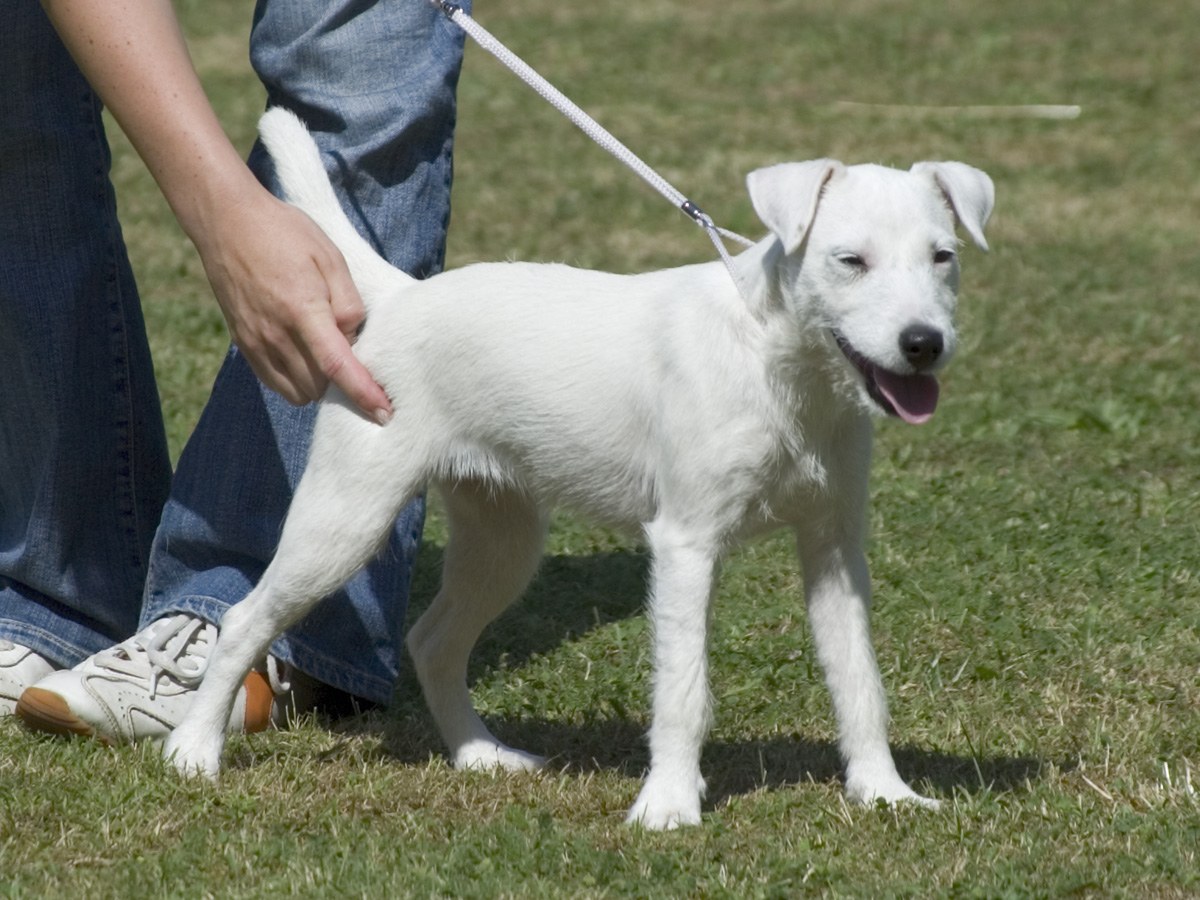
A compact, athletic white terrier, predominantly white with black, tan, or lemon markings. The harsh double coat is weatherproof and naturally shaggy without being overdone, the head is strong with a keen expression, and the body is flexible and well-balanced — spannable, meaning the chest can be spanned by two hands behind the shoulders, a leftover of its fox-bolting design.
Care & daily life
Budget around one to one and a half hours of exercise a day — Parsons were bred to run with hounds, and a bored one will dig, chew, and redecorate. They thrive on dog sports like agility, earthdog, and flyball. The rough coat needs hand-stripping a few times a year (clipping softens it); smooth coats just need a weekly brush. Secure fencing matters: this is an escape-minded hunter.
Health & lifespan
The Parson Russell Terrier is generally known for the following health watch-points:
- Primary lens luxation — a hereditary eye condition that can cause sudden blindness; DNA testing is available
- Late-onset ataxia and spinocerebellar ataxia (DNA-testable)
- Patellar luxation
- Deafness, occasionally associated with predominantly white coats
- Legg-Calvé-Perthes disease in some lines
Living with a Parson Russell Terrier
Best with active owners who enjoy training and dog sports. Parsons can live in apartments if genuinely exercised, but a securely fenced garden is a real asset — digging and escaping are breed hobbies. They are usually too intense and prey-driven for homes with small free-roaming pets.
History
The breed traces to the Reverend John 'Jack' Russell of Devon, who in the early 1800s developed white working terriers that could run with foxhounds and bolt foxes from their dens. The taller type he favoured — legs long enough to keep up with horses and hounds — was eventually recognised as the Parson Russell Terrier, while the shorter-legged version kept the Jack Russell name.