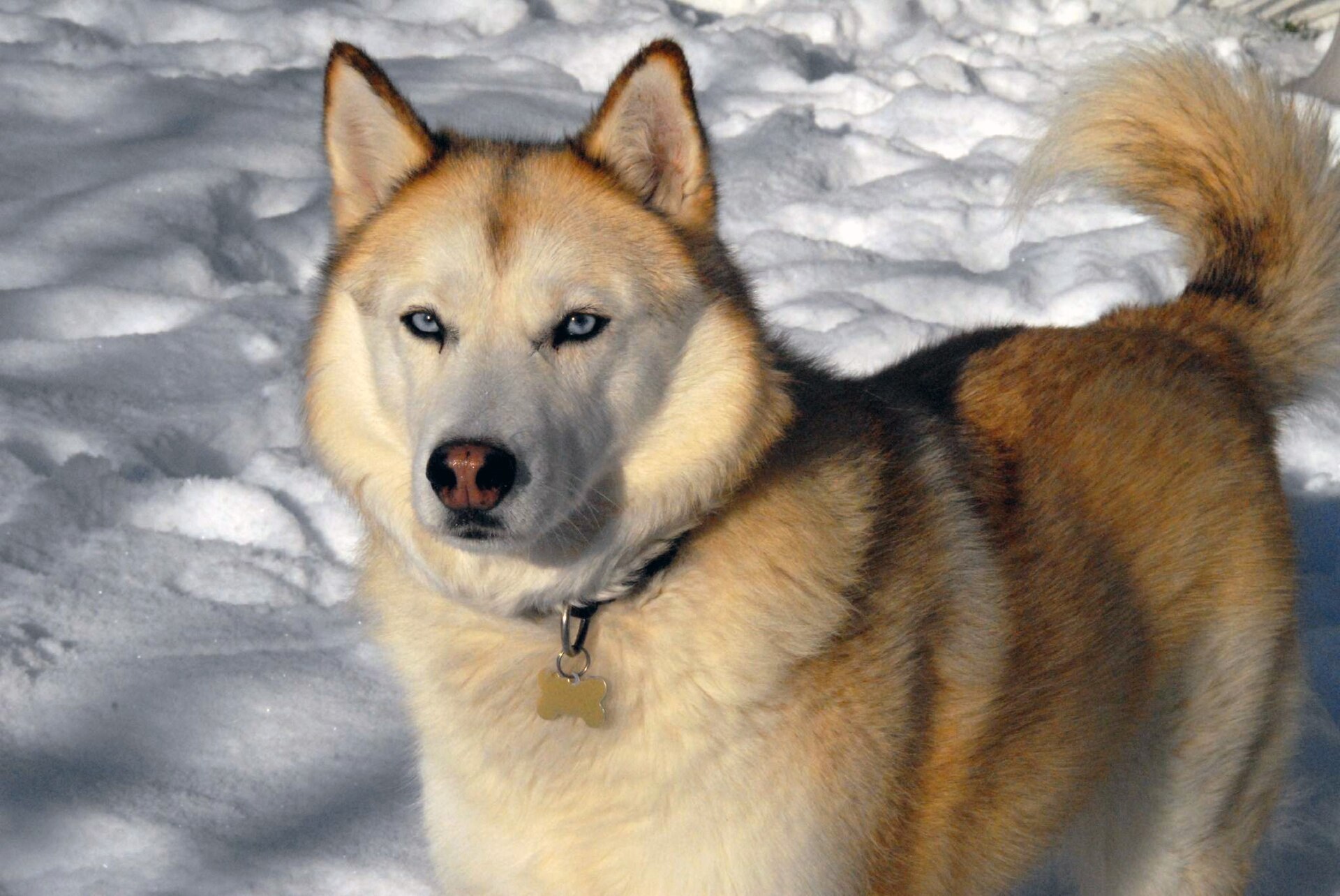
Overview
The Siberian Husky is a endurance athlete wrapped in a wolfish beauty that stops traffic. Bred by the Chukchi people to pull light loads across enormous distances in brutal cold, the modern Husky keeps the engine, the independence, and the pack sociability — plus a famous talent for escape artistry and theatrical howling. Owning one is less like having a pet and more like living with a furry, opinionated training partner.
Temperament & personality
Huskies are friendly — with everyone, including strangers, which makes them hopeless guard dogs — and famously independent thinkers. They are not eager-to-please in the retriever sense; they cooperate when the deal seems fair. Intelligent, mischievous, and destructive when bored, they reward owners who channel their energy into running, pulling sports, and games.
Appearance
A graceful, athletic dog with a thick double coat — a coarse outer layer over a dense undercoat — in grey, red, black, or white colourings, often with striking facial markings. Blue eyes, brown eyes, one of each, and parti-coloured eyes all occur, adding to the breed's arresting look.
Care & daily life
Give at least one and a half to two hours of vigorous exercise daily — running, hiking, bikejoring, or sled sports where possible — and always manage the world like an escape is planned, because it is: dig-proof, climb-proof fencing and leashed outings. Brush weekly, and brace for two enormous coat blows a year. Train with humour and variety; repetition bores them.
Health & lifespan
The Siberian Husky is generally known for the following health watch-points:
- Inherited eye diseases are the breed's signature concern: cataracts, corneal dystrophy, and progressive retinal atrophy
- Hip dysplasia occurs at moderate rates
- Hypothyroidism and zinc-responsive skin conditions are seen
- Overall one of the healthier purebreds when eyes are screened
Living with a Siberian Husky
Huskies fit active, outdoorsy households that genuinely enjoy daily vigorous exercise and can laugh at dramatic vocal opinions. They need secure fencing, do poorly left alone for long hours, and are risky housemates for cats and small pets. For the right owner, their funny, social, cat-like independence is addictive.
History
The breed was kept for centuries by the Chukchi people of far north-eastern Siberia as an endurance sled dog that could haul light loads over vast frozen distances on minimal food. Brought to Alaska during the gold rush era, Siberians swept sled racing and starred in the famous 1925 serum run to Nome — the event the Iditarod commemorates — led by dogs including Balto and Togo.