Overview
The Leonberger is a gentle giant with a lion's mane and a family dog's heart. Created in 19th-century Germany as a majestic companion with a look modelled on a town crest, the breed combines the size of a St. Bernard with an unusually steady, playful temperament. Leos are known for patience with children, a love of water, and a calm confidence that makes them far easier to live with than their dimensions suggest — provided you can afford their upkeep and accept their short time with you.
Temperament & personality
Steady, affectionate, and notably sensible. Leonbergers are sociable without being pushy, watchful without being sharp, and they mature into dignified adults after a gangly, boisterous adolescence. They bond closely with the whole family rather than one person, and they are generally gracious with visiting children, other dogs, and household chaos. Early socialization and training matter: a 140-pound dog with no manners is a problem no amount of good nature fixes.
Appearance
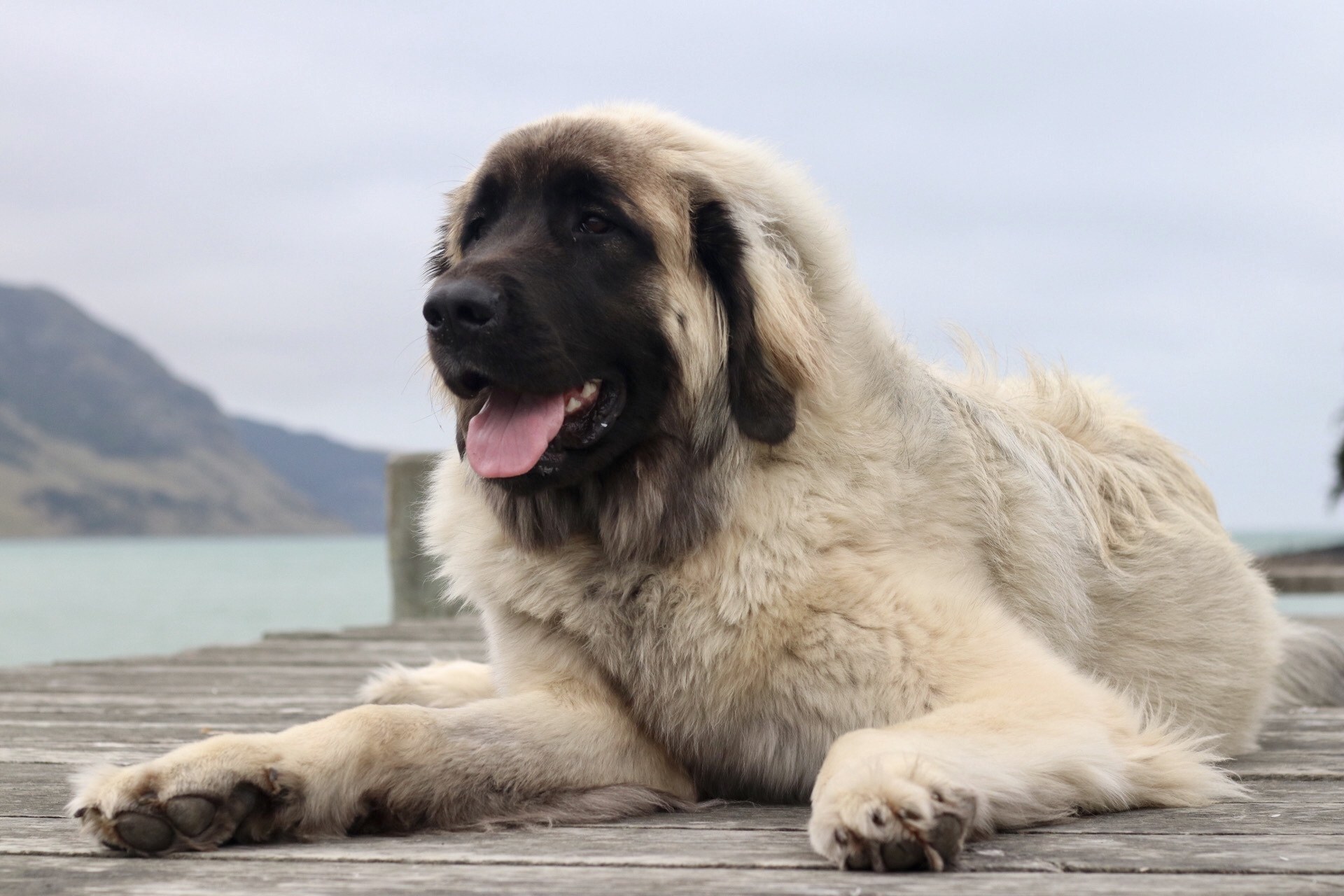
A majestic giant with a distinctive black mask, kind dark eyes, and a long, dense double coat in lion-like shades of gold, red, and brown with black tipping. Males carry a noticeable mane around the neck and shoulders. The waterproof coat, feathered tail, and webbing between the toes all point to the breed's mountain and water heritage.
Care & daily life
Plan on one to one and a half hours of exercise a day — steady walks, hill work, and swimming suit them better than hard running, and young dogs should avoid forced exercise and jumping while their joints develop. The heavy coat needs brushing several times a week and daily attention during the twice-yearly blows. Feed a giant-breed diet, keep the dog lean, and follow bloat precautions: smaller meals, no exercise right after eating.
Health & lifespan
The Leonberger is generally known for the following health watch-points:
- Cancer — osteosarcoma and hemangiosarcoma are leading causes of the breed's short lifespan
- Leonberger polyneuropathy (LPN1, LPN2 and related forms) — inherited nerve diseases, now DNA-testable
- Bloat (gastric dilatation-volvulus) — a life-threatening emergency in deep-chested giants
- Hip dysplasia
- Eyelid problems such as entropion and ectropion, and hypothyroidism
Living with a Leonberger
Be honest about the giant-breed ledger before falling for the mane: a Leo eats like a giant, every vet bill scales with its weight, and the average lifespan is only around seven years. They need a house with real space, a car they fit in, and an owner who will train them kindly but consistently while they are still small enough to manage. In return they are among the gentlest, steadiest family dogs of any size, famously patient with children and happiest as indoor companions, not yard ornaments.
History
The breed was created in the 1840s by Heinrich Essig, a councillor of Leonberg in southwest Germany, who crossed St. Bernards and Newfoundlands — and later Pyrenean Mountain Dogs — aiming for a majestic dog resembling the lion on the town's crest. Leonbergers became fashionable companions for European royalty, nearly vanished in the World Wars, and were rebuilt from a handful of survivors.