Overview
The Shetland Sheepdog is a working collie distilled to lap-adjacent size: bred on Scotland's wind-scoured Shetland Islands to herd miniature sheep and ponies, it kept the collie brain, the collie loyalty, and the collie double coat — in a 20-pound package. Shelties consistently rank among the most intelligent and trainable of all breeds, and among the most devoted: a Sheltie does not just live with its family, it studies them.
Temperament & personality
Playful, energetic, and bright, with a characteristic Sheltie sensitivity — they read voices and moods with unnerving accuracy and wilt under harsh handling. They are reserved with strangers without being fearful in well-socialised dogs, and they bond with an almost shadow-like devotion. Their herding heritage surfaces as chasing games and enthusiastic commentary on household events.
Appearance
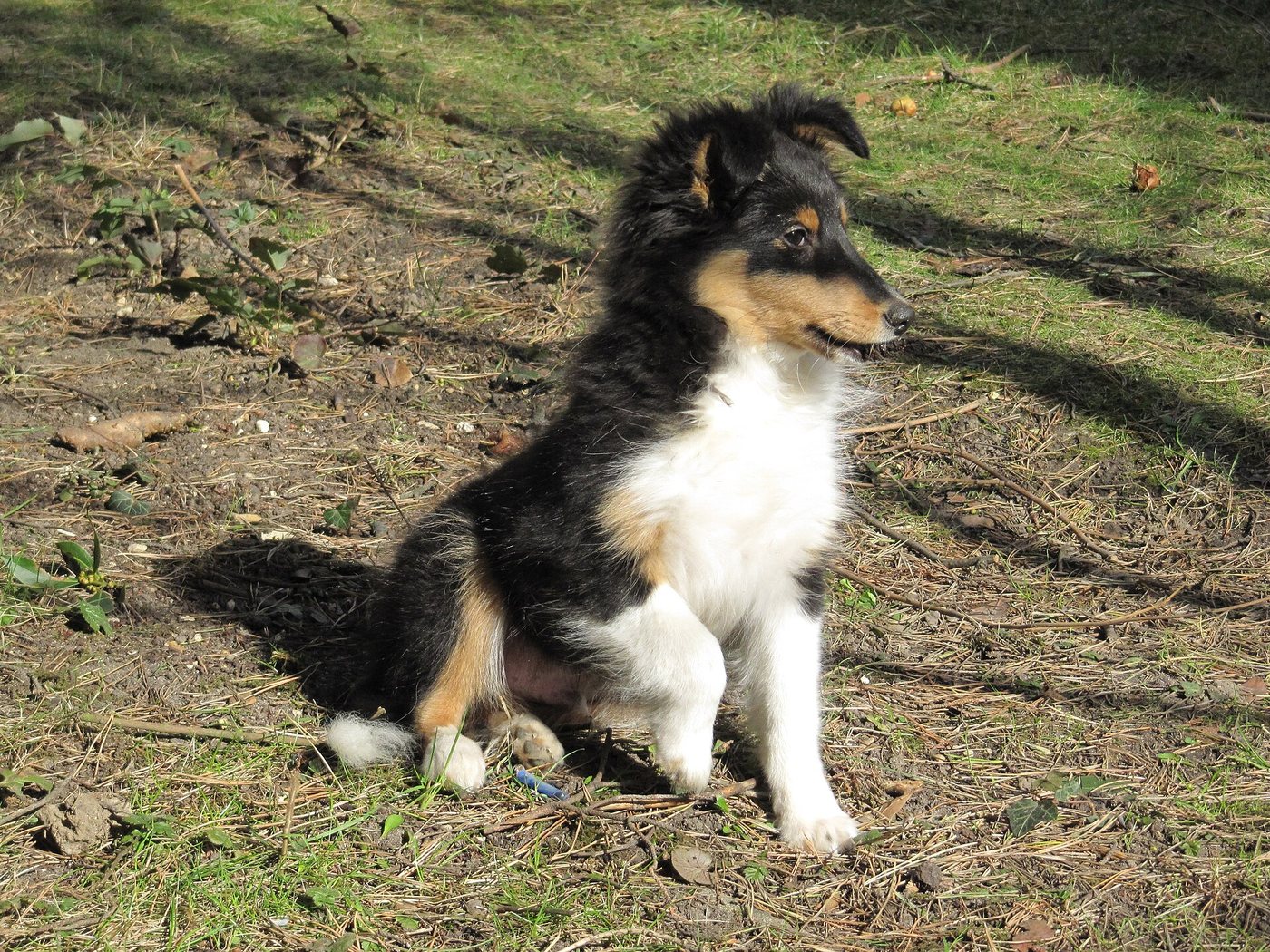
A small, elegant herding dog that looks like a Collie in miniature: a refined wedge-shaped head, almond eyes full of intelligence, ears that tip forward at the top, and a lush double coat with a magnificent mane and frill. Colours are sable, black, blue merle, and bi-black or bi-blue, with white markings. The expression — sweet, keen, watchful — is the breed's calling card.
Care & daily life
Give about an hour of exercise and play a day, plus training games — this breed's brain needs work as much as its legs. Shelties excel at obedience, agility, and trick training and genuinely enjoy learning routines. The double coat needs brushing once or twice a week, working down to the skin, and more during the twice-yearly coat blows. Early socialisation counters the breed's natural reserve and noise sensitivity.
Health & lifespan
The Shetland Sheepdog is generally known for the following health watch-points:
- The MDR1 drug-sensitivity gene is common in the breed — DNA test and inform your vet
- Collie eye anomaly and progressive retinal atrophy — eye screening and DNA tests are available
- Hip dysplasia at low-to-moderate rates for the size
- Dermatomyositis, a skin and muscle condition, occurs in some lines
- Hypothyroidism and von Willebrand's disease are seen occasionally
Living with a Shetland Sheepdog
Shelties suit families, singles, and seniors who want an engaged, trainable companion — they are sensitive souls that bond deeply and dislike chaos and long solitude. Apartment living works with daily exercise and bark management. They are one of the finest choices for owners who enjoy training as a hobby.
History
The Sheltie comes from Scotland's Shetland Islands, where harsh conditions miniaturised everything — ponies, sheep, cattle, and the farm dogs that worked them. Island farmers crossed small mainland collies with other spitz-type and King Charles Spaniel influences over time, producing a hardy little herder for tiny livestock. The breed reached mainland Britain in the early 1900s and was recognised by the AKC in 1911.