Home › Dogs › German Shepherd
German Shepherd — Herding
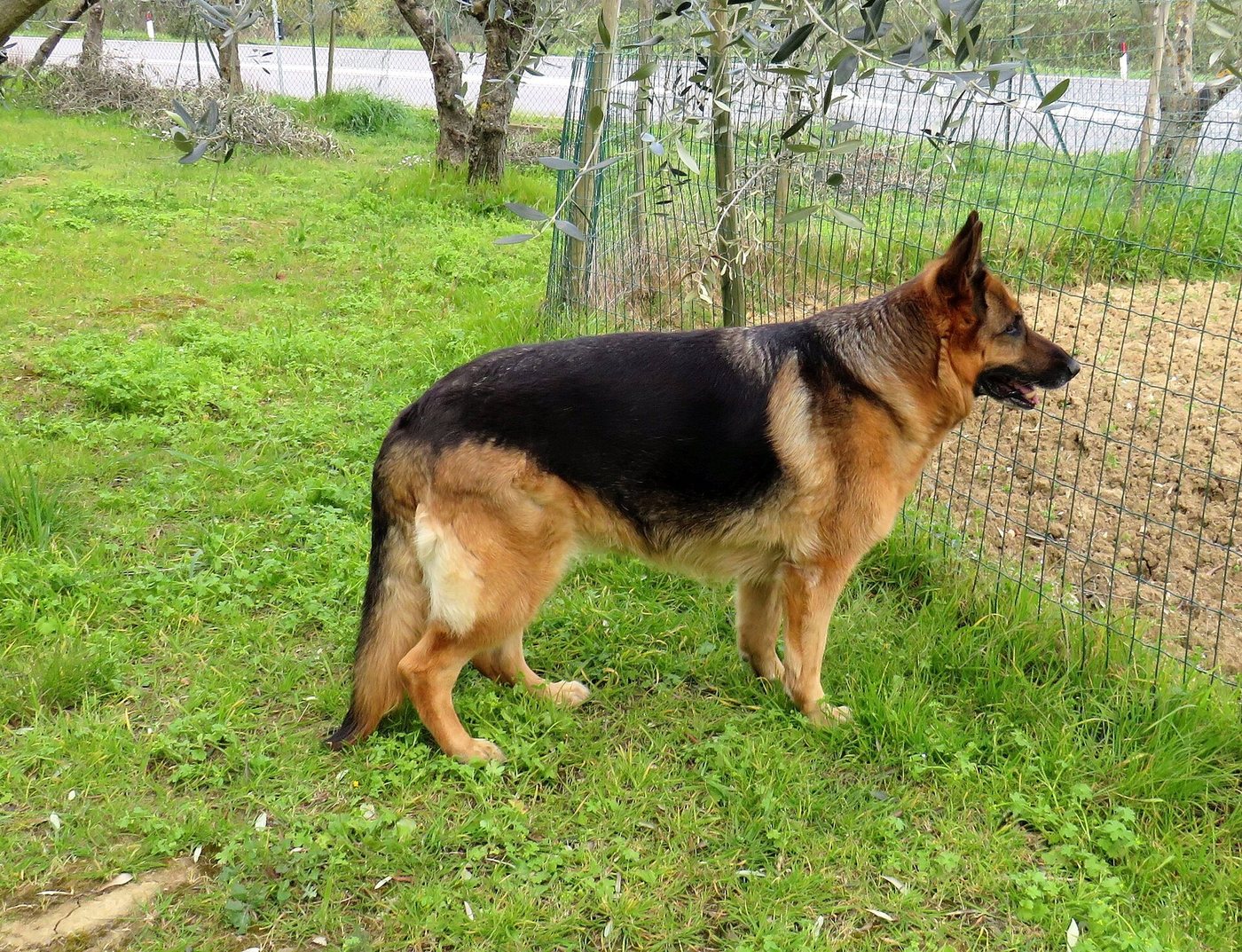
Photo: "German shepherd guard dog" by PROPOLI87 · CC BY-SA 4.0, via Wikimedia Commons

German Shepherd

The German Shepherd at a glance: a confident, loyal herding breed standing 22–26 inches, weighing 50–90 pounds, and living 9–13 years — one of the world's most capable working dogs.

Height22–26 inches
Weight50–90 pounds
Lifespan9–13 years
TemperamentConfident, loyal, courageous, watchful

German Shepherd facts

Energy level
High
Exercise needs
1.5–2 hours a day
Good with children
Good with proper socialization
Good with other pets
Moderate — socialization matters
Grooming
Brush several times a week
Height
22–26 inches
Lifespan
9–13 years
Origin
Germany
Shedding
High — heavy double coat
Temperament
Confident, loyal, courageous, watchful
Weight
50–90 pounds

Overview

The German Shepherd is the archetypal working dog: police and military service, search and rescue, guide work, and herding all sit in its resume. That capability comes with intensity — this is a breed that bonds deeply to its family, thinks constantly, and needs a job to do. In the right hands it is steady, brave, and devoted; in idle hands it can become anxious and difficult.

Temperament & personality

Aloof with strangers but not hostile, and utterly committed to its own people. German Shepherds are highly trainable and rank among the most intelligent breeds, which is a double-edged sword: they learn routines — including bad ones — fast. Early, thorough socialization is not optional; it is what turns natural watchfulness into calm confidence rather than reactivity.

Appearance

A large, athletic, elongated dog with erect ears, a bushy tail, and a dense double coat, most often black and tan but also sable, all black, or bi-colour. The breed standard calls for a strong, muscular build with a notably sloped topline in show lines; working lines tend to be straighter-backed.

Care & daily life

Budget one and a half to two hours daily of combined exercise and training — this breed measures a good day in work done. Training should be consistent, reward-based, and ongoing; advanced obedience, tracking, and scent games suit them well. The double coat sheds constantly and blows out twice a year; brush several times weekly.

Health & lifespan

The German Shepherd is generally known for the following health watch-points:

General information only, not veterinary advice — a vet who knows your dog is the right source for health decisions.

Living with a German Shepherd

Best in an active home with space, structure, and an owner who enjoys training. German Shepherds can adapt to many living situations if their physical and mental needs are met, but they are a poor match for sedentary households or first-time owners who want an easy dog.

History

The breed was standardized in Germany at the end of the 1890s by Captain Max von Stephanitz, who bred the versatile herding dogs of Germany into a single, capable working breed under the motto 'utility and intelligence.' Its service in both World Wars spread it worldwide, and it has been among the most popular breeds ever since. Von Stephanitz founded the breed club in 1899 and registered Horand von Grafrath as the first German Shepherd. The breed served as messenger, sentry and rescue dog in both World Wars, and film stars Rin Tin Tin and Strongheart made it famous in the 1920s.

Is this breed right for you?

Good With Children
Good with proper socialization
Apartment Ok
Yes, only with 1.5–2 hours exercise and training daily
Needs Yard
Helpful, not essential if exercised
Shedding Level
High — heavy double coat
First Time Owner
Better for experienced owners

Care needs at a glance

Exercise Per Day
1.5–2 hours a day
Grooming Frequency
Brush several times a week
Training Difficulty
Easy to train, demanding to handle — needs consistent leadership

Cost of owning

Yearly cost (approx., 2026)
Approximately $1,050–$2,000 per year

Approximate yearly range for food, routine vet care and grooming only — excludes emergencies, insurance and boarding. Based on ASPCA pet-care cost categories and AKC food-cost ranges by size; actual costs vary by location and choices.

Adoption & rescue

Like the German Shepherd? Visit the official breed page for the breed standard and official guidance.

German Shepherd FAQs

Are German Shepherds good family dogs?

For active families who will train and socialize them, yes — they are loyal and protective. They are usually too much dog for a quiet, first-time household.

How much exercise does a German Shepherd need?

Around 1.5–2 hours a day including training and mental work. A bored German Shepherd will find its own jobs, and you may not like them.

Do German Shepherds shed a lot?

Yes — the nickname 'German Shedder' is earned. Expect constant shedding and two major coat blows a year.

Are German Shepherds aggressive?

They are naturally watchful and protective, not inherently aggressive. Breeding, socialization, and training decide the outcome; poorly socialized dogs can become reactive.

How much does it cost to keep a German Shepherd each year?

Approximately $1,050–$2,000 per year (2026). Approximate yearly range for food, routine vet care and grooming only — excludes emergencies, insurance and boarding. Based on ASPCA pet-care cost categories and AKC food-cost ranges by size; actual costs vary by location and choices.

Show this breed on your site

Embed a free German Shepherd fact card — it links back here:

<iframe src="https://allpetbreeds.com/embed/dogs/german-shepherd/" width="340" height="430" style="border:0;border-radius:16px;overflow:hidden" loading="lazy" title="German Shepherd breed card"></iframe>

Sources: AKC breed standard and care pages; SV (Verein für Deutsche Schäferhunde) breed information; AKC breed page — https://www.akc.org/dog-breeds/german-shepherd-dog/; ASPCA Pet Care Costs — https://www.aspca.org/sites/default/files/pet_care_costs.pdf; AKC Rescue Network — https://www.akc.org/akc-rescue-network/

Similar breeds