Overview
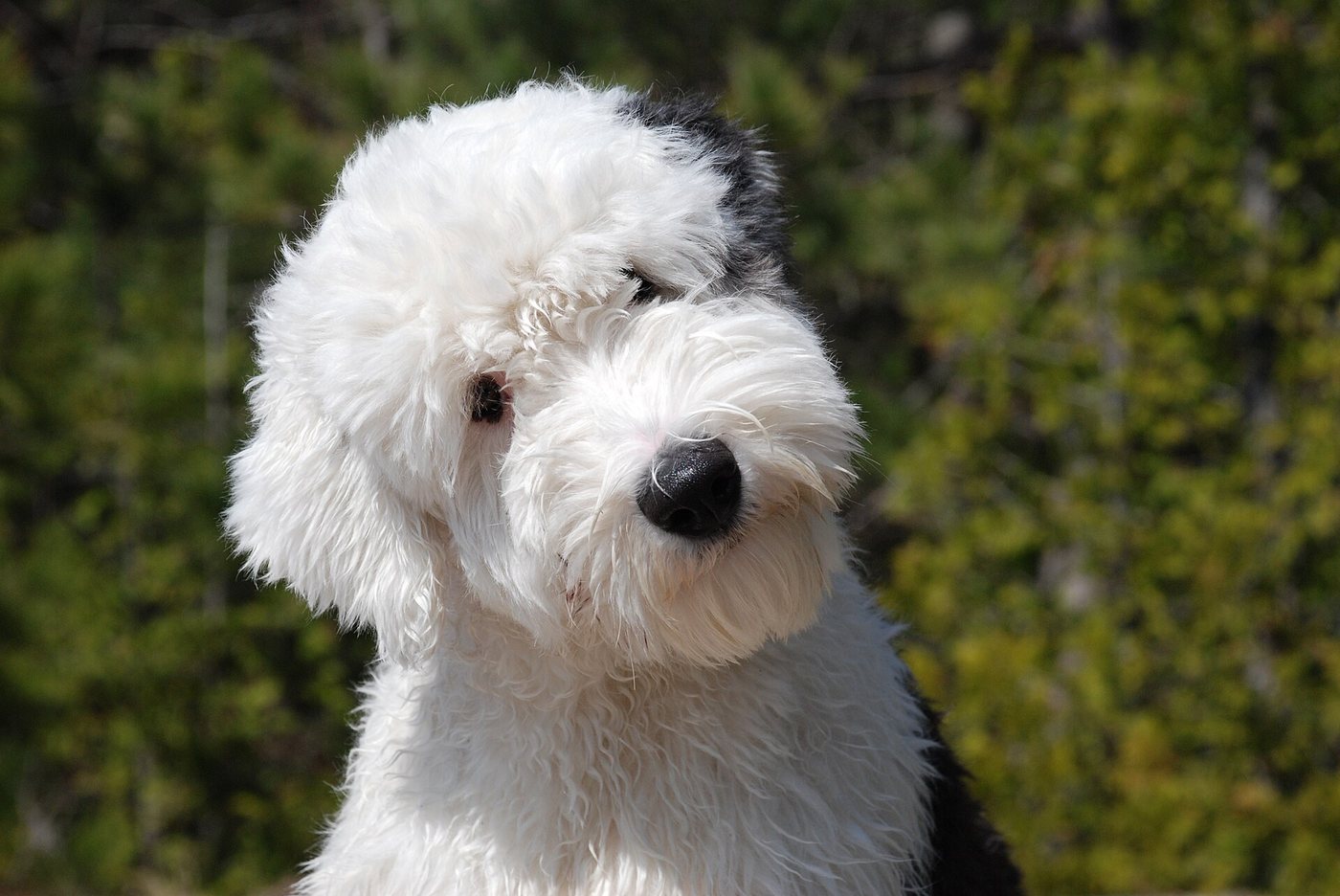
The Old English Sheepdog is a drover's dog turned family clown: a big, shaggy herding breed with a teddy-bear outline, a peekaboo fringe, and a famously humorous outlook. Bred to drive livestock over long distances, it is hardier and more athletic than its comical coat suggests, and it needs work, company, and considerable grooming to be at its best.
Temperament & personality
Gentle, adaptable, and playful, with a real sense of humour and a strong attachment to family. Sheepdogs are watchful and make capable watchdogs — the bark is deep and convincing — but are generally welcoming once introduced. They learn quickly and respond well to positive training, though their size and enthusiasm need channelling early. Many are gently bossy herders of children, guests, and other pets.
Appearance
Unmistakable and endearing: a substantial, bear-like dog under an enormous shaggy double coat — blue-grey and white, born black and 'clearing' to grey with age — with a docked or naturally bobbed tail (hence 'Bobtail'), hair falling over the eyes, and a distinctive rolling, shuffling gait. Despite the coat, the dog underneath is a solid athlete of 60–100 pounds.
Care & daily life
The coat is the commitment: thorough brushing to the skin at least weekly — an hour or more for a full coat — or the dog kept in a manageable shorter clip. Sheepdogs need about one to one and a half hours of daily exercise and mental work; they are bright and get bored. Watch weight, and keep the coat around the eyes and rear trimmed for hygiene and vision.
Health & lifespan
The Old English Sheepdog is generally known for the following health watch-points:
- Hip dysplasia
- Cataracts and other eye conditions, including progressive retinal atrophy in some lines
- Hypothyroidism and autoimmune issues
- Deafness, associated with excessive white pigmentation
- Inherited conditions screened in the breed include the MDR1 drug-sensitivity gene, exercise-induced collapse, and cerebellar abiotrophy
Living with a Old English Sheepdog
Sheepdogs suit homes with space and people around much of the day — families, especially, who can laugh at a boisterous, shedding sheepdog and keep up the coat. They can manage apartment life only if exercise and companionship are genuinely provided daily. Herding behaviour — gently bumping and circling children and joggers — is normal and managed with training.
History
The breed was shaped in the west of England in the late 1700s and 1800s from Bearded Collie-type and European herding stock, as a drover's dog that moved cattle and sheep to market and guarded them on the road. The docked tail marked it as a working (tax-exempt) dog. Popularised in America by industrialist William Wade in the 1880s, it was recognised by the AKC in 1905 and became a media star — the Dulux paint dog and Disney's 'The Shaggy Dog.'