Overview
The Norwegian Elkhound is one of the oldest dog breeds in Europe — a grey spitz that hunted moose and bear alongside Vikings and has changed remarkably little since. Built for endurance in cold forests, it tracks big game and holds it at bay with a relentless, ringing bark until the hunter arrives. Today that courage and stamina live in a loyal, friendly family dog who still takes perimeter security very personally.
Temperament & personality
Confident, dependable, and independent-minded. Elkhounds bond deeply and are gentle, sensible family members, but they were bred to make decisions alone in the forest, so training is a partnership, not a dictatorship — they respond to fairness and food, not force. They are typically friendly with other dogs and welcoming to guests once their initial announcement is complete.
Appearance
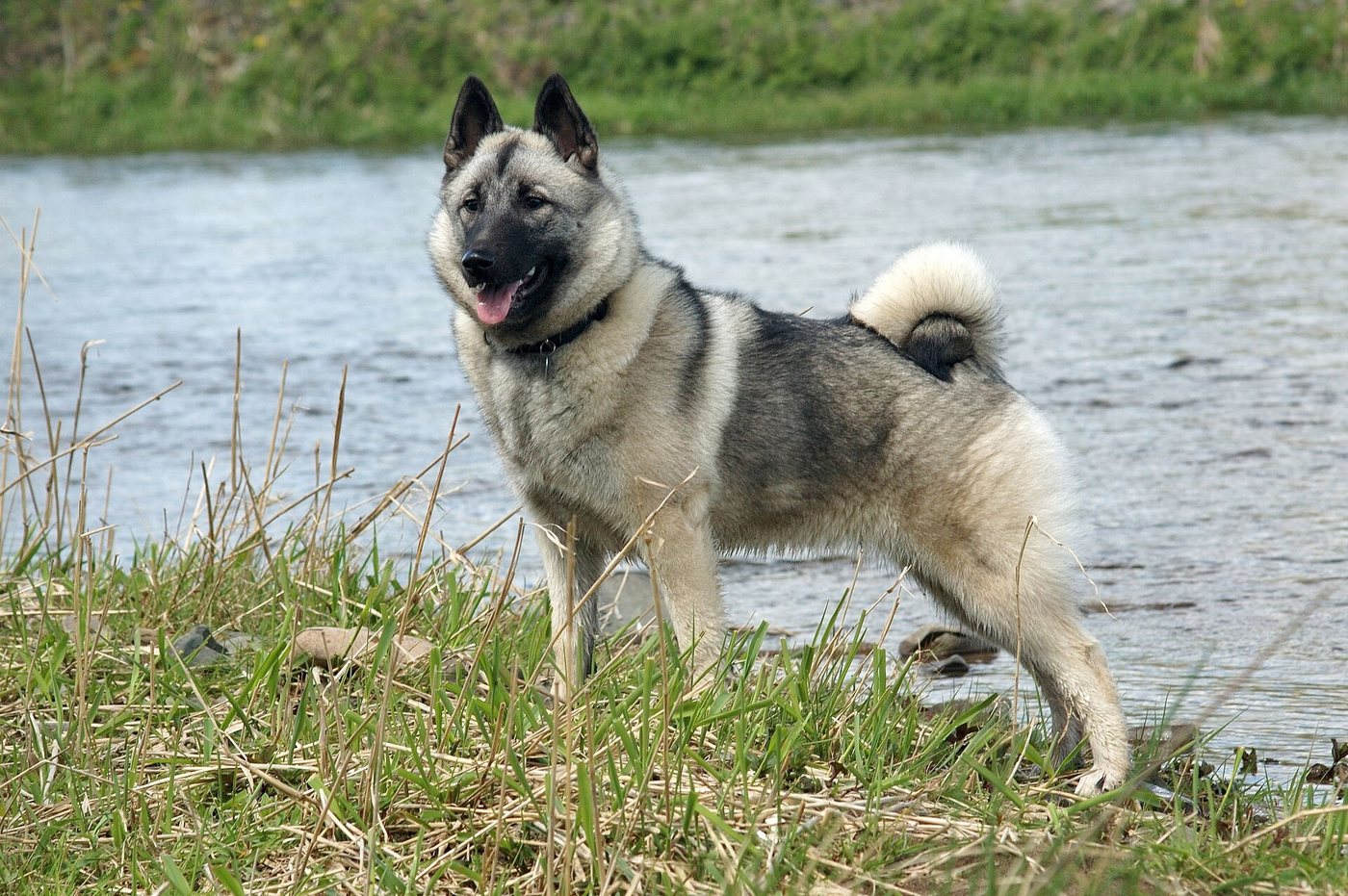
Unmistakable in grey: a thick, silver-grey double coat with darker markings on the ears and a lighter 'spectacle' shading, a wolf-like head with a black mask line, erect ears, and a plumed tail curled tightly over the back. Medium-sized and powerfully built for its height, the Elkhound looks exactly like what it is — a spitz of the Viking age, little changed in a thousand years.
Care & daily life
One to one and a half hours a day of exercise — hiking, running, and tracking games suit this endurance athlete — plus mental work to occupy a clever, independent mind. The legendary coat needs weekly brushing and daily work during the twice-yearly blows, when undercoat comes out by the armful. They are easy keepers that gain weight readily, so measure food. Expect a dog that considers the household's perimeter its personal responsibility and reports on it vocally.
Health & lifespan
The Norwegian Elkhound is generally known for the following health watch-points:
- Hip dysplasia — ask for hip scores
- Progressive retinal atrophy (prcd type is DNA-testable)
- Renal issues including renal dysplasia and a Fanconi-like syndrome are reported in the breed
- Sebaceous cysts are common and usually benign, but new lumps deserve a vet check
- Hypothyroidism and hot spots under the dense coat
Living with a Norwegian Elkhound
Elkhounds suit active, outdoorsy households — ideally with a garden, a hiking habit, and neighbours who tolerate a dog with opinions. They are devoted family dogs that want to be indoors with their people, but their barking, shedding, and independent streak make them a poor match for quiet apartment life or owners who want instant obedience.
History
Dogs of Elkhound type have lived in Scandinavia since the Stone Age — skeletons resembling the breed were found in Norwegian burial sites alongside Viking weapons, and the dogs guarded farms, herded, and hunted big game for millennia. Norway's defence minister famously was said to have authority to mobilise the nation's Elkhounds in wartime. The breed was formalised in the 1870s and remains Norway's national dog.