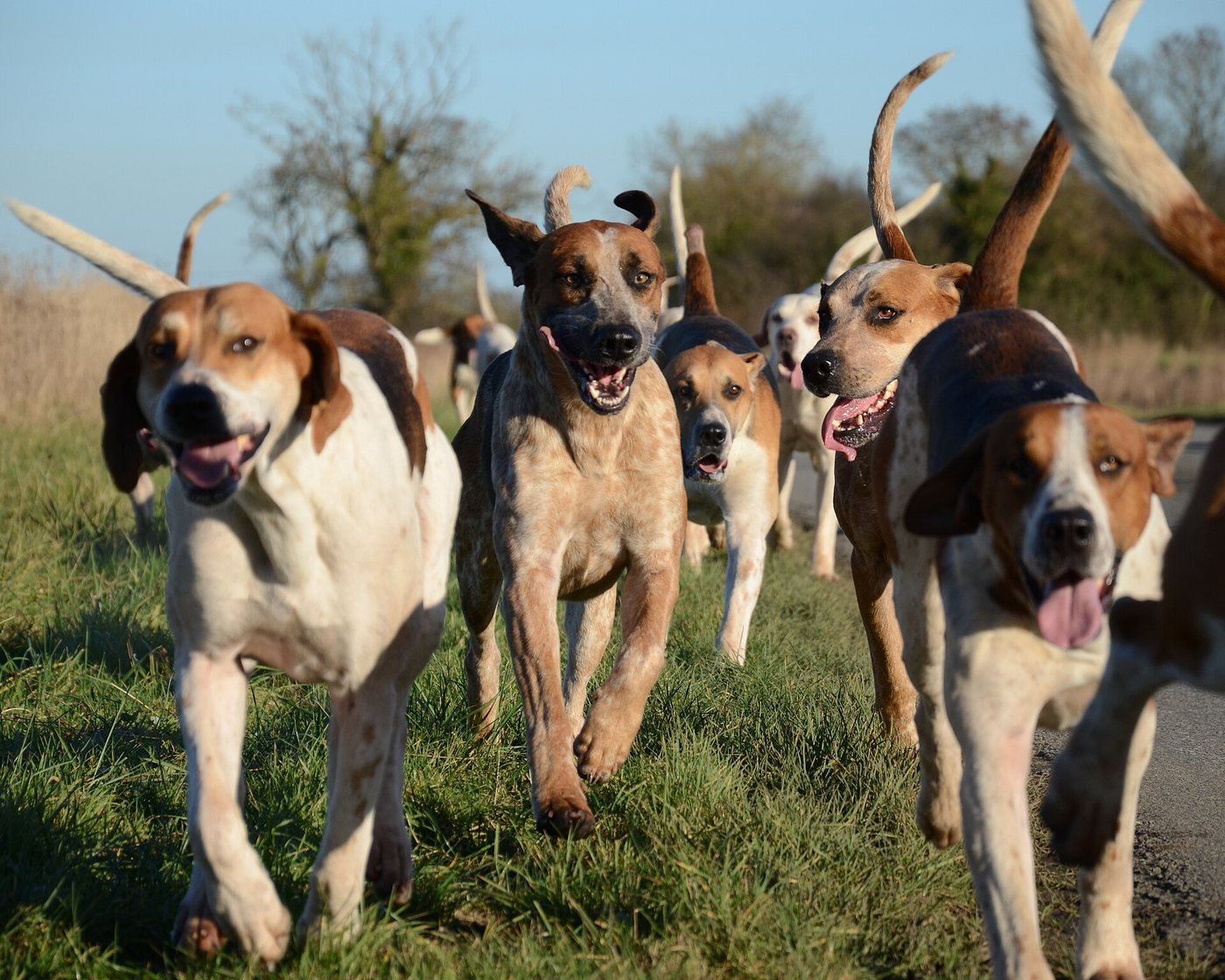
Overview
The English Foxhound is not really a pet breed that hunts — it is a hunting breed that occasionally becomes a pet. For three centuries, British hunts have bred these hounds as a team: athletic, even-tempered pack athletes with the stamina to run all day and the voice to be heard across a county. As a companion, the Foxhound brings gentleness and sociability — and an exercise requirement that must not be underestimated.
Temperament & personality
Within the pack, Foxhounds are bred to be amiable, biddable, and free of aggression toward dogs or people — pet Foxhounds keep that friendly, gentle nature. Independence rises outdoors, where scent takes command. They are not notably trainable in the obedience sense and are famously vocal, but at home a tired Foxhound is a calm, affectionate, undemanding presence.
Appearance
A substantial, athletic hound built for a full day's running: long legs, deep chest, long ears, and a keen, kind expression. The short coat is any hound colour, typically tricolour or bicolour in black, tan, and white. Everything about the English Foxhound says stamina — this is a marathon runner in a dog suit.
Care & daily life
Exercise is the headline: a Foxhound needs two hours or more of running-level activity daily and is genuinely unsuited to a sedentary home. The short coat needs only a weekly brush. They are pack animals with a loud, carrying bay — train recall seriously, expect lead-walking in unfenced areas (a scent ends all negotiations), and plan for a dog that wants canine company.
Health & lifespan
The English Foxhound is generally known for the following health watch-points:
- Generally a hardy, sound breed — pack breeding selected ruthlessly for stamina and health
- Hip dysplasia occurs occasionally
- Renal amyloidosis (kidney disease) is documented in the breed
- Hypothyroidism is reported
- Ear infections, as in most long-eared hounds, and injuries from hard running are the usual practical issues
Living with a English Foxhound
Honestly assessed: this is a kennel-and-pack breed that occasionally adapts to pet life with runners, riders, or very active rural families. They thrive with other dogs, need serious daily running, and are happiest outdoors. Apartments, sedentary homes, and close neighbours (that voice) are poor fits.
History
English Foxhounds have been bred by Masters of Foxhounds since the 18th century, with stud books kept since the early 1800s — among the most carefully recorded pedigrees in the dog world. Bred purely for pack hunting: stamina, scent, voice, and biddability within the pack. George Washington imported English hounds and helped found the American strain.