Overview
The American Bobtail is a study in contrasts: a rugged, wild-looking cat with an almost bobcat profile and short, expressive tail, wrapped around one of the calmest, most companionable temperaments in the cat world. Developed from naturally short-tailed domestic cats in North America, the breed is devoted without being clingy, playful without being frantic, and famously adaptable — the cat most often recommended to people who travel with their pets. If you like the look of the wild with the manners of a gentleman, this is your breed.
Temperament & personality
Devoted, gentle, and quietly clever. American Bobtails bond closely with their people, greet visitors with composure, and are famously tolerant of children and dogs. They play in focused bursts, often learn to walk on a harness and ride happily in cars, and communicate in soft chirps rather than demands. Owners describe a steady, almost dog-like companion who supervises the household with calm good humour.
Appearance
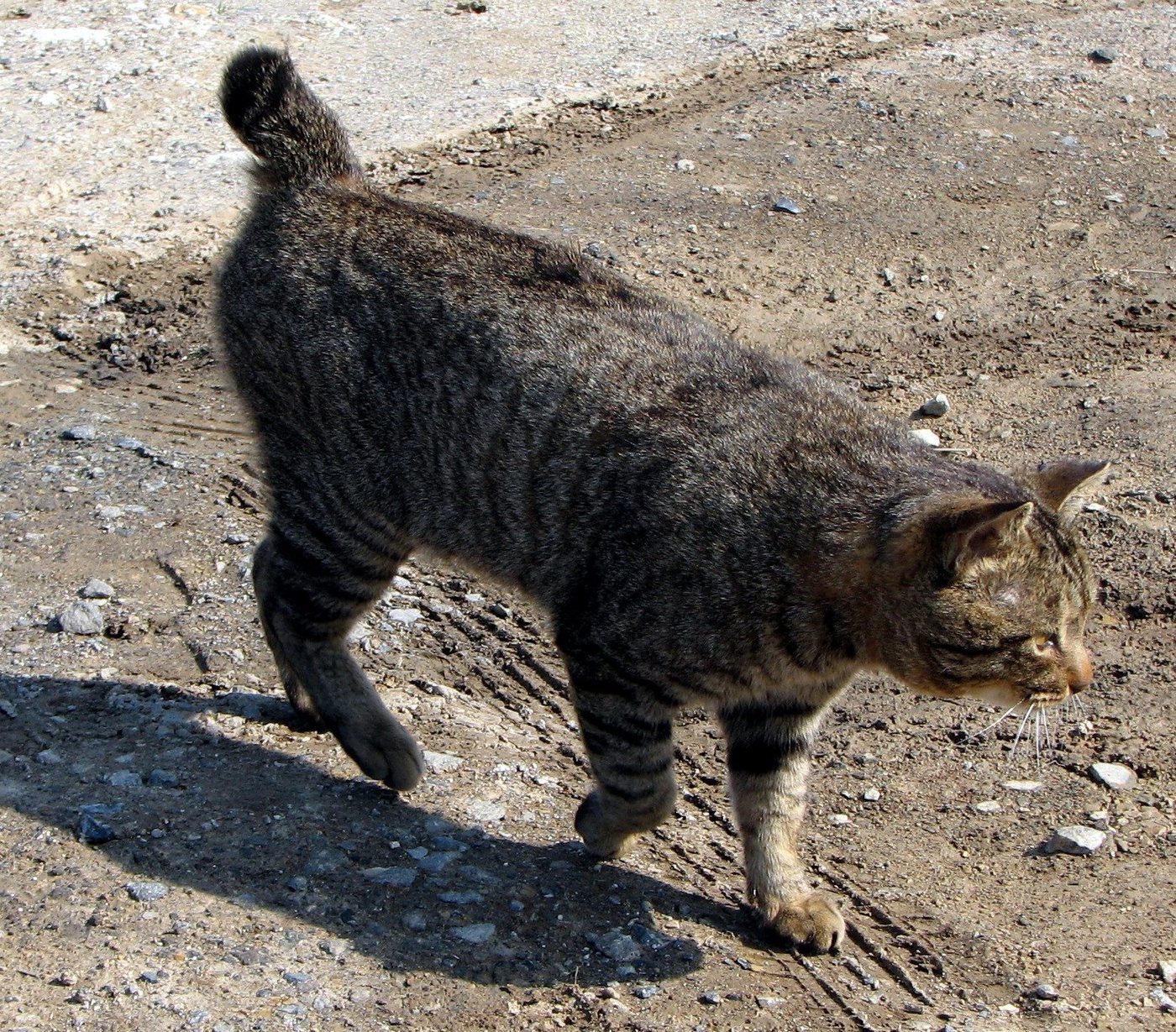
The American Bobtail looks like a wild bobcat's well-mannered cousin: an athletic, rectangular body, broad head with a strong muzzle, deep-set almond eyes with a watchful 'hunting' expression, and hind legs slightly longer than the front. The defining feature is the naturally short tail — roughly a third to half the length of an average cat's tail, straight or gently curved, and different on every individual cat. The coat comes in two lengths (a medium shorthair and a shaggier semi-longhair) and every colour and pattern.
Care & daily life
Comb the coat two or three times a week, a little more for longhairs, especially through seasonal shedding. Bobtails are interactive cats who enjoy games, puzzle toys, and often harness walks — they are famous as travelling companions and adapt well to leash routines. They mature slowly, taking two to three years to fill out, and can gain weight in maturity, so measure meals and keep daily play on the schedule. Routine dental care and annual vet checks cover the rest.
Health & lifespan
The American Bobtail is generally known for the following health watch-points:
- Generally a hardy, healthy breed with a broad foundation in domestic cats
- Hip dysplasia can occur in this large, muscular breed — responsible breeders evaluate hips
- Polycystic kidney disease (PKD) has been reported; a DNA test exists and breeding cats should be screened
- The bobtail tail gene is different from the Manx gene and is not associated with Manx syndrome, but very short or absent tails are a fault — ask how the breeder manages tail length
- Weight gain in maturity is the common everyday issue; these cats love their food
Living with a American Bobtail
American Bobtails suit families, multi-pet homes, and even people who travel — they are renowned as RV and road-trip cats and many work as therapy animals. They are adaptable and tolerant rather than demanding, bond strongly to the whole household, and do well indoors with play and company. First-time owners who want a dog-like cat without extremes of size or volume will find them easy to live with.
History
The breed begins in the 1960s, when vacationers John and Brenda Sanders adopted a short-tailed brown tabby kitten found in Arizona and bred him — Yodie — to their seal point Siamese back home in Iowa. The resulting short-tailed kittens founded a line that later absorbed Himalayan and other crosses, and the original bloodline eventually became too inbred to continue. In the 1980s, breeders rebuilt the breed from scratch using unrelated, naturally bobtailed domestic cats from across North America, producing the healthier, broader-based breed recognised today. TICA accepted the American Bobtail in 1989 and granted championship status in 2002. Despite persistent folklore, genetic work confirms there is no bobcat in the mix.