Overview
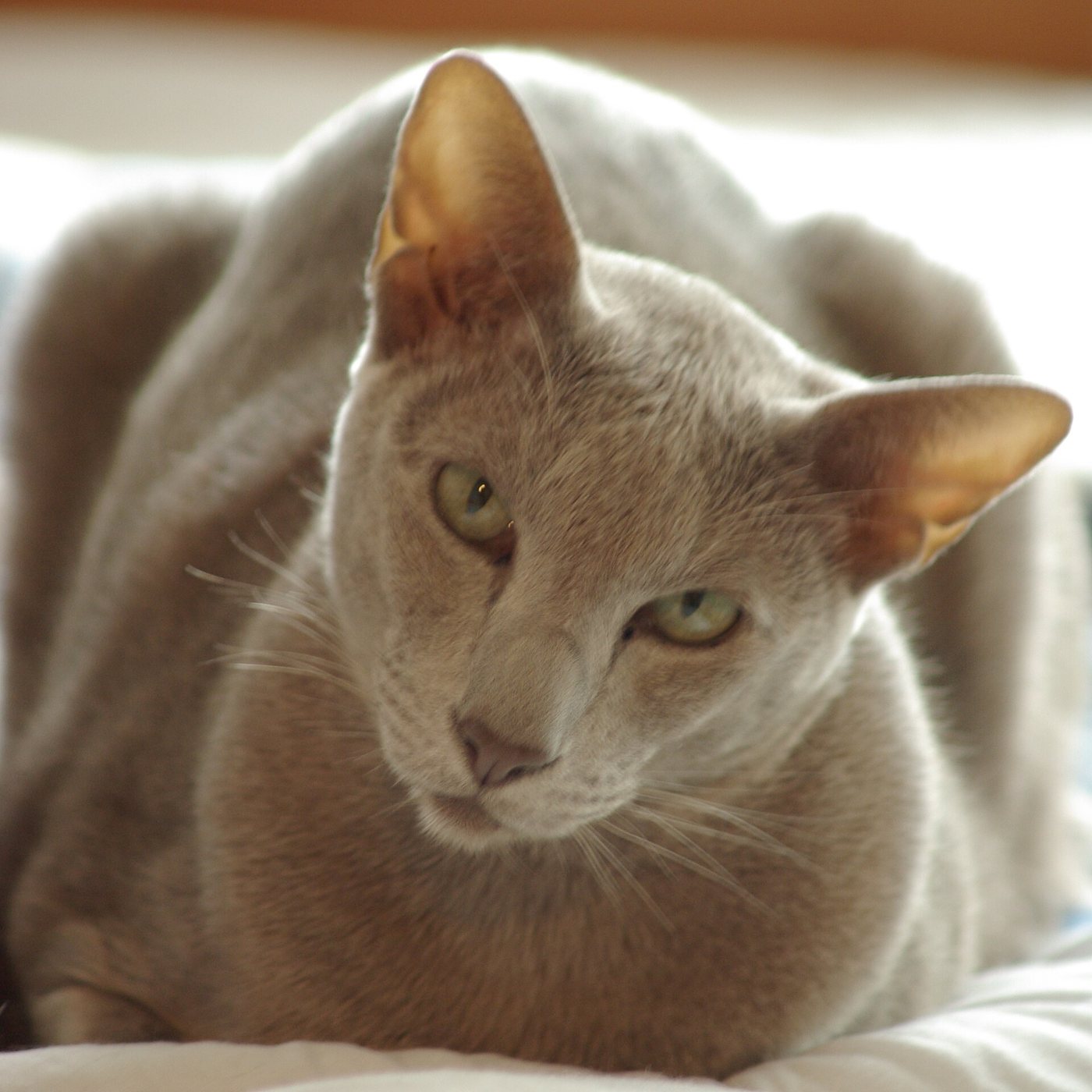
Take everything that makes the Siamese famous — the svelte body, the huge ears, the intelligence, the devotion, and yes, the voice — and dress it in every colour except pointed. That is the Oriental Shorthair: a breed deliberately created so that people who loved the Siamese personality could have it in ebony, red, tabby, tortoiseshell, or any of hundreds of other shades. Orientals are social conductors of household life: athletic, curious, talkative, and completely convinced that their humans are the most interesting show on earth.
Temperament & personality
Intelligent, demonstrative, and gloriously opinionated. Orientals form intense bonds — often with one favourite person, though they are sociable with the whole household — and follow their humans about, commenting in a clear, carrying voice. They are playful well into adulthood, quick to learn routines, doors, and cupboards, and they sulk visibly when ignored. With company and stimulation they are joyful; left alone and bored, they will redecorate your schedule and possibly your curtains.
Appearance
The Oriental Shorthair is the Siamese's silhouette in a full wardrobe: a long, svelte, tubular body on fine legs, a wedge-shaped head with a straight profile, almond-shaped eyes (usually vivid green; white Orientals may have blue or odd eyes), and very large, flared ears. The coat is very short, close-lying, and satin-smooth. Where the breed dazzles is colour — Orientals come in over 300 colour and pattern combinations, from solid ebony and chestnut to tabbies, tortoiseshells, smokes, and bicolours.
Care & daily life
The fine coat needs almost nothing — a weekly wipe with a grooming glove keeps it glossy. The real care requirement is entertainment and company: Orientals are athletic, high-energy cats that need tall climbing furniture, daily interactive play, and ideally a companion animal. Intelligent and trainable, they enjoy puzzle feeders, harness walks, and learning tricks. They feel the cold in their thin coat and appreciate warm resting spots. Brush teeth regularly — like their Siamese cousins, dental health deserves attention.
Health & lifespan
The Oriental Shorthair is generally known for the following health watch-points:
- Shares the Siamese family's watch-points, though modern breeding has improved several: dental disease is common and home dental care is worthwhile
- Progressive retinal atrophy (PRA) — a DNA test exists and responsible breeders screen
- Amyloidosis has historically been associated with the Siamese family; reputable breeders track pedigrees for it
- Mediastinal lymphoma occurs more than average in young Siamese-family cats — any breathing change in a young Oriental warrants prompt veterinary attention
- Generally a long-lived, robust breed when sourced from health-conscious breeders
Living with a Oriental Shorthair
Orientals belong in lively homes where their conversation is welcomed, not tolerated. They pair beautifully with another cat (or two), a friendly dog, and humans who are home a lot; a single Oriental in an empty house will be lonely and loud about it. They suit apartment and house living equally, since their needs are interaction and vertical play space rather than territory. First-time owners who want a quiet ornament should reconsider — those who want a witty, athletic shadow will be delighted.
History
The Oriental Shorthair was created in the 1950s–70s, when British and American breeders who admired the Siamese type began producing the same elegant cat in solid and patterned colours — essentially reviving the non-pointed cats that had existed alongside pointed Siamese in old Siam. Crosses to Russian Blues, British Shorthairs, Abyssinians, and Havana Browns built the colour range, and pointed kittens from Oriental litters were simply registered as Siamese. The CFA granted championship status in 1977, and the breed's rainbow palette has expanded ever since.