Overview
The Ocicat wears the jungle and lives for the sofa. Created accidentally in 1960s Michigan from Siamese–Abyssinian crosses, it looks like a small ocelot and behaves like a devoted, confident dog — greeting guests, learning tricks, and demanding a full social life. Under the spots is one of the most outgoing, long-lived breeds in the fancy.
Temperament & personality
Bold, affectionate, and busy. Ocicats run to the door for visitors, supervise every project, and expect to be included in everything; left alone regularly, they get lonely and inventive. They are intelligent and trainable — fetch, leash walks, and puzzle toys are all fair game — and most keep a Siamese-flavored conversational voice without the full Siamese volume. Think less 'aloof feline,' more 'spotted sidekick.'
Appearance
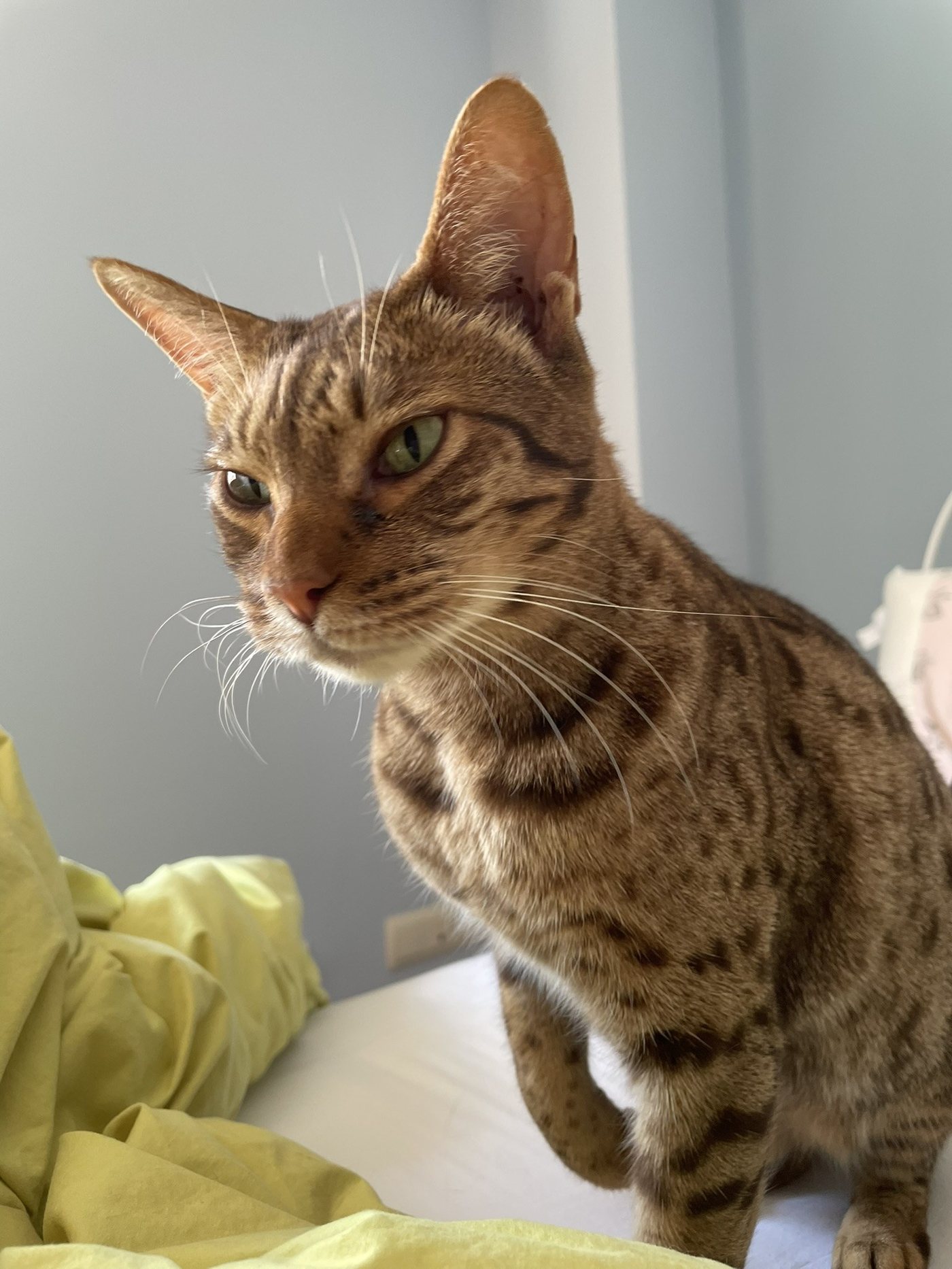
A wild-looking cat in a completely domestic package: bold, thumbprint-sized spots and rosettes patterned like an ocelot's across a short, dense, satiny coat in tawny, chocolate, cinnamon, silver, blue, and lilac. The body surprises everyone — an Ocicat is a big, hard-muscled athlete, substantially heavier than it appears, with a graceful neck, large almond eyes ringed in dark liner, and tufted ears in some lines. Every hair carries bands of color (agouti ticking), which gives the coat its shimmering depth.
Care & daily life
Care is simple: a weekly brush or rub with a damp chamois keeps the short coat shining, and the breed sheds little. The commitment is companionship and stimulation — Ocicats need people around, interactive play daily, and ideally another animal in the home. They travel well, walk on leashes happily, and do best with puzzle feeders and perches. Routine vet care, with attention to teeth, covers the rest.
Health & lifespan
The Ocicat is generally known for the following health watch-points:
- Generally healthy and long-lived, with hybrid vigor from its multi-breed foundation
- Dental disease and gingivitis are the most common problems — regular dental checks and cleaning matter
- Hypertrophic cardiomyopathy (HCM) screening by ultrasound is recommended in breeding cats
- Progressive retinal atrophy has been noted in some lines; DNA tests exist for the known mutations in related breeds
- Renal amyloidosis, associated with Abyssinian lines historically, is rarely reported; ask about line history
Living with a Ocicat
Ocicats fit active, social households — families, multi-pet homes, people who work from home or provide a companion animal. They are confident travelers, harness-train readily, and adapt to apartments if given vertical space and play. They are not the breed for a quiet, empty house: an Ocicat's one firm requirement is company.
History
The Ocicat was an accident. In 1964, Michigan breeder Virginia Daly crossed a Siamese with an Abyssinian hoping for an Aby-pointed Siamese; one kitten, Tonga, arrived spotted like a little ocelot — Daly's daughter dubbed him 'Ocicat.' Geneticist Dr. Clyde Keeler encouraged developing the type, and further crosses (with American Shorthairs adding size and silver) built the breed. CFA registered it in 1966 and granted championship in 1987. Its popularity proved a house cat could wear a wild coat with a wholly civilized temperament.