Overview
The Bombay was designed, deliberately and over decades, to be a miniature black panther that lives for human company — and the design worked. Beneath the gleaming black coat and copper eyes is a Burmese-hearted cat: playful, heat-seeking, talkative in a soft register, and determined to be on, under, or beside its people at all times.
Temperament & personality
Affectionate, confident, and entertaining. Bombays greet visitors like a host, supervise homework and laptops, play fetch, and then melt into the nearest lap or burrow into the bedding. They are less demanding in volume than their Siamese cousins but every bit as people-focused — expect opinions, commentary, and a cat-shaped shadow. They get along well with children, dogs, and other cats, and generally expect to be the center of the household universe.
Appearance
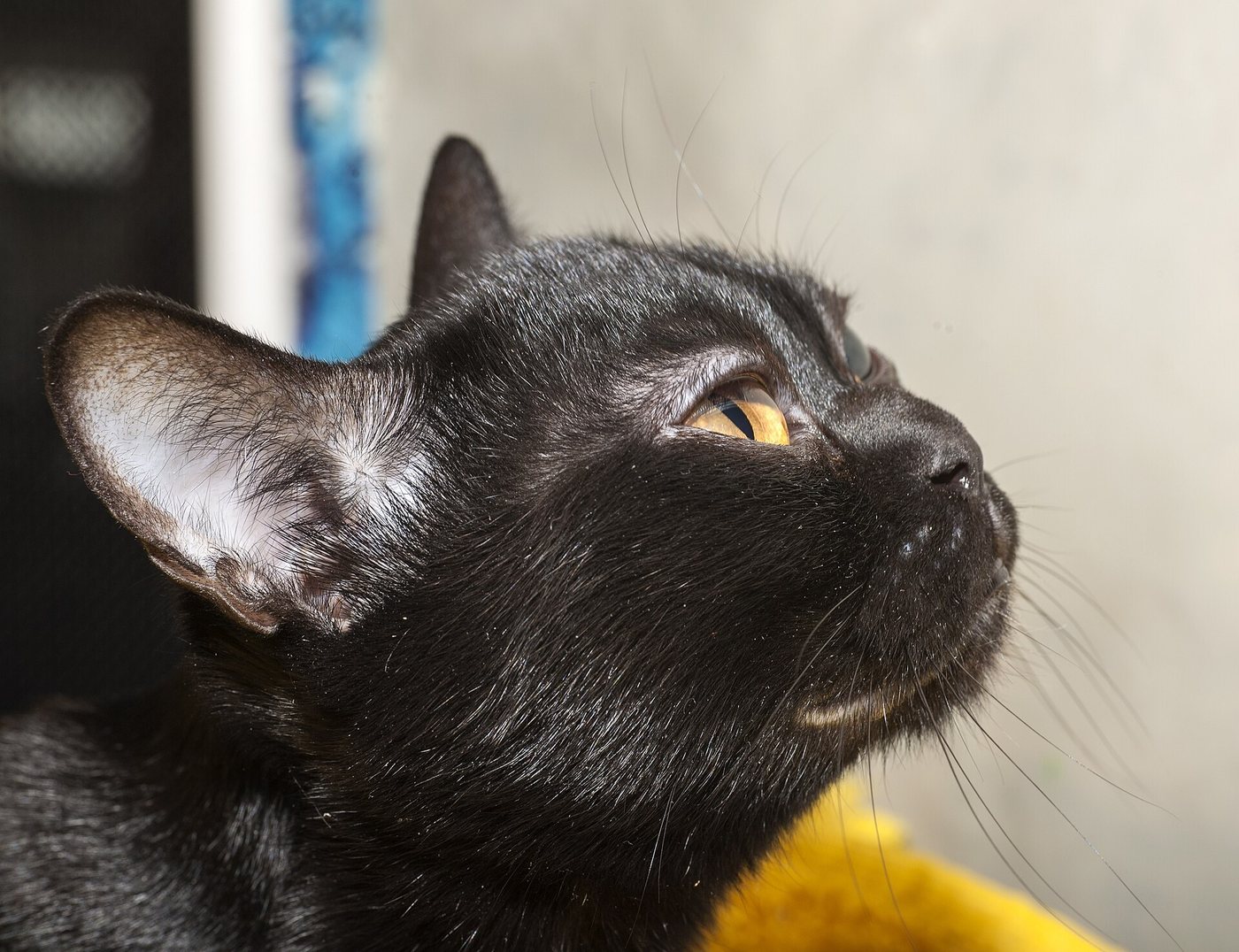
A pocket panther: a sleek, solid-black cat with a gleaming, patent-leather coat so dark even the whiskers, nose leather, and paw pads are black, set off by vivid copper-to-gold eyes. The body underneath surprises — the Bombay is medium-sized but dense and heavily muscled, noticeably heavier than it looks, with a rounded head, medium ears tilted slightly forward, and a level, swinging walk that owners compare to a panther's prowl.
Care & daily life
One of the lowest-maintenance coats in the fancy: the short, tight fur needs only a weekly rub with a soft cloth or your hands to keep the shine, and shedding is minimal. Bombays are indoor cats that crave warmth and laps — expect yours to seek radiators, sunbeams, and blankets, and to burrow under covers. They are active players who need daily games to stay trim, since the Burmese side loves its food. Routine vet care and watching the shorter muzzle in hot weather complete the job.
Health & lifespan
The Bombay is generally known for the following health watch-points:
- Generally a healthy, hardy breed built on Burmese and American Shorthair foundations
- Burmese hypokalaemia (episodic muscle weakness from low potassium) occurs in Burmese-derived lines — a DNA test exists; ask breeders about it
- The craniofacial ('Burmese head') defect is a serious inherited problem in some traditional Burmese lines; reputable Bombay breeders avoid affected pedigrees — ask directly
- The moderately shortened face can bring tear overflow and mild upper-respiratory snuffling, though far less than in extreme flat-faced breeds
- Weight gain in indoor adults — the breed loves food and warmth in equal measure
Living with a Bombay
Bombays suit homes that want a cat in the middle of everything: families, singles, apartment dwellers, and multi-pet households all work, provided someone is home a good part of the day and laps are available. They are strictly indoor cats. A Bombay alone for long working hours will be a bored, vocal Bombay — a companion pet helps.
History
The Bombay is one breeder's long campaign: Nikki Horner of Louisville, Kentucky, wanted a miniature black panther and from 1958 crossed black American Shorthairs with her sable Burmese to get it. Early attempts were disappointing — the breakthrough male, Lomae Midnight Mist, fixed the type — and after years of rejections the CFA accepted the breed in 1970, granting championship in 1976. Horner retired from breeding, but the 'parlor panther' she designed — gleaming black, copper-eyed, and engineered to adore people — was established. TICA recognises the breed as well, and British breeders developed a parallel Bombay from Burmese–domestic crosses.