Overview
The short-tailed opossum is the exotic keeper's pocket marsupial: a grey, bright-eyed hunter from Brazil no bigger than a hamster, with a gripping tail, a pouchless mother's strange biology, and a personality that is entirely, honourably wild. It breeds readily in captivity and has decades of history as a laboratory animal, yet it has never been domesticated — what you keep is a tiny nocturnal predator that happens to tolerate you. For the right specialist keeper, that authenticity is the whole appeal; for everyone else, it is the reason to admire and move on.
Temperament & personality
Curious, confident, and utterly self-possessed. A short-tailed opossum explores its enclosure like a tiny inspector — sniffing, tasting, climbing, and systematically checking for exits — and hunts insects with real enthusiasm. Tame-raised individuals accept brief evening handling and may sit in a hand investigating; they never become cuddly, and a startled or sleepy opossum bites first and considers later. Solitary to the marrow: their social programme contains exactly one opossum, and they enforce it.
Appearance
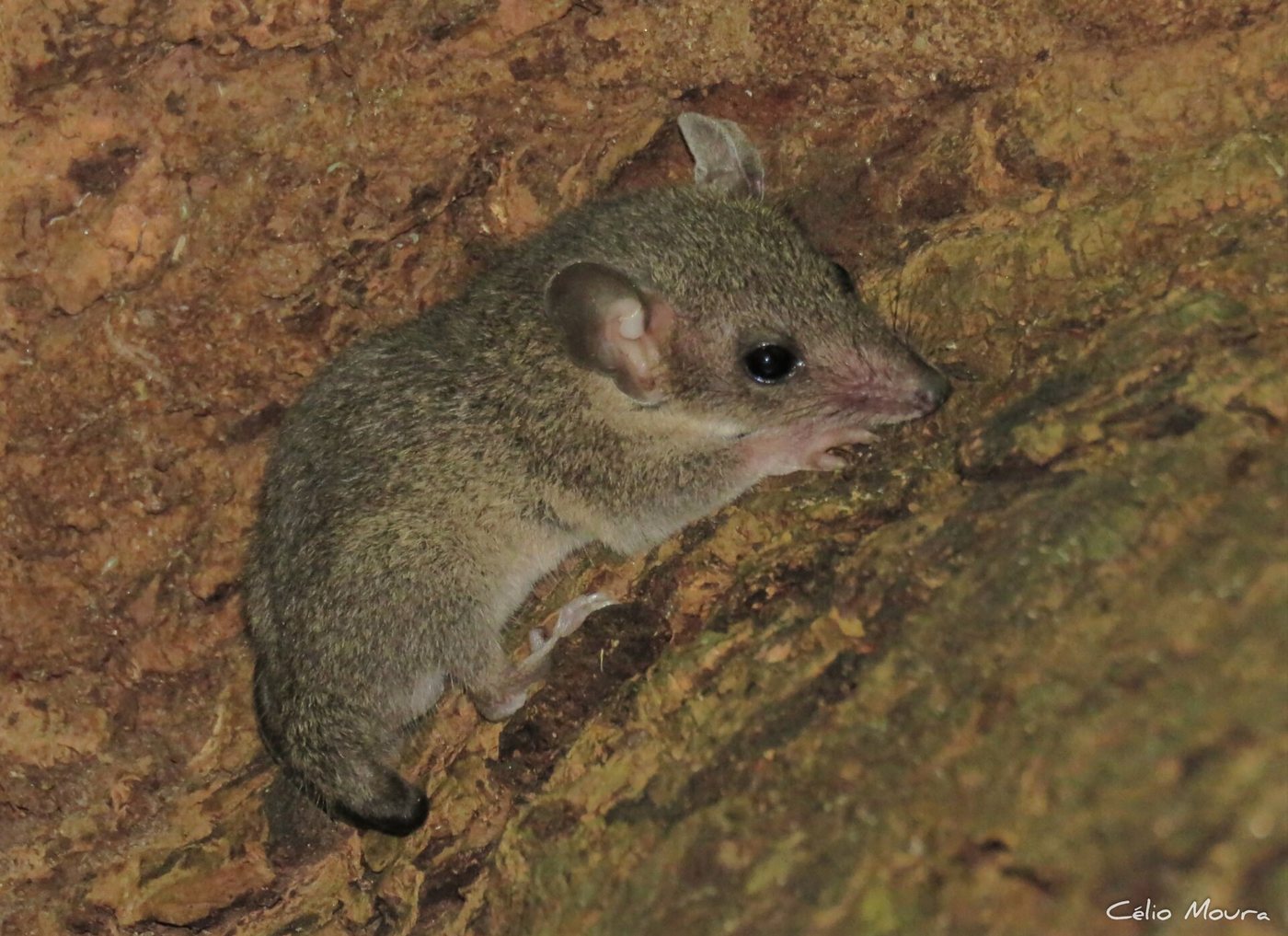
A miniature marsupial that looks like a sleek grey mouse crossed with something older: short, dense, silver-grey fur, a nearly hairless prehensile tail about as long as the body, large dark eyes, prominent ears, and a pointed, whiskered face. Females have no pouch — one of the few marsupials without one; the young cling to exposed teats. Adults are 4–6 inches of body plus tail, weighing a few ounces: an opossum you could lose in a sofa, which is a husbandry point as much as a description.
Care & daily life
Housing is a secure, well-ventilated terrarium or fine-barred cage of 20 gallons long or more, with an escape-proof lid — they are strong, curious climbers and dedicated escapers — fitted with branches, a solid-surface wheel, hide houses, a nest box with soft bedding, and things to investigate. Keep them warm (around 75–85°F; they chill easily at normal room temperatures below the low 70s) and out of draughts. Feed a protein-forward omnivore diet: a quality commercial insectivore/short-tailed opossum diet or low-fat cat kibble as a base, plus live and dried insects, a little cooked egg or lean meat, and small amounts of fruit and vegetables — variety matters, and sugary or fatty excess makes them obese. Handle gently and briefly, in the evening, letting the animal wake fully first; wash hands before and after (they hunt partly by smell and fingers can be mistaken for food). Keep strictly alone.
Health & lifespan
The Short-Tailed Opossum is generally known for the following health watch-points:
- Obesity — sedentary cage life plus rich food; portion discipline and a wheel are the counters
- Metabolic bone disease and nutritional imbalances on improvised diets — use a formulated base food and vary carefully
- Stress decline in cold, bright, or exposed housing — warmth and a dark nest box are health care
- Bite wounds are almost always self-inflicted lifestyle news: it means another animal got in, or handling is going wrong
- Dental problems and tumours are reported in older animals; little formal veterinary literature exists for the species
Living with a Short-Tailed Opossum
Short-tailed opossums suit experienced exotic keepers who want a genuinely wild-behaving miniature predator to observe at night, and who accept the terms: solitary housing, warm quarters, a protein-rich varied diet, minimal handling, and a lifespan of 4–6 years. Legality is the gate: marsupials sit under exotic-animal rules in many states and countries, so the law check comes before the breeder search. They are not pets for children, for handling-focused owners, or for anyone in a jurisdiction that says no — and a cold house is a quiet disqualifier too.
History
Monodelphis domestica comes from the cerrado grasslands and forest edges of Brazil, Bolivia, and Paraguay, where it hunts invertebrates and small vertebrates by night and shelters in leaf litter and hollow logs. Uniquely among common marsupials it has no pouch — its young simply cling to the mother's teats, which, together with its willingness to breed in captivity, made it a laboratory marsupial of choice (the first marsupial whose genome was sequenced). From research colonies it filtered into the exotic pet trade, where it remains a specialist animal: captive-bred readily enough, but never domesticated, and governed by exotic-pet law in many jurisdictions.