Overview
The African pygmy hedgehog is a pet with three non-negotiables: warmth, solitude, and a wheel. It is a tropical insectivore that must live at summer temperatures all year, a loner that wants a cage to itself, and a marathon runner in a 6-inch body. Add a legal caveat — hedgehogs are illegal in California, Hawaii, Georgia, and Pennsylvania, banned in New York City, and permit-controlled in other places — and this is a pet to research before you fall for the photos.
Temperament & personality
An introvert with a sense of humour. A hedgehog's first answer to anything new is the full defensive routine: huffing, popping, balling up. Give it a minute and a familiar smell and the ball unfolds into a sniffing, waddling explorer with real individual quirks — some are cuddle-tolerant lap-sitters, others are perpetual motion machines. They bond to scent and routine rather than to faces.
Appearance
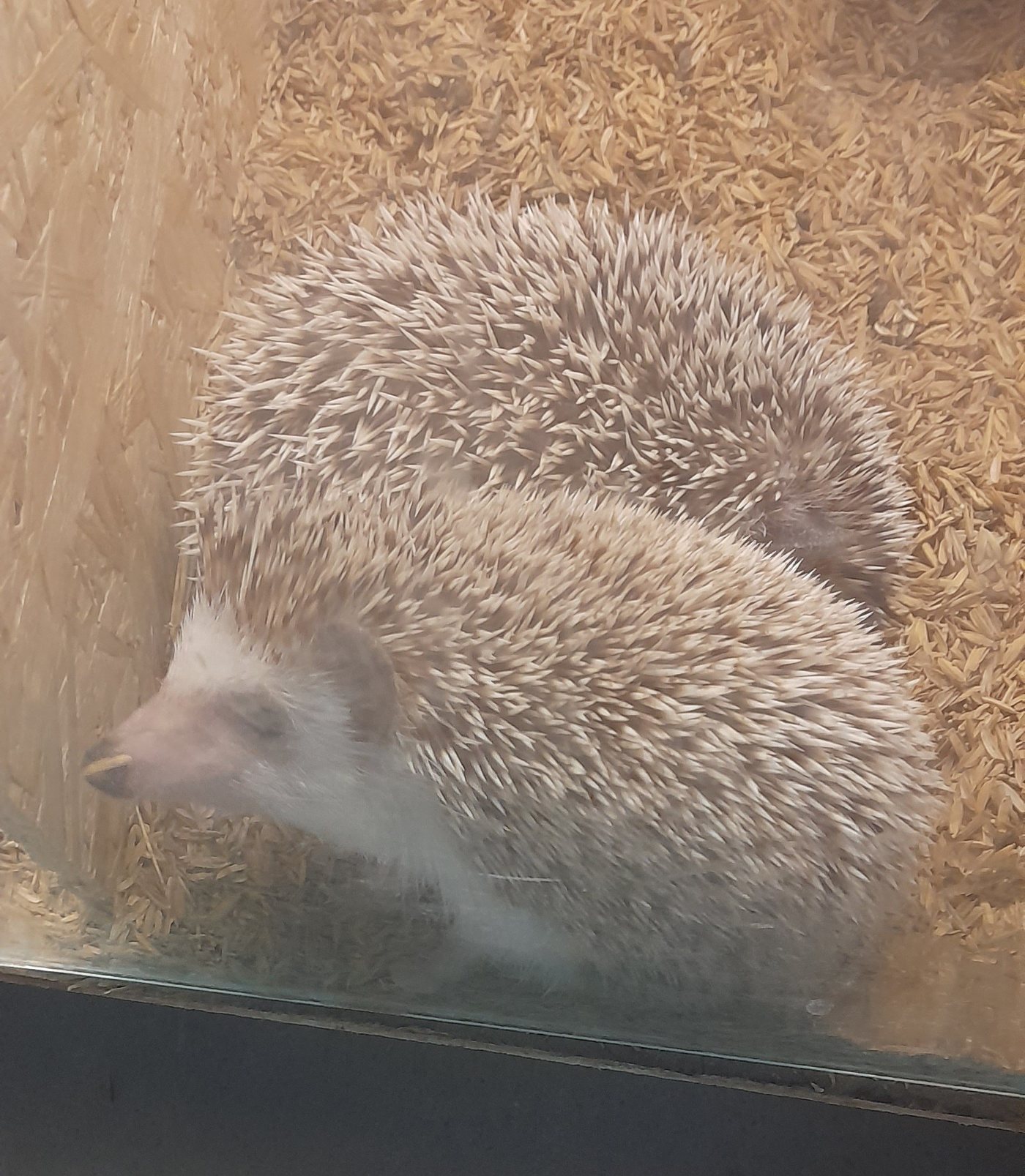
A pocket-sized ball of spines: when calm, the quills lie flat over the back revealing a furred face, small ears, and a pointed snout; when startled, it huffs, pops, and rolls into a complete spiky ball. Pet animals descend from two African species and come in colours from standard salt-and-pepper through albino, pinto (patched), and cinnamon. Short legs, a waddling gait, and poor eyesight compensated by an excellent nose.
Care & daily life
Temperature is the first rule: keep the enclosure at 22–27°C (72–80°F) with supplemental heat if the room is cooler — a hedgehog that gets cold may attempt hibernation, which pet African pygmies do not survive well. Feed a quality cat kibble as the base plus insects (mealworms, crickets) and a little veg; watch weight closely, as obesity is common. A large solid-surface wheel (30 cm / 12 in) is essential — hedgehogs run miles nightly. Spot-clean daily; most learn to use a litter tray. Handle daily from the start: a socialised hedgehog uncurls quickly; an unhandled one stays a ball of huff.
Health & lifespan
The African Pygmy Hedgehog is generally known for the following health watch-points:
- Wobbly Hedgehog Syndrome — a progressive, inherited neurological disease causing loss of coordination; no cure, so bloodline choice matters
- Obesity and fatty liver disease — indoor hedgehogs gain weight easily; the wheel is medicine
- Tumours and cancers, which are common from middle age
- Mites and dry skin, often from overly frequent bathing
- Dental disease and mouth tumours in older animals
Living with a African Pygmy Hedgehog
A hedgehog suits a warm home with a patient adult or older child who enjoys a nightly ritual: wake at dusk, uncurl over a few minutes, explore a playpen, eat some worms, run the wheel until dawn. It is a poor pet for cold houses, young children (quills plus huffing read as rejection), or anyone in a jurisdiction where they are banned — check first, because 'I didn't know' is not a defence anywhere.
History
The pet hedgehog is a modern hybrid, bred mainly in North America from the 1980s–90s onward, crossing the four-toed (white-bellied) hedgehog of central and west Africa with the Algerian hedgehog. Wild ancestors are solitary night hunters of insects and small invertebrates. The pet trade boomed quickly — and just as quickly produced a wave of impulse purchases, rescues, and the regional bans that followed, which is why legality and breeder quality matter so much with this species.