Overview
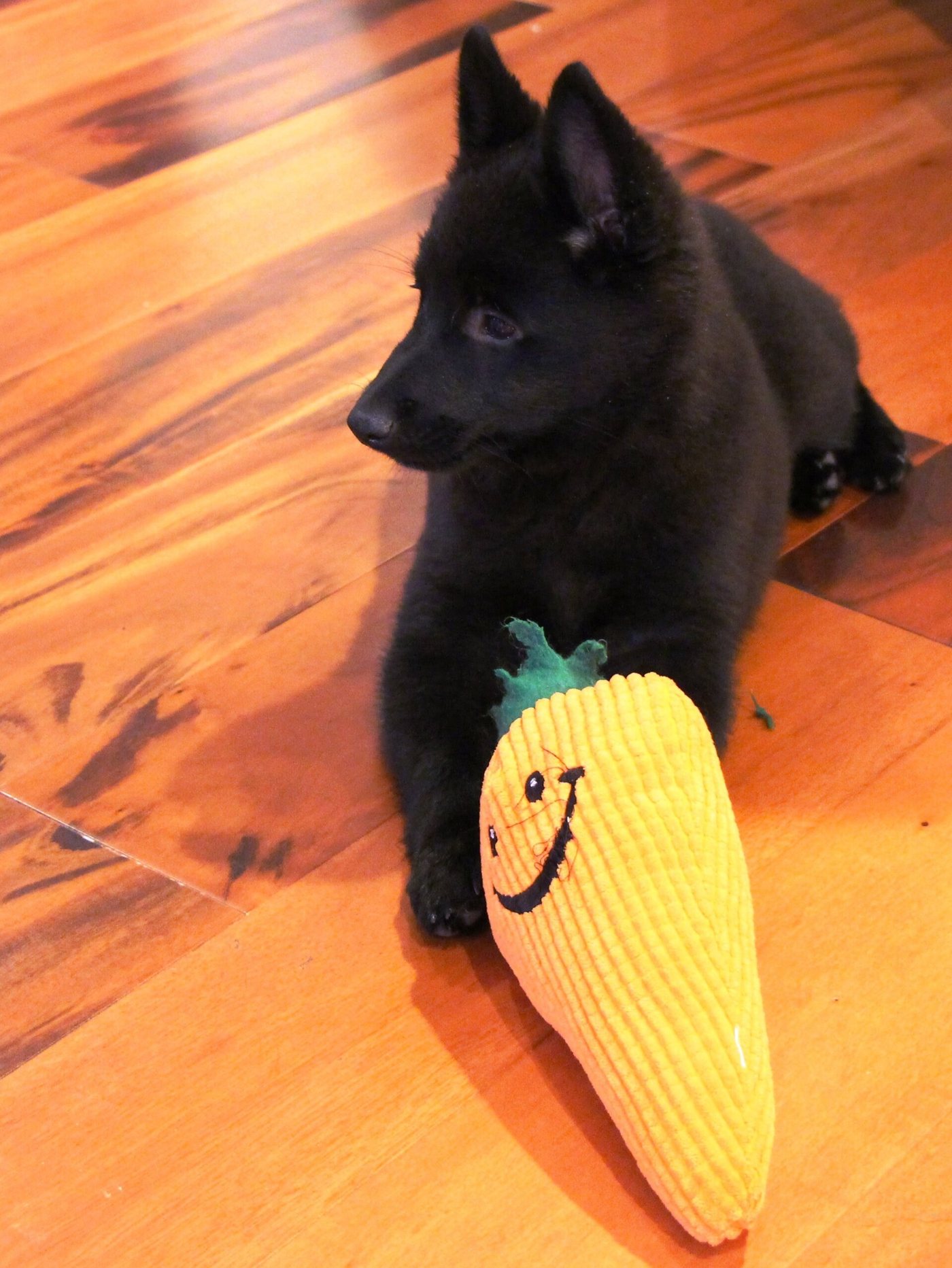
The Schipperke is Belgium's 'little captain': a compact black watchdog and ratter from the canal barges of Flanders. Everything about it is alert — ears, eyes, attitude. In a 12-pound package it packs the confidence of a large guard breed, the curiosity of a cat, and a mischievous streak that keeps owners on their toes for a decade and a half.
Temperament & personality
Confident, curious, and clever, with a famous independent streak. Schipperkes are devoted to their families, excellent watchdogs, and endlessly interested in everything — especially rodents, open doors, and anything at fence-climbing distance. They can be headstrong in training but are highly capable when motivated; boredom produces barking and redecorating.
Appearance
An all-black, tailless or docked, fox-faced little dog with a thick double coat that stands off the body and forms a distinctive cape and culottes of longer hair. Pointed ears, bright dark eyes, and a square, compact build give the Schipperke its instantly recognisable silhouette — like a little black fox in a ruff.
Care & daily life
Schipperkes need about an hour of exercise a day and plenty of mental engagement — they are busy, bright dogs that invent their own entertainment if you don't provide any. The dense double coat sheds moderately and blows out a couple of times a year; weekly brushing suffices outside those periods. They are known escape artists and climbers, so gardens need to be genuinely secure.
Health & lifespan
The Schipperke is generally known for the following health watch-points:
- Mucopolysaccharidosis IIIB (MPS IIIB) — a serious inherited storage disease; a DNA test exists and breeding stock should be tested
- Hypothyroidism
- Patellar luxation and Legg-Calvé-Perthes disease
- Epilepsy and eye conditions such as progressive retinal atrophy are also reported
Living with a Schipperke
A lively small dog for owners who want a watchdog and a character, not a lap ornament. Schipperkes adapt to apartments if exercised and trained, get on with older children, and are famously long-lived companions. Their curiosity, climbing, and escaping need a secure home and garden.
History
The Schipperke descends from the black Belgian sheepdog family (the same roots as the Groenendael) and was miniaturised by canal folk in Flanders. By the 1600s–1800s these little black dogs were the standard guards and ratters of the canal barges and a beloved Brussels house dog. Queen Marie Henriette of Belgium popularised the breed in the 1880s, and it was recognised by the AKC in 1904.