Overview
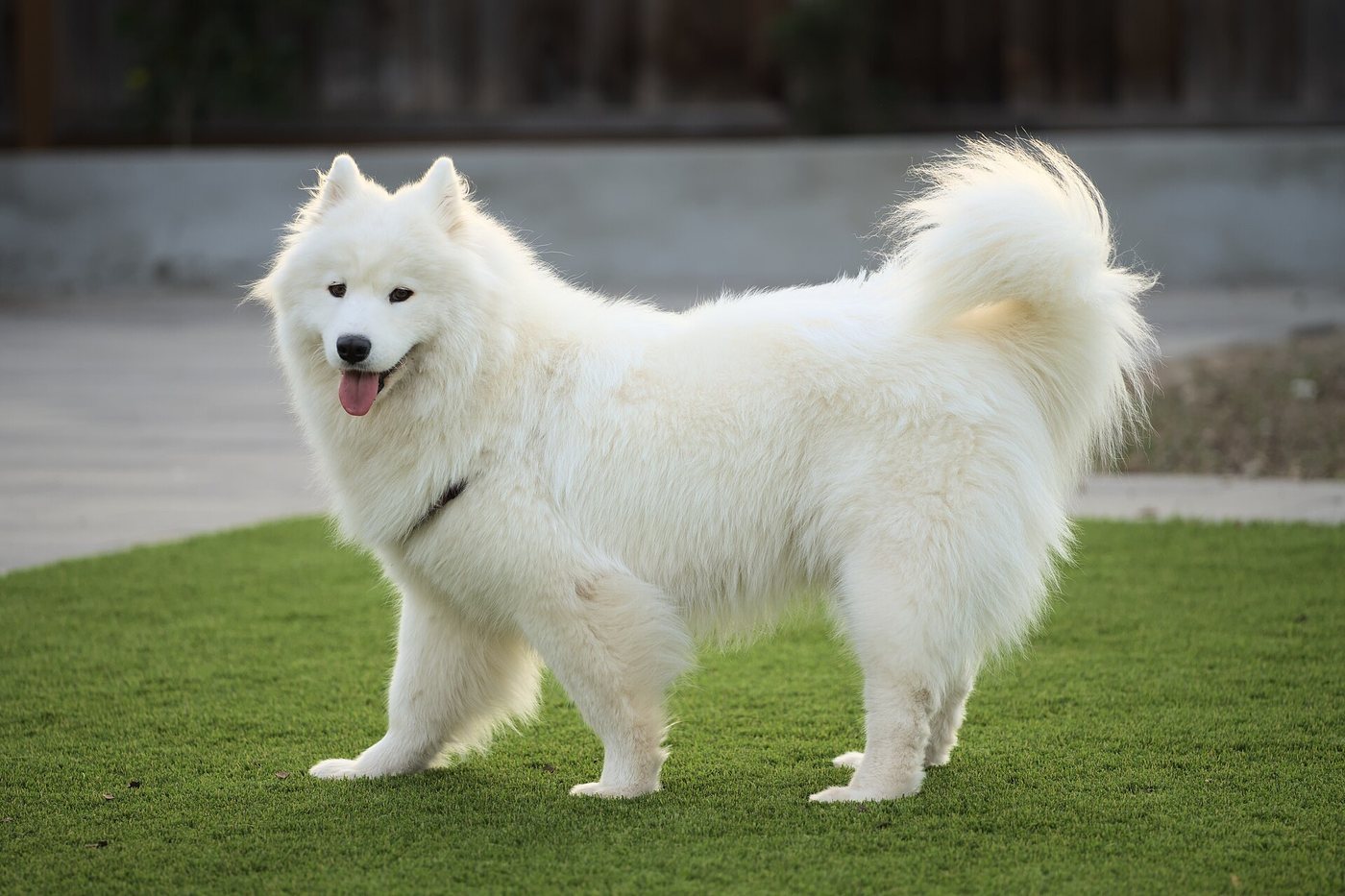
The Samoyed is the smiling sled dog of Siberia: a beautiful white spitz bred by the Samoyede (Nenets) people to herd reindeer, pull sleds, hunt, and — unusually for a working breed — to live inside the family's tent, sharing warmth and company through Arctic nights. That heritage produced a dog that is both a genuine athlete and a devoted, gentle companion, famous for the upturned mouth corners that form the 'Sammy smile.'
Temperament & personality
Samoyeds are friendly, cheerful, and people-centred to their core — they were bred to live cheek-by-jowl with their families and still expect to. They are intelligent and can be stubborn and mischievous, with a herder's instinct to gather their flock, and they are famously vocal: Samoyeds talk, woo, and complain expressively. They are poor guard dogs in the deterrent sense (most adore people) but excellent alarms. Boredom and loneliness are this breed's enemies.
Appearance
A sturdy, muscular spitz with a dazzling white (or cream or biscuit-tinged) double coat, a black nose, dark almond eyes, and erect triangular ears. The tail curls over the back in classic spitz fashion, and the mouth's natural upturn creates the breed's signature smile. The coat is profuse — a thick, harsh outer layer over a soft, dense undercoat, with a pronounced ruff around the neck, especially in males.
Care & daily life
Give one and a half to two hours of exercise and activity a day — Samoyeds were bred to work and love pulling, running, hiking, and snow most of all. Brush two to three times a week, working down to the skin, and daily during the twice-yearly coat blows, which produce astonishing quantities of white fur (spinners famously knit with it). Keep them cool in summer: the Arctic coat and heat are enemies. Training should be positive and varied; Samoyeds outsmart repetitive drilling.
Health & lifespan
The Samoyed is generally known for the following health watch-points:
- Hip dysplasia
- Samoyed hereditary glomerulopathy — a serious inherited kidney disease; DNA testing is available and responsible breeders screen for it
- Progressive retinal atrophy and other inherited eye conditions
- Hypothyroidism and diabetes occur at moderate rates
- Heart conditions including pulmonic stenosis are screened for in breeding stock
Living with a Samoyed
Samoyeds suit active families in cool-to-temperate climates who want a dog fully woven into daily life and are at peace with white fur on everything they own. They thrive with children and other dogs and do best with a secure garden — they are diggers and escape artists when bored. Apartment life is possible only with major daily exercise, and neighbours should be warned that Samoyeds have opinions they share out loud.
History
The Samoyede (Nenets) people of Siberia developed the breed over centuries as a reindeer herder, sled dog, hunter, and family companion — dogs that worked all day and slept in the tent at night, a dual role that shaped the breed's unusual friendliness. Samoyeds reached the West in the late 1800s and starred in the heroic age of polar exploration: dogs of this breed pulled for Amundsen's successful South Pole expedition of 1911. The AKC recognized the breed in 1906.