Overview
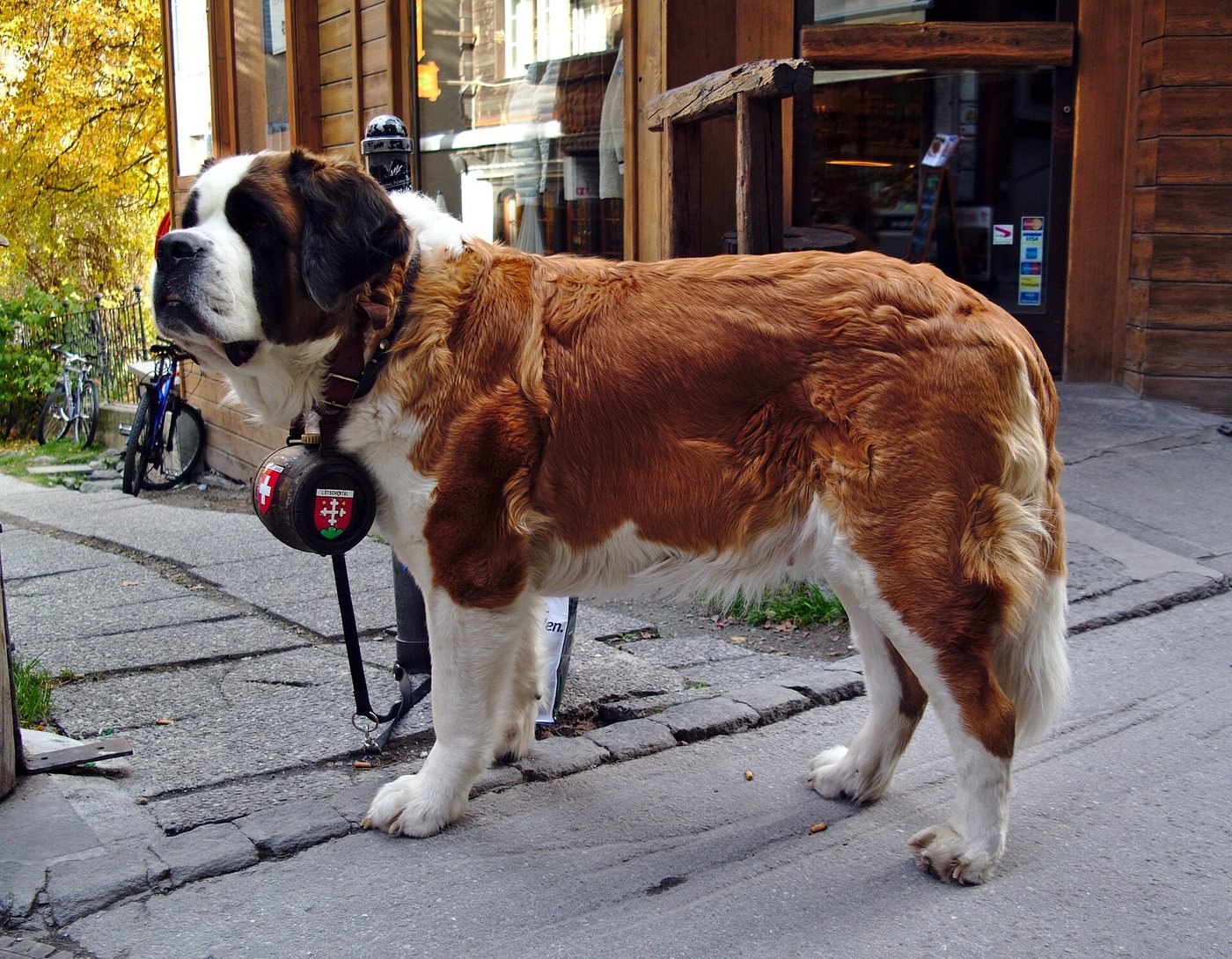
The Saint Bernard is the most famous rescue dog in history: the giant of the Swiss Alps whose ancestors located travellers buried by avalanches at the Great St Bernard Hospice. Today's Saint is that same dog in temperament — patient, kind, watchful, and almost comically gentle for its size — wrapped in up to 180 pounds of dog that drools like it's a profession. It is a breed that asks a lot of a household and gives back a very particular, enormous devotion.
Temperament & personality
Playful, charming, and inquisitive per the standard — and genuinely benevolent. Saints are notably patient with children and generally peaceful with other animals. They are alert enough to announce visitors, though their size is the deterrent, not their nature. Training should start early and stay kind: a giant dog must be mannerly, and a Saint's eagerness to please makes manners easy to teach.
Appearance
One of the largest dogs in the world: massive head, deep flews and jowls, soulful droopy eyes, and a thick double coat in white with orange or mahogany markings, solid orange or mahogany, or brindle patterns. Two coat lengths exist — the shaggy long coat is the famous rescue-dog image; the short coat is smoother and easier. Everything about a Saint is supersized, including the drool.
Care & daily life
Exercise is moderate — about an hour a day of walks and play, with care for growing joints in puppies and no forced long-distance exercise for youngsters. Heat is a genuine danger for this giant, heavily coated breed: cool housing and summer caution are essential. Brush the coat a few times a week, keep ears clean, and budget honestly — food, vet care, and drool management all scale with the dog.
Health & lifespan
The Saint Bernard is generally known for the following health watch-points:
- Hip and elbow dysplasia
- Bloat (GDV) — a leading emergency risk in this deep-chested giant
- Osteosarcoma (bone cancer) occurs at giant-breed rates
- Heart conditions including dilated cardiomyopathy
- Entropion and other eyelid problems; heatstroke risk is severe
Living with a Saint Bernard
Saints fit calm, spacious households with cool climates and owners prepared for giant-breed costs, giant-breed mess, and a giant-breed lifespan. They are gentle, undemanding companions indoors — often described as enormous lapdogs — and they need their people around them rather than isolation outdoors.
History
The breed was developed by monks at the hospice of the Great St Bernard Pass in the Swiss Alps, a treacherous crossing between Switzerland and Italy where the dogs — descended from Roman mastiff types — worked from the 1600s as pathfinders, pack carriers, and avalanche rescue dogs alongside the monks. The most famous, Barry (1800–1814), is credited with saving more than 40 lives and is preserved in the Natural History Museum in Bern. The little barrel of brandy around the neck is a painter's invention from 1820 that the world simply refused to give up.