Overview
The Pug has been a professional companion for roughly two thousand years, and it shows: few dogs are as charming, as sociable, or as fully committed to the business of being loved. It is also the breed where honesty matters most. The flat face that makes a Pug adorable is a genuine health burden — breathing, heat tolerance, and exercise all have to be managed around it for the dog's whole life. A Pug bought with open eyes, from a health-focused breeder, and kept lean and cool is a joy; a Pug bought carelessly can be a heartbreak and a vet bill.
Temperament & personality
Charming, loving, and mischievous, with a clown's instinct and a shadow's loyalty — most Pugs follow their person everywhere, including the bathroom. They are sociable with strangers and other dogs, famously patient with children, and stubborn in the way of all ancient companion breeds: training works when it is fun and food-motivated. They are not yappy, but they are expressive, and their snorts and sighs narrate the entire day.
Appearance
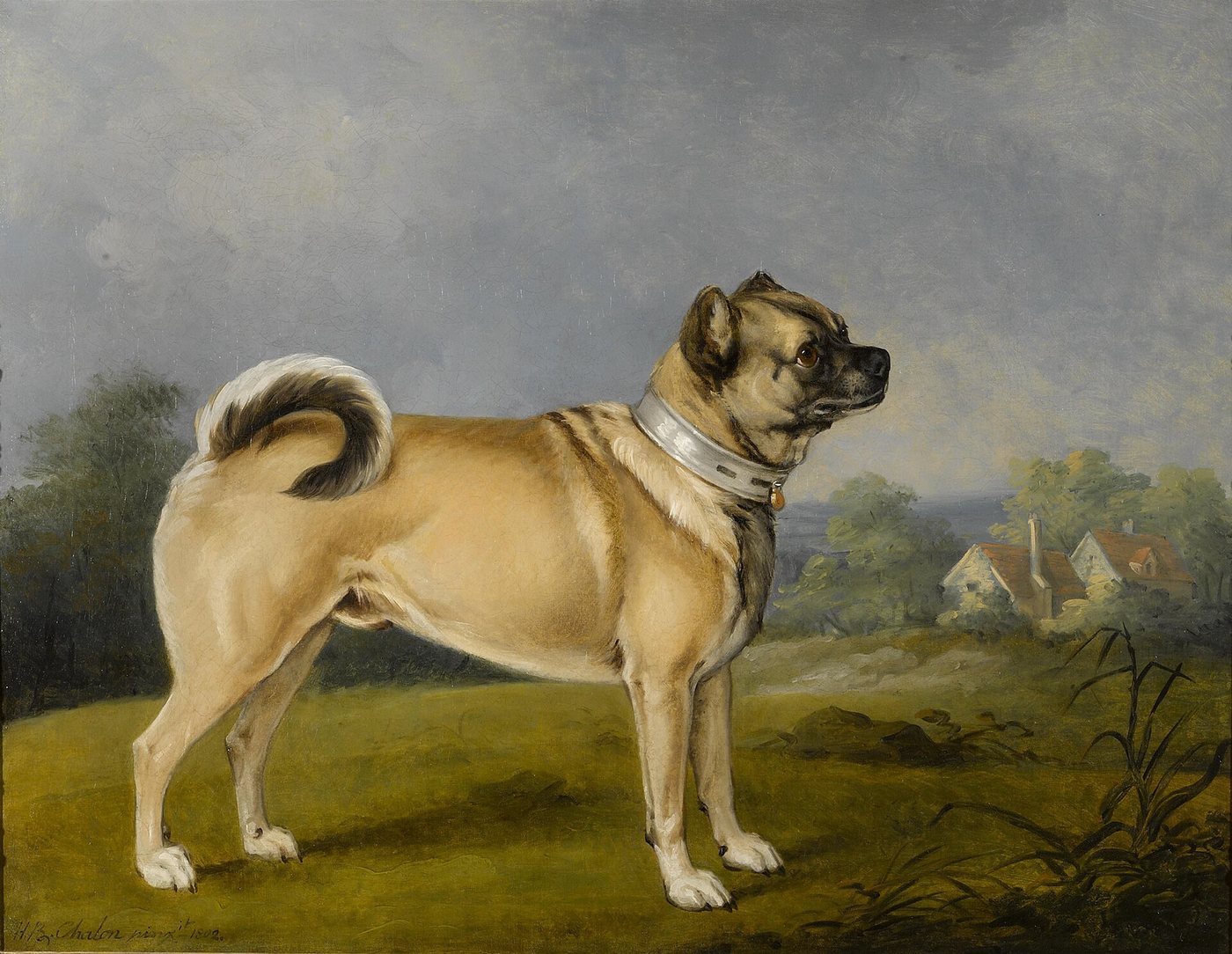
Instantly recognisable: a compact, muscular toy dog with a wrinkled, very flat face, a curled tail, large dark eyes, and a short glossy coat in fawn or black. The deep wrinkles, the snorting and snoring, and the almost human expressions are all part of the package. The Pug's motto in the old phrase is multum in parvo — 'a lot of dog in a small space' — and the build delivers exactly that.
Care & daily life
Keep exercise gentle and brief: a couple of short walks and indoor play totalling around 30–45 minutes a day, never in heat. This is the most important part of Pug ownership, stated plainly: the flat face means many Pugs cannot breathe freely, cool themselves, or tolerate heat, exertion, or stress the way other dogs do. Keep a Pug lean (they gain weight easily, and extra weight worsens breathing), keep it cool, clean the facial wrinkles daily, and never fly one in cargo.
Health & lifespan
The Pug is generally known for the following health watch-points:
- Brachycephalic obstructive airway syndrome — the flat face obstructs breathing; heatstroke is a leading risk and this breed must be kept cool and lean
- Pug dog encephalitis (necrotizing meningoencephalitis) — a fatal inherited brain inflammation unique to Pugs; a DNA risk test exists
- Hip dysplasia — surprisingly common in Pugs despite their size
- Eye problems: corneal ulcers, dry eye, and pigmentary keratitis, thanks to prominent eyes
- Obesity, skin-fold infections, patellar luxation, and spinal malformations (hemivertebrae) causing gait problems in some dogs
Living with a Pug
Pugs are consummate indoor dogs: apartments and houses alike, any climate with air conditioning, and above all people around as much as possible — they are profoundly social and hate being left out. They are a poor fit for hot climates without cooling, for very active owners wanting a jogging partner, or for anyone who wants a quiet sleeper in the room — the snoring is world-class.
History
The Pug is an ancient breed, a companion of Chinese emperors from at least the Han era, kept alongside Pekingese and Shih Tzu in the imperial court and traded to Europe by the Dutch East India Company in the 1500s. A Pug famously became the mascot of the Dutch House of Orange after, legend says, warning William the Silent of approaching assassins. Hugely popular in Victorian England, the Pug was recognised by the AKC in 1885.