Overview
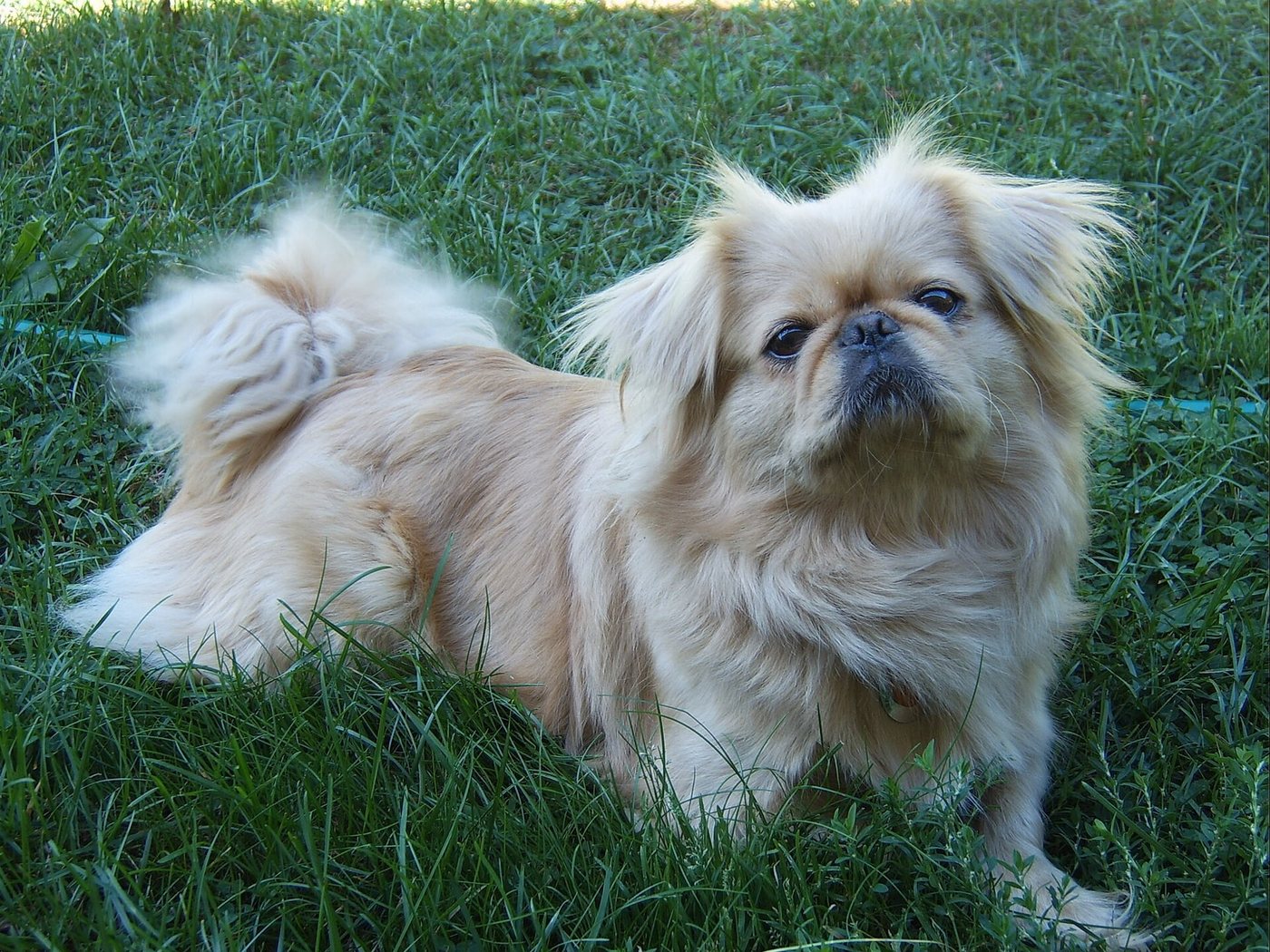
The Pekingese was never meant to be useful — it was meant to be treasured, and it knows it. Bred for over a millennium as the sacred lion dog of China's imperial court, it is a compact, heavily coated toy with a massive head, a flat face, and the self-importance of a dowager empress. That dignity, combined with real courage and deep loyalty to one chosen person, makes the Peke a breed people either merely like or utterly worship.
Temperament & personality
Affectionate and utterly loyal to its own person, reserved and rather grand with everyone else. Pekingese are intelligent and independent — they were never bred to obey anyone but an emperor, and it shows — so training needs patience, humour, and respect rather than insistence. They are surprisingly courageous for their size and make determined little watchdogs.
Appearance
One of the most distinctive dogs in the world: a compact, low-slung 'lion dog' with a massive head, a very flat face, prominent round eyes, and a profuse double coat — traditionally grown into a full mane — in red, gold, fawn, cream, black, and other colours. The rolling gait comes from its bowed legs and unique construction: the forequarters are deliberately heavier than the hindquarters, giving the breed its dignified, forward-tilting roll.
Care & daily life
Exercise needs are small — a couple of short, gentle walks a day, taken slowly and never in heat. This is a brachycephalic (flat-faced) breed: it cannot cool itself efficiently, must live in air conditioning in warm weather, and should never be exercised hard or flown in cargo. The coat needs real work — brushing several times a week to the skin, or a short clip — plus daily cleaning of the facial folds and care around the prominent eyes, which injure easily.
Health & lifespan
The Pekingese is generally known for the following health watch-points:
- Brachycephalic obstructive airway syndrome — the flat face narrows the airways; breathing difficulty and heatstroke are the breed's central health risks
- Intervertebral disc disease — the long back and short legs predispose Pekingese to slipped discs
- Mitral valve disease and other heart conditions, especially with age
- Eye problems: corneal ulcers, dry eye, and injuries to the prominent eyes are common
- Patellar luxation and skin-fold dermatitis
Living with a Pekingese
A Pekingese is an indoor dog through and through: apartments and quiet houses, cool rooms, short outings, and one devoted person to adore. It suits adults and calm households with older children far better than boisterous family life, and warm climates only where air conditioning is guaranteed — heat is genuinely dangerous for this breed.
History
The Pekingese is among the most ancient of breeds, a palace dog of China for well over a thousand years — legend gives it a mythical origin as the offspring of a lion and a marmoset. Kept exclusively at the imperial court in Peking, the little sleeve dogs were sacred and fiercely guarded. Five reached England after British forces entered the Summer Palace in 1860, one presented to Queen Victoria and named Looty; the AKC recognised the breed in 1909.